The Apple Parer Patent Archive
Somewhere in the 1870s, the American kitchen acquired a machine tool. It clamped to the table edge like something out of a pattern shop, it was cast iron with gears you could watch working, and its entire purpose was to undress an apple.
This site collects the patents behind those machines. The idea was old — Moses Coates patented a crank-and-fork parer in 1803, when Thomas Jefferson was president — but the golden age came when cast iron met the orchard economy. Farm families dried, sauced, and cellared apples by the barrel, and paring by knife was an evening's servitude. So inventors went to work, and what they produced is some of the most joyful gearing ever drawn: lathe-type machines that spin the fruit while a blade rides its profile like a cutting tool; turntable machines that carry the knife clear around and swing it home; segment gears that pare, core, push off, and reset the fork in one turn of the crank.
Collectors know these machines by the names cast into their frames — Reading Hardware's '78, Goodell's White Mountain, Sinclair Scott's triple-threat parer-corer-slicers — and by the patent dates cast right beside them. That date is how you identify the machine on your shelf, and this site is organized so that date finds its patent.
The drawings are mechanical drawing at its most cheerful, and every one is public domain — made by the U.S. government, free to anyone, forever. Bring your apple.
❧ Begin here
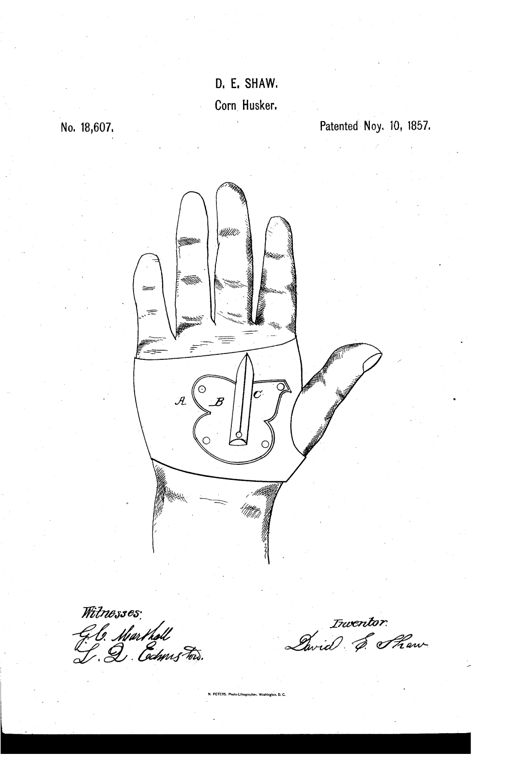 IMPROVED HUSKING-PALMDavid E. Shaw · November 10, 1857
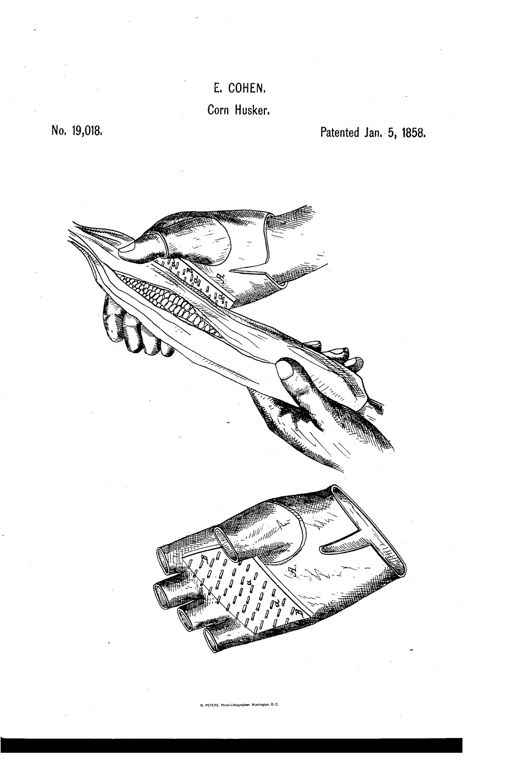 HUSKING AND SHELLING GLOVEEmil Cohen · January 5, 1858
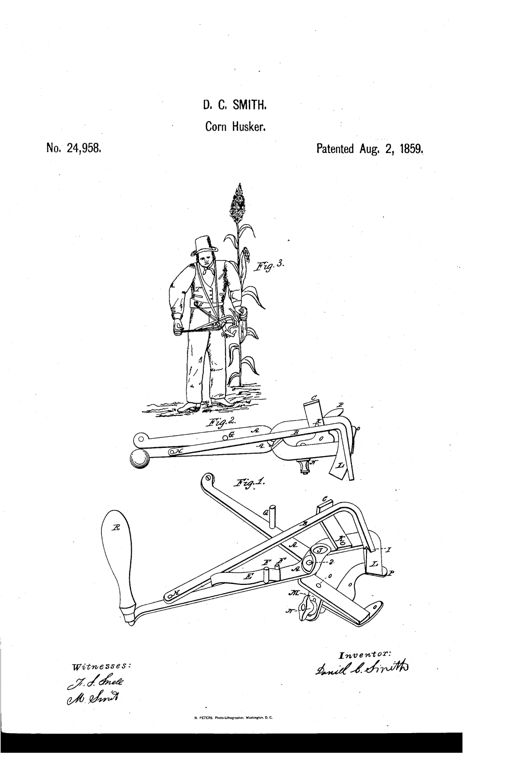 CORN-HUSKER.Daniel C. Smith · August 2, 1859
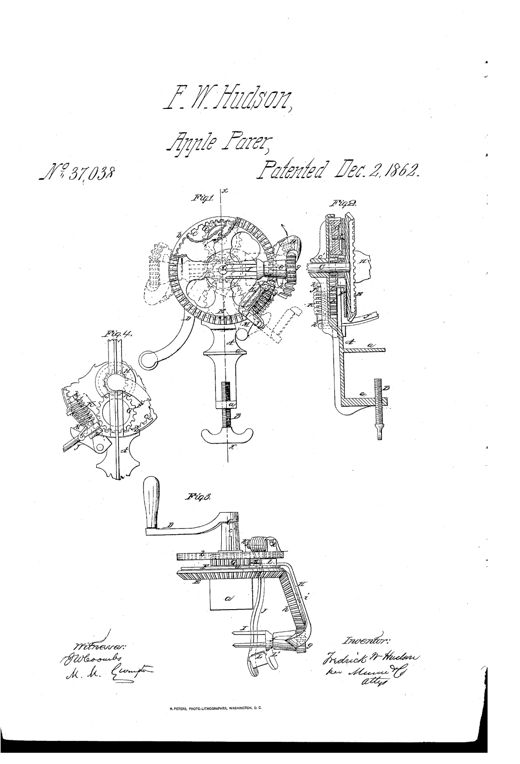 IMPROVED APPLE-PARERFrederick W. Hudson · December 2, 1862
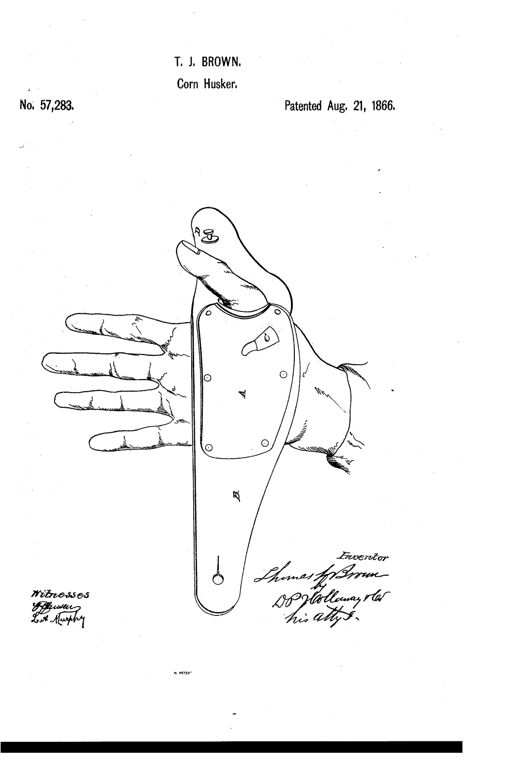 IMPROVEMENT IN CORN-HUSKERSThomas J. Brown · August 21, 1866
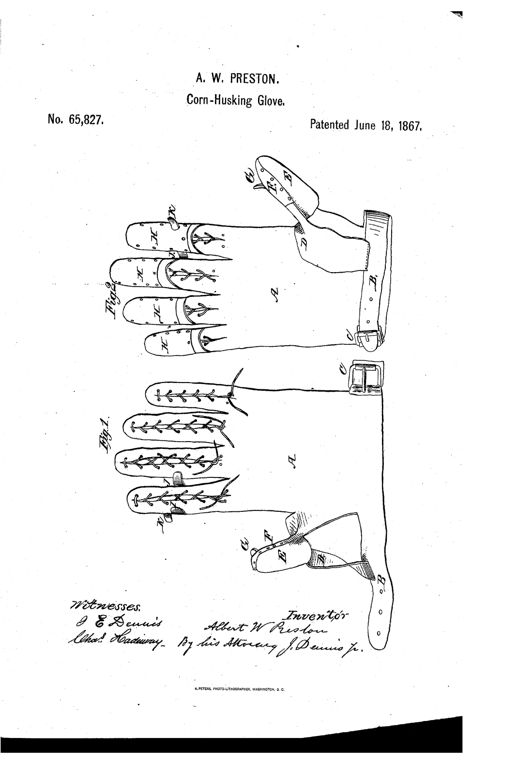 IMPROVEMENT IN GLOVE FOR HUSKING CORNAlbert W. Preston · June 18, 1867
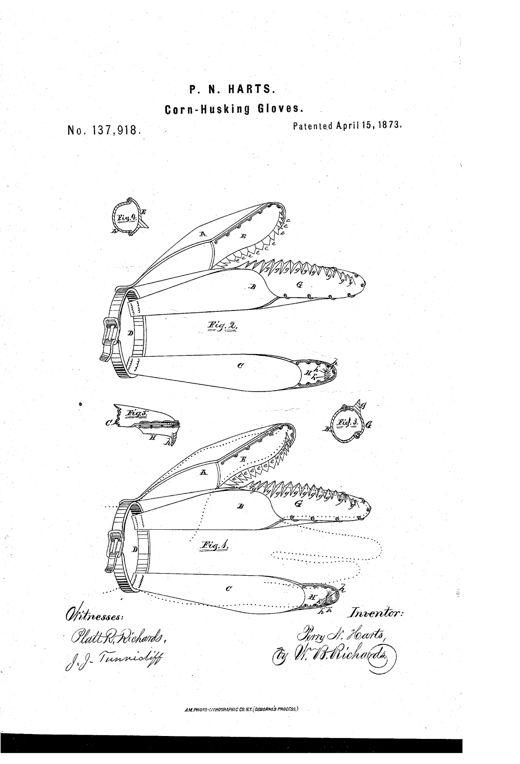 IMPROVEMENT IN CORN-HUSKING GLOVESPerry N. Harts · April 15, 1873
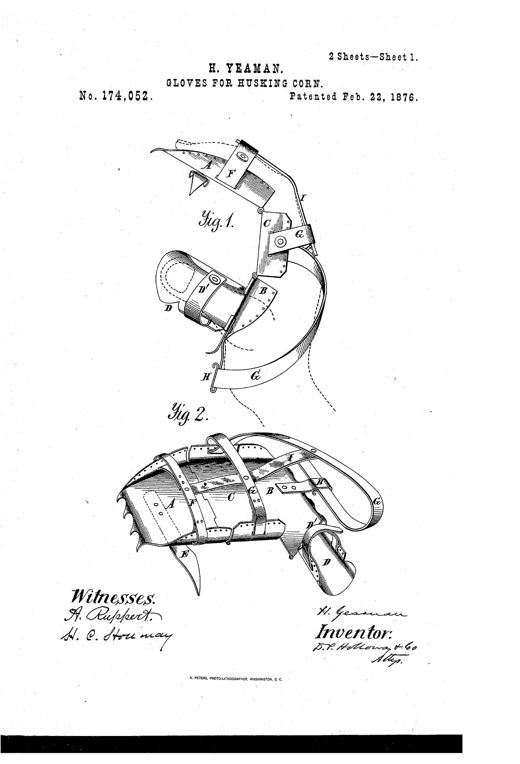 IMPROVEMENT IN GLOVES FOR HUSKING CORN.Harvey Yeaman · February 22, 1876