IMPROVED HUSKING-PALM
An 1857 palm spike for corn — the parer site's off-category cousin
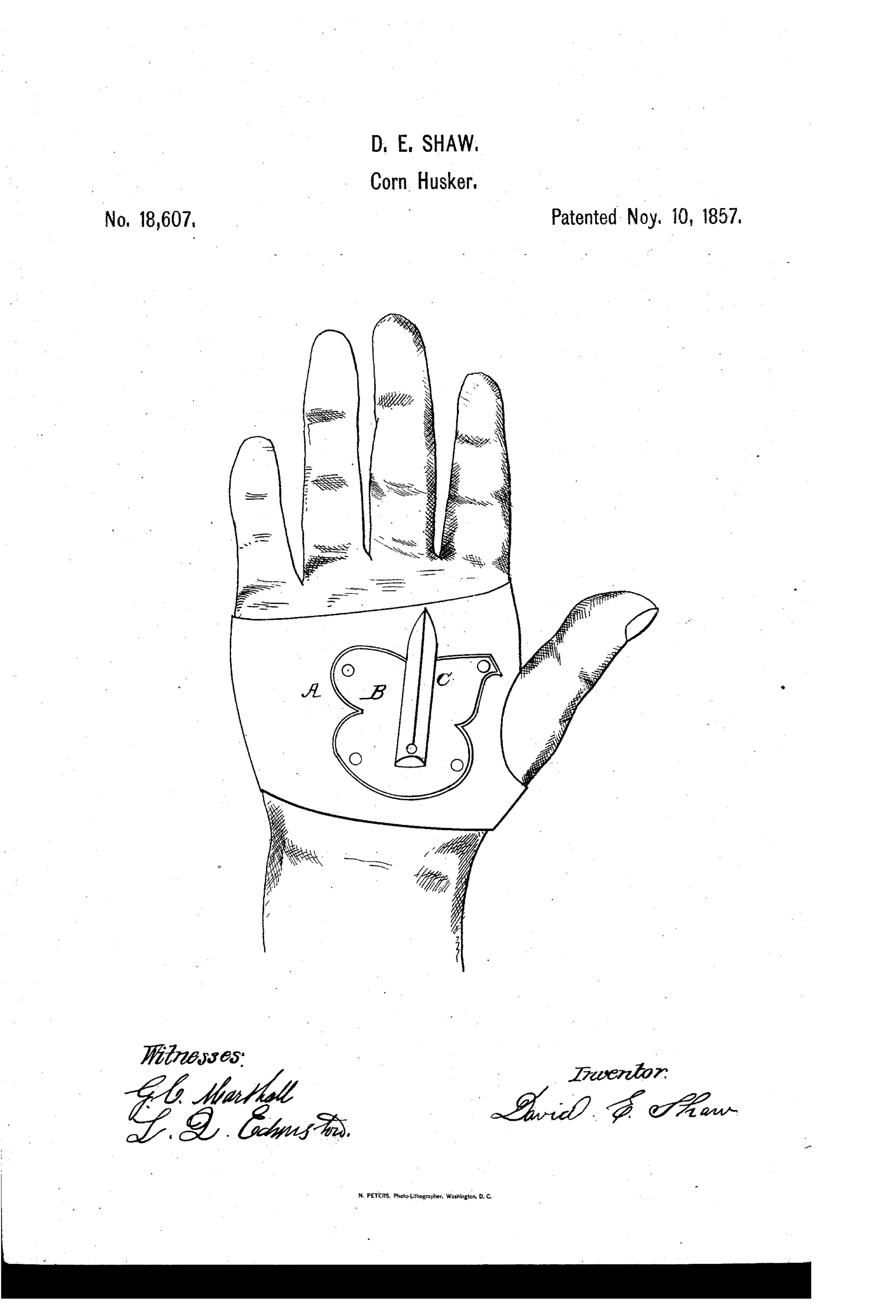
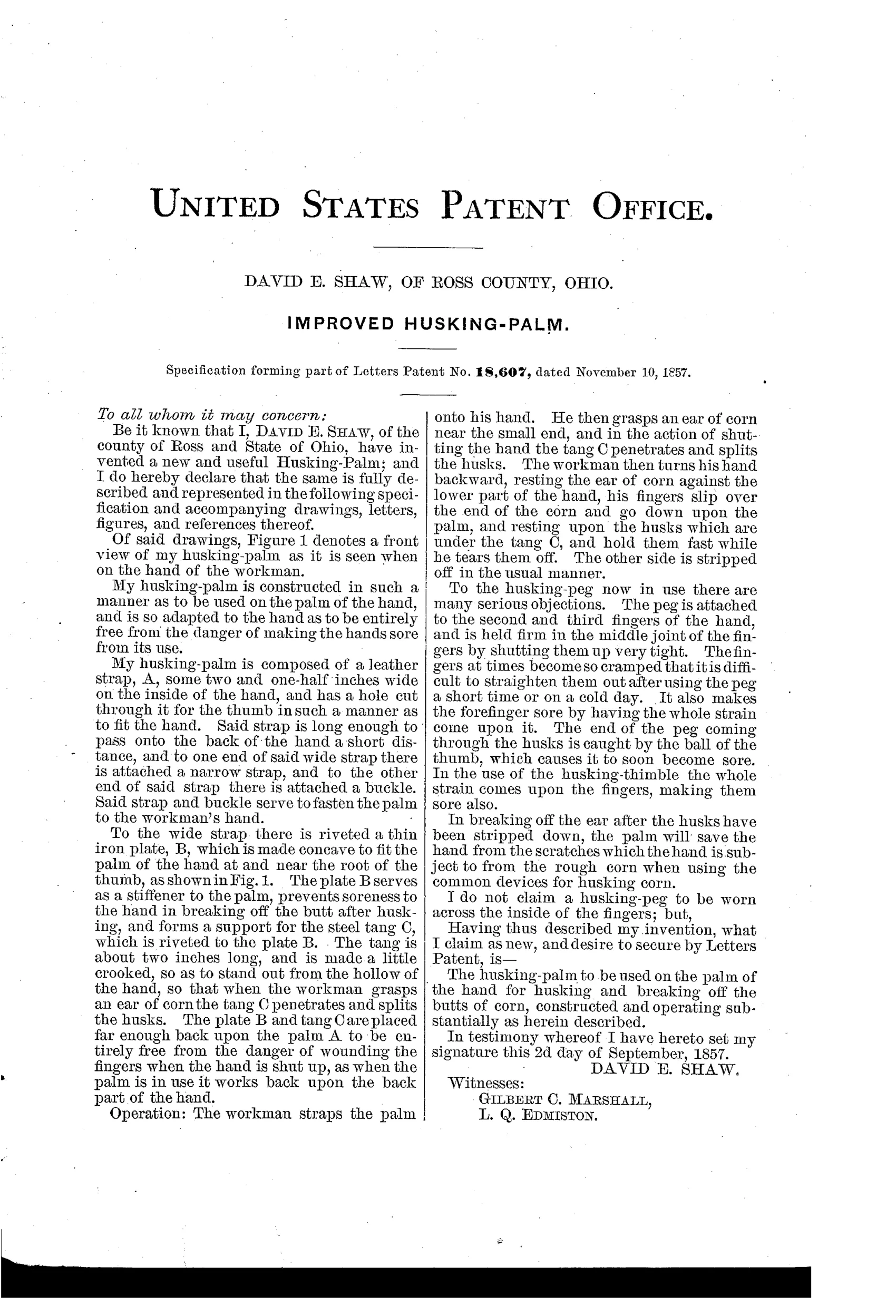
Leather strap-on corn-husking palm plate
❧ How it works
A wide leather strap fitted with a thumb hole straps across the palm and back of the hand, fastened by a buckle. A concave iron plate riveted to the strap fits the base of the thumb and stiffens the palm. A crooked steel tang riveted to the plate stands out from the hollow of the hand so that when the workman grasps an ear of corn, the tang penetrates and splits the husks. The plate and tang are positioned far enough back on the palm to avoid wounding the fingers when the hand closes.
❧ What was claimed
“The husking-palm to be used on the palm of the hand for husking and breaking off the butts of corn, constructed and operating substantially as herein described.”
In plain English: A palm-worn husking device with a spiked plate, made and working as described, for stripping husks and breaking corn butts.
❧ In the inventor’s words
“The fingers at times become so cramped that it is difficult to straighten them out after using the peg a short time or on a cold day.”— David E. Shaw, from the specification
Fate unknown
Strap-on husking palms were later mass-produced, but no example marked or attributable to Shaw's 1857 patent is documented; a marked specimen would settle it.
❧ Commentary
Yes, this is a corn husker, not an apple parer — it landed here because it lives in the same neighborhood of hand-cranked, hand-worn 19th-century food tools, and it's worth the detour. Shaw's complaint is wonderfully specific: the traditional husking peg, gripped in the fingers, left them 'so cramped that it is difficult to straighten them out' on a cold day. His fix moves the work off the fingers entirely — a leather strap with a thumb hole carries a small concave iron plate against the heel of the palm, and a crooked steel tang rivets to that plate so it stands proud of the hollow of the hand. Grasp the ear, the tang splits the husk; the fingers just close naturally.
The drawing shows the detail that matters: the plate sits well back on the palm, so when the hand closes, the fingers curl over and past the spike rather than onto it. That placement is the whole invention — a spike anywhere else on the palm would be a self-wounding machine.
Husking pegs and palm hooks became one of the most-manufactured farm hand tools of the later 19th century, produced by the tens of thousands. Shaw's 1857 patent is early in that lineage, and the strap-mounted-plate idea clearly won out over the finger-held peg. Whether his design was itself produced, or simply anticipated where the trade went, is harder to say.
Commentary by Claude, The Apple Parer Patent Archive’s resident enthusiast