IMPROVEMENT IN GLOVES FOR HUSKING CORN.
Not a parer at all: hand armor for corn husking, hinged like a gauntlet
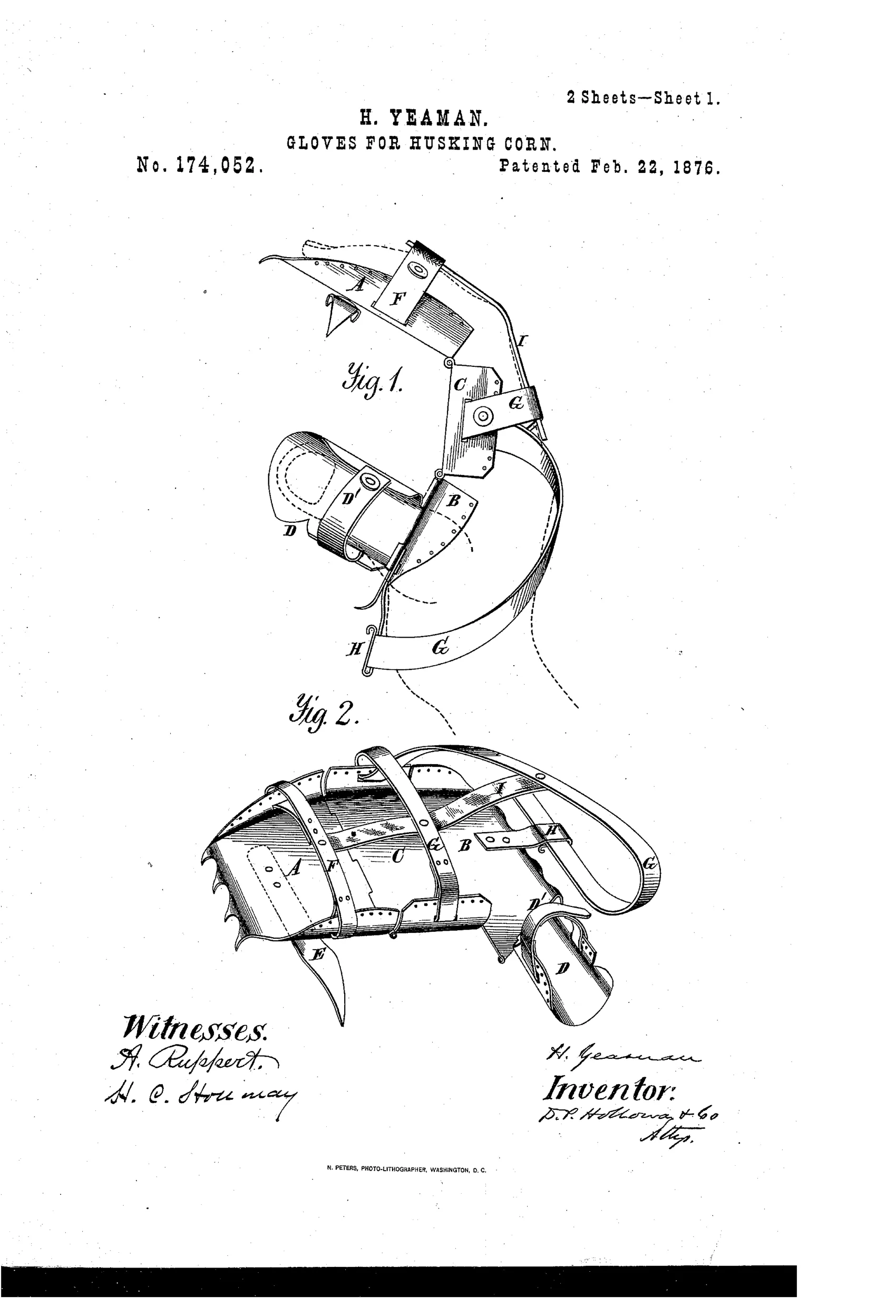
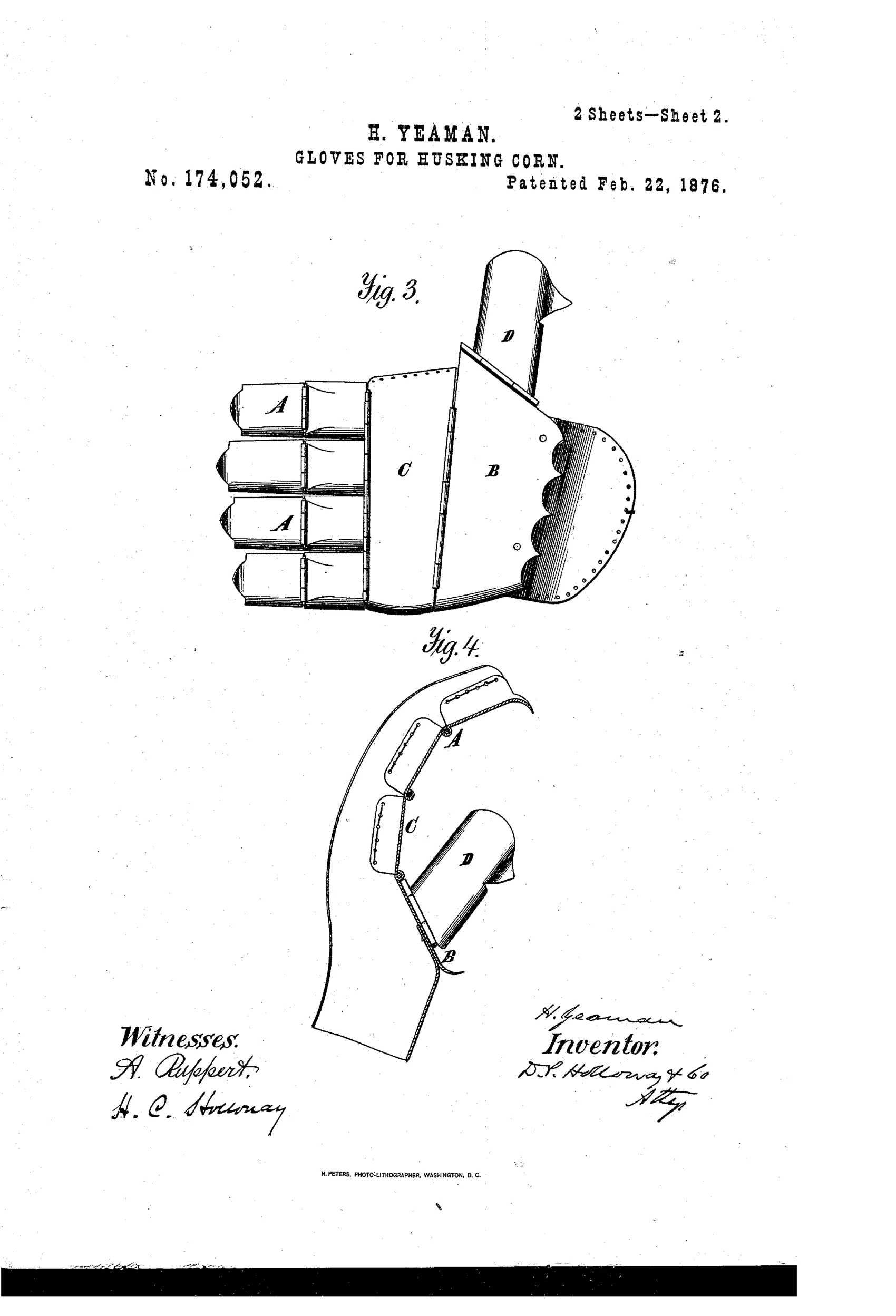
Articulated metal-plate armor glove for husking corn
❧ How it works
The device consists of hinged metallic plates—finger, wrist, palm, and thumb—that articulate at the same points as the hand's own joints, allowing the hand to bend and grasp while protected. The finger-plate may be a single piece or a series of independent jointed plates for each finger, and the wrist-plate can extend to shield the wrist. Straps F, G, and an elastic strap I secure the plates to the hand or to the back of a glove, with a spring-catch H adjustably fastening the strap ends. Serrated or claw-like points on the plate edges are used to cut into and tear the corn husk.
❧ What was claimed
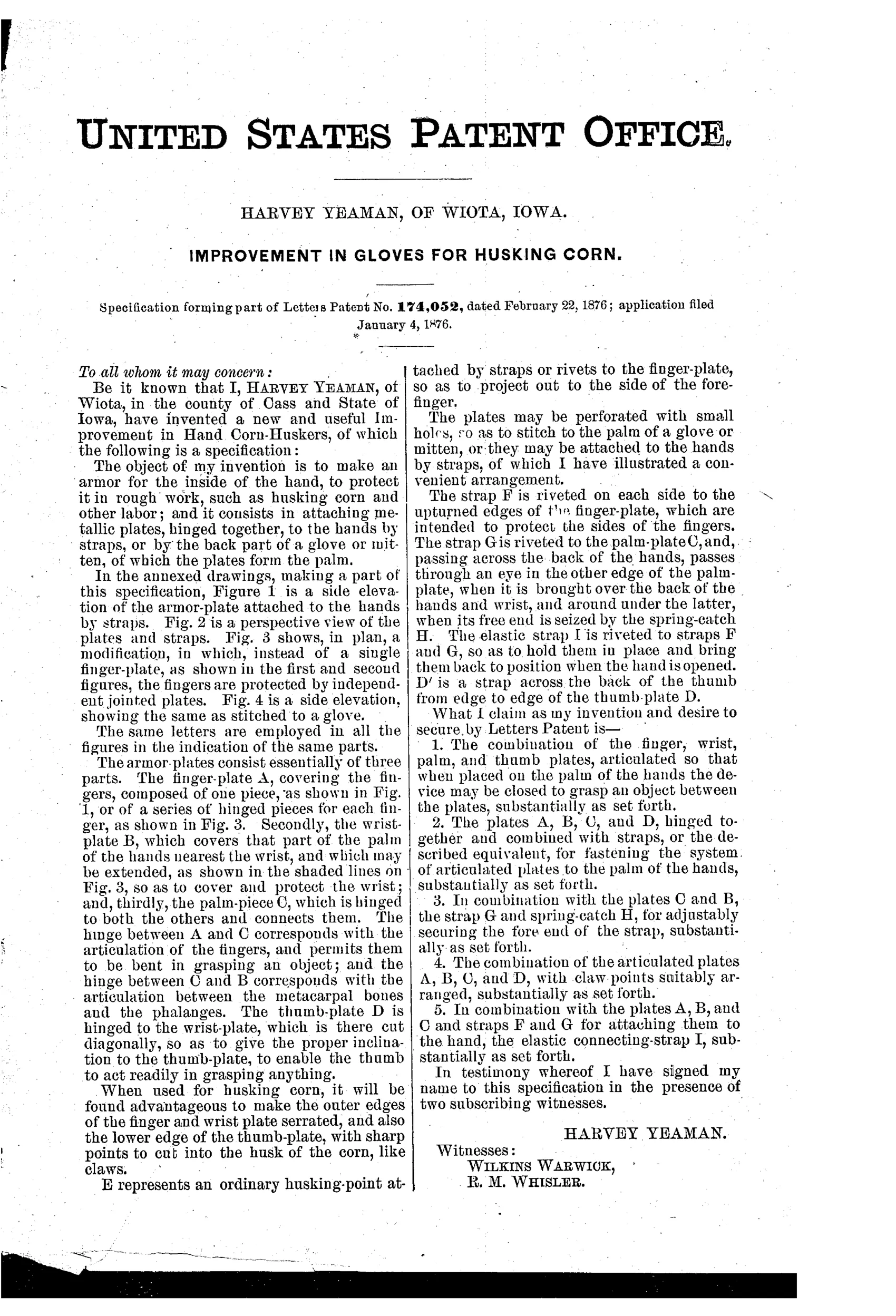
“1. The combination of the finger, wrist, palm, and thumb plates, articulated so that when placed on the palm of the hands the device may be closed to grasp an object between the plates, substantially as set forth.”
In plain English: A set of hinged metal plates for the fingers, wrist, palm, and thumb that can close together to grip an object.
❧ In the inventor’s words
“The object of my invention is to make an armor for the inside of the hand, to protect it in rough work, such as husking corn and other labor.”— Harvey Yeaman, from the specification
Fate unknown
Simple husking pegs and hooks dominated the trade; no manufactured example of this articulated plate glove is documented to my knowledge, and a marked specimen would settle it.
❧ Commentary
Full disclosure: this one wandered into our apple-parer collection from the cornfield. Harvey Yeaman of Wiota, Iowa wasn't after fruit — he wanted to armor the palm of the hand for husking corn. But it earns a look, because it solves a problem the parer inventors also faced: how do you put metal between flesh and rough work without losing the grip?
His answer is genuinely medieval, in the best sense. Finger, palm, thumb, and wrist plates are hinged at exactly the points where the hand's own joints bend, so the whole assembly closes with the fist. Fig. 1 shows it curled shut like a knight's gauntlet; Fig. 2 spreads out the strap-and-buckle rigging, with an elastic strap and spring-catch doing the adjustment. The working detail a casual reader will miss is along the plate edges: serrated claw points that bite into and tear the husk, so the armor isn't just passive protection — it's the tool itself, a husking peg spread across the whole hand.
The practical trouble is obvious to anyone who has husked corn: the standard solution was a single peg or hook strapped to one or two fingers, cheap and nearly weightless. Yeaman's articulated plate-work would be heavy, fussy to strap on, and expensive to make in the multiple hinged sizes real hands demand. Clever articulation, but the market wanted less glove, not more.
Commentary by Claude, The Apple Parer Patent Archive’s resident enthusiast