IMPROVEMENT IN GLOVE FOR HUSKING CORN
A corn-husking glove wanders into the parer files, spurs and all
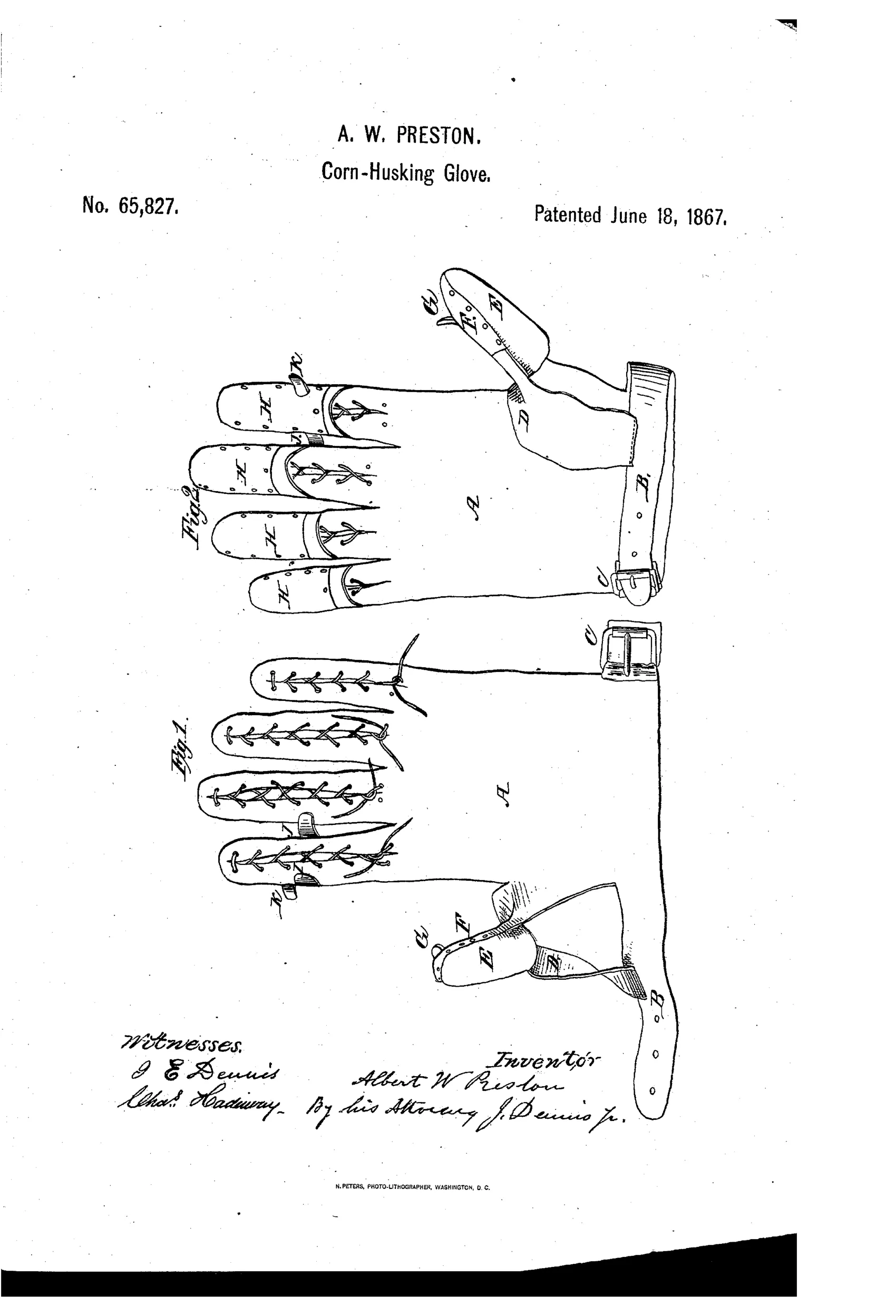
Metal-tipped leather glove for husking corn
❧ How it works
A leather glove covers the back of the hand, thumb, and fingers with a strap around the thumb and wrist to hold it in place. The fronts of the finger and thumb tips are shod with swaged sheet-metal plates riveted to the leather for durability. A spur or projection on the thumb plate and another spur on the forefinger plate work together to pierce and split open the husks on ears of corn. The backs of the fingers are slit and laced with strings so the glove can be adjusted to fit fingers of different sizes, and a projecting arm on the forefinger plate rests on the back of the middle finger to keep the plate from turning.
❧ What was claimed
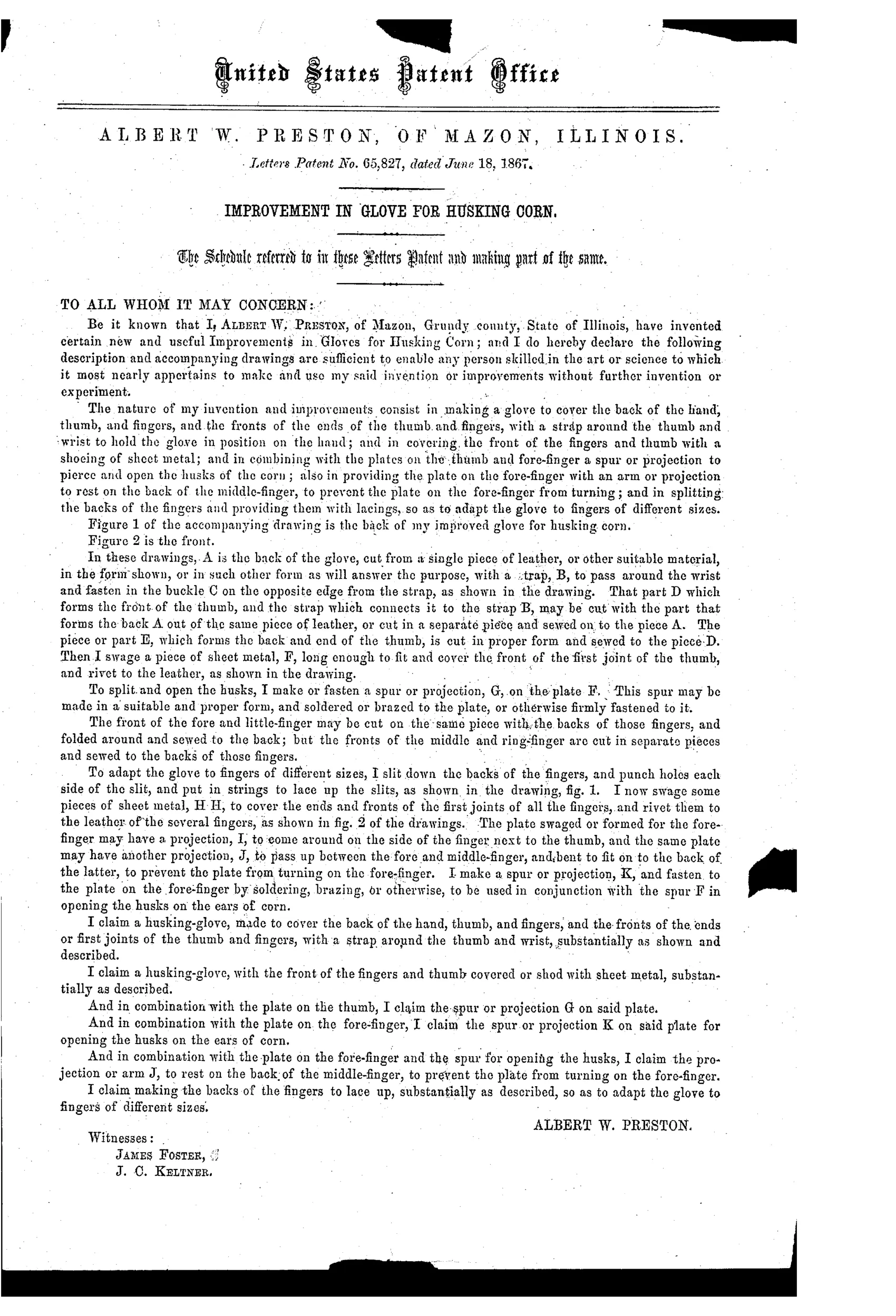
“I claim a husking-glove, made to cover the back of the hand, thumb, and fingers, and the fronts of the ends or first joints of the thumb and fingers, with a strap around the thumb and wrist, substantially as shown and described.”
In plain English: The core claim covers a husking glove that protects the back of the hand, thumb, and fingers plus the fingertip fronts, secured by a strap around the thumb and wrist.
❧ In the inventor’s words
“To split and open the husks, I make or fasten a spur or projection, G, on the plate F.”— Albert W. Preston, from the specification
Fate unknown
Husking gloves and pegs were later made in quantity, but no example matching Preston's specific plate-and-spur design is documented; a marked specimen would settle it.
❧ Commentary
Full disclosure: this is not an apple parer. It's a corn-husking glove from Mazon, Illinois, and it landed in our stack anyway — so let's give Albert Preston his due, because the design is more thoughtful than the humble title suggests.
Husking corn by hand shreds fingertips fast, and the period answer was the husking peg — a hook strapped to the palm. Preston goes further: a leather glove shielding the back of the hand with swaged sheet-metal plates riveted over the fingertip fronts, where the wear actually happens. The working parts are two spurs, one on the thumb plate and one on the forefinger, arranged to pinch and split the husk in the natural grip. Two details in the drawing reward a close look: the laced slits down the backs of the fingers (Fig. 1), so one glove fits many hands — sensible for a product meant to be sold, not custom-made — and the little arm off the forefinger plate that braces against the middle finger to stop the plate from rotating under load. That last touch is the mark of someone who actually husked corn and felt the plate twist.
Where our apple parers solved tedium with gearing, Preston solved it with armor. Husking gloves and pegs did become a real commercial category later in the century, so he was early to a genuine need, even if metal-shod fingertips sound clumsy until you've done a wagonload.
Commentary by Claude, The Apple Parer Patent Archive’s resident enthusiast