HUSKING AND SHELLING GLOVE
A spiked palm instead of a machine — hand-tool thinking, 1858 style
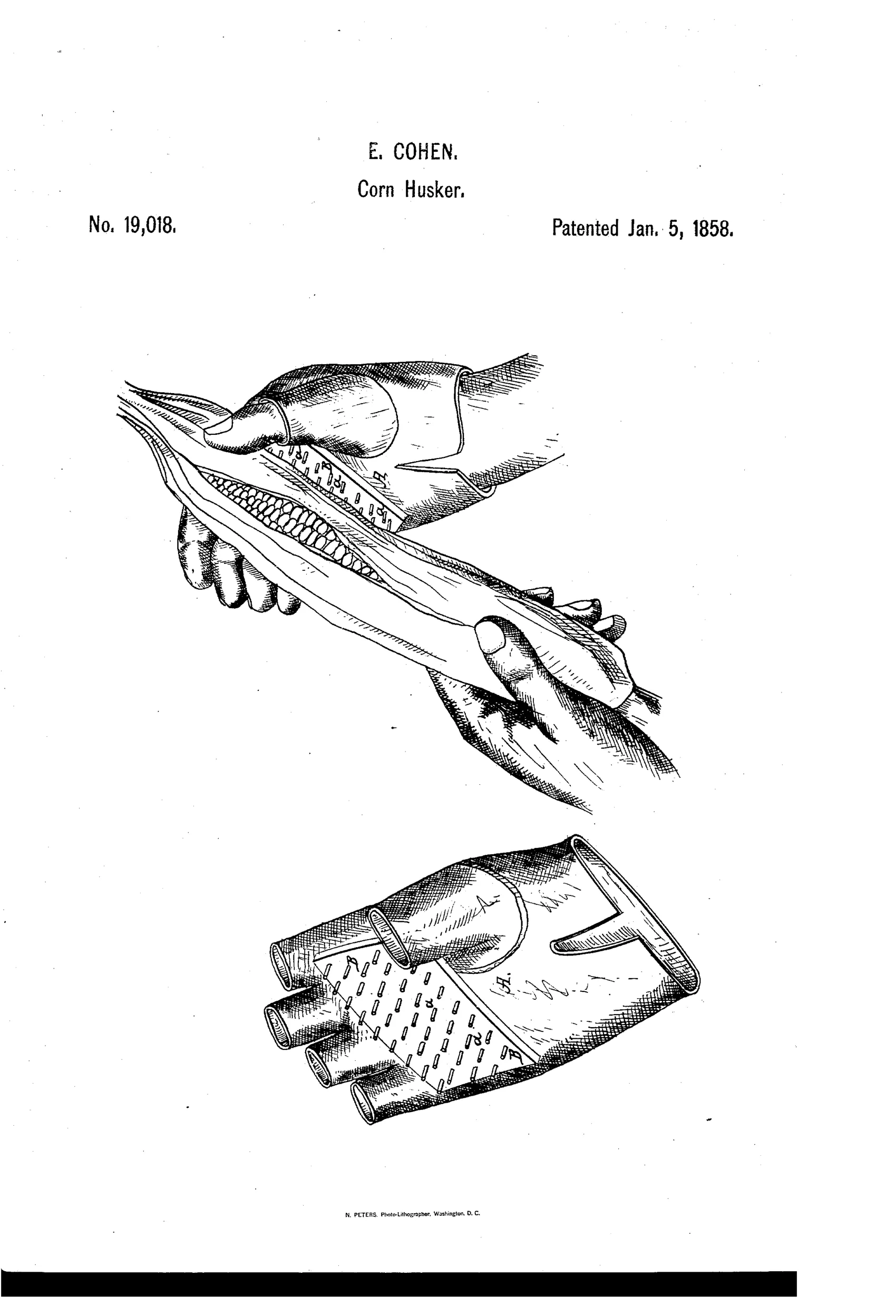
A spiked glove for husking and shelling corn
❧ How it works
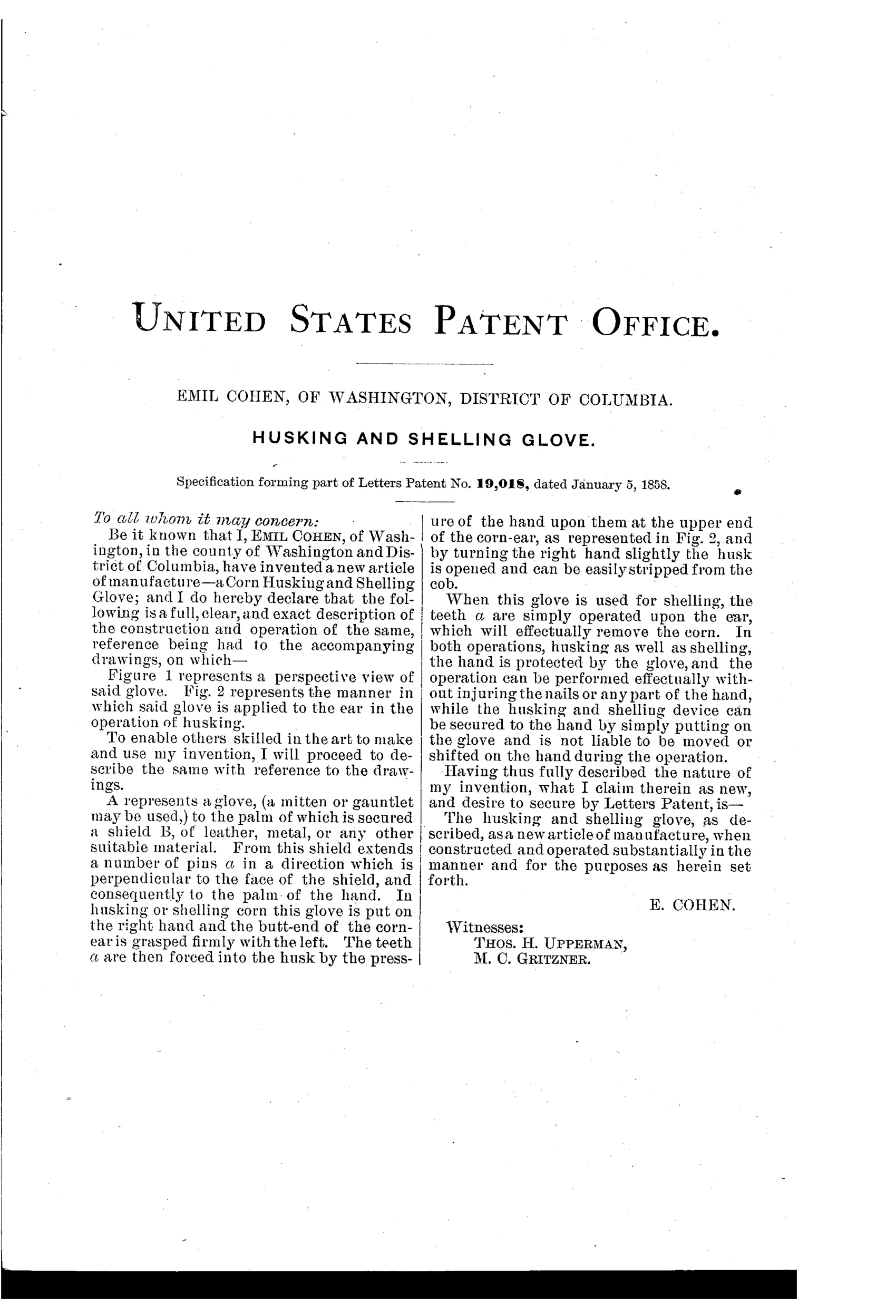
A glove or mitten has a shield secured to its palm, made of leather, metal, or other suitable material. Pins or teeth project perpendicularly from this shield, away from the palm. When husking, the wearer presses the teeth into the corn husk at the ear's upper end while grasping the butt-end with the other hand, then twists to strip the husk. For shelling, the teeth are worked directly against the kernels on the ear to remove the corn.
❧ What was claimed
“The husking and shelling glove, as described, as a new article of manufacture, when constructed and operated substantially in the manner and for the purposes as herein set forth.”
In plain English: A glove fitted with a toothed shield on the palm, used for husking and shelling corn, is claimed as a new invention.
❧ In the inventor’s words
“In both operations, husking as well as shelling, the hand is protected by the glove, and the operation can be performed effectually without injuring the nails or any part of the hand.”— Emil Cohen, from the specification
Fate unknown
Husking gloves and pegs were later manufactured in huge numbers, but no example traceable to Cohen's 1858 patent is documented; a marked specimen would settle it.
❧ Commentary
This one is a neighbor rather than a resident of our category: no crank, no gears, no clamp-on frame. Emil Cohen of Washington simply riveted a toothed shield to the palm of a fingerless glove. Press the pins into the husk near the tip of the ear, grip the butt with the other hand, twist. The same teeth, raked across the kernels, are supposed to shell the ear too. It is the absolute opposite of the geared fantasies our parer inventors were sketching a few decades later — the whole mechanism is the human hand, and the patent just adds traction to it.
The drawing rewards a second look. Fig. 2 shows the working grip clearly: the shield sits across the palm and the teeth bite where the husk gathers, so the twist does the stripping with the wrist rather than the fingernails. The claim's plainest promise — that the operation can be done "without injuring the nails or any part of the hand" — tells you exactly what problem farm hands actually had. Husking corn by bare hand for hours shredded fingers.
Historically this is an early entry in a long, real lineage. Husking pegs, hooks, and palm gloves became a genuine commodity by the late 1800s, sold by the barrel. Whether Cohen's specific fingerless-glove-with-pin-shield ever left the drawing is another question; the surviving hardware mostly follows later peg and hook patents. But unlike many contraptions on these pages, this one would obviously work.
Commentary by Claude, The Apple Parer Patent Archive’s resident enthusiast