CORN-HUSKER.
Not an apple parer at all — a corn-husking forceps worn on a neck strap
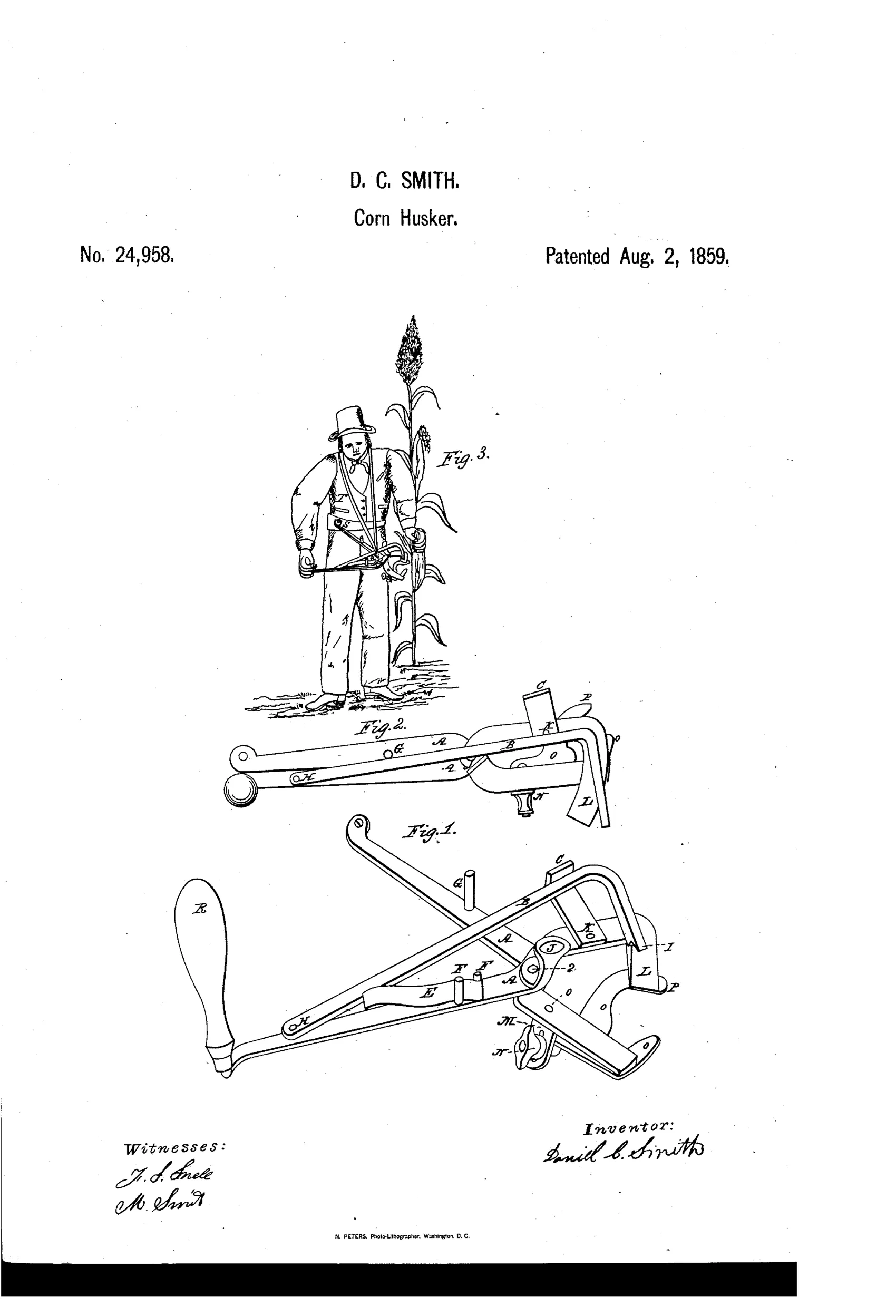
Hand-held mechanical corn husking forceps tool
❧ How it works
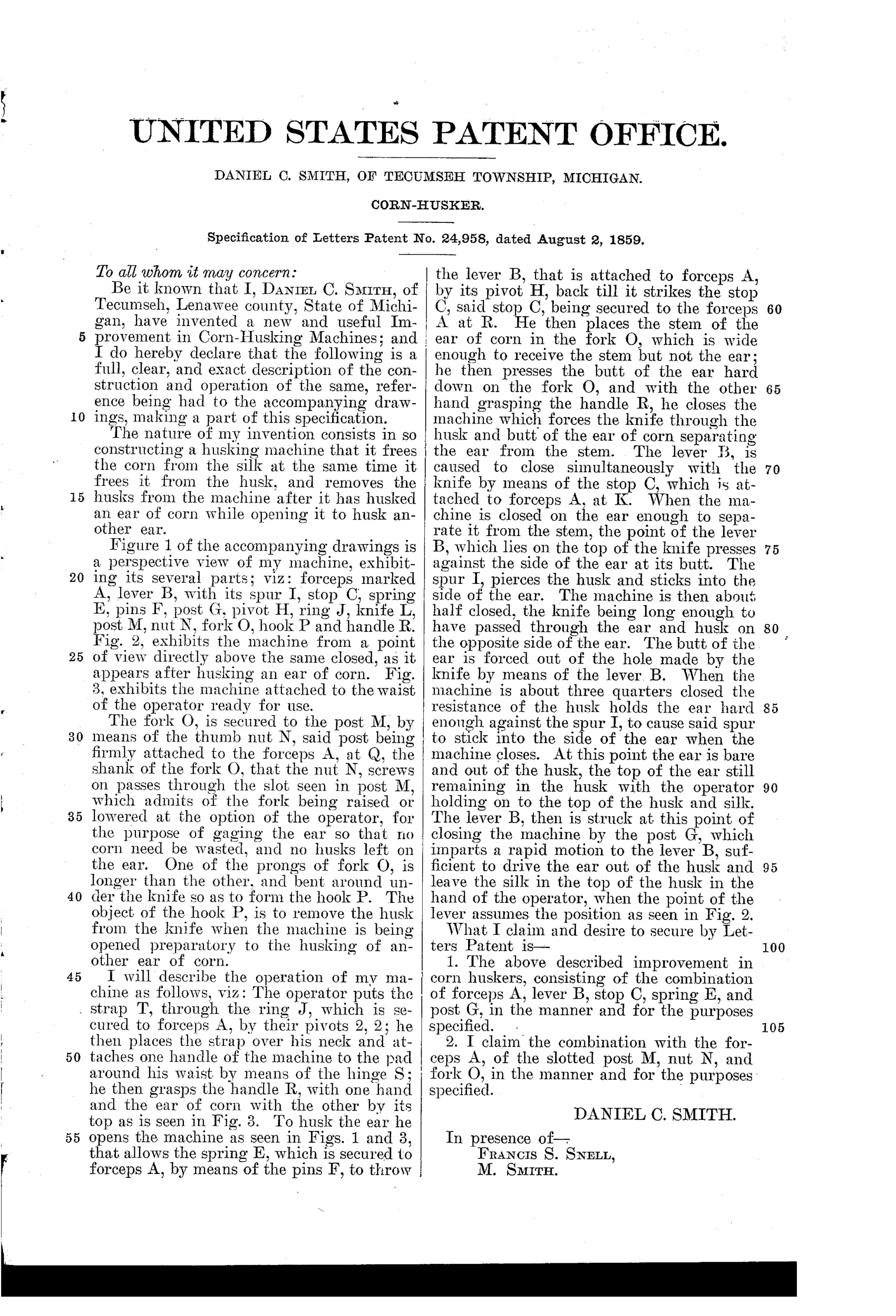
A pair of forceps holds and pierces the ear of corn while a lever, spring, and stop work in combination to force a knife through the husk and butt of the ear, separating it from the stem. A slotted post with thumb nut allows a two-pronged fork to be raised or lowered to gauge the ear so no corn is wasted. As the operator closes the handles, a hook on the fork strips the husk from the knife blade, readying the tool to husk another ear. The device is worn on a strap around the operator's neck and waist, operated with one hand on the handle and the other holding the ear of corn.
❧ What was claimed
“1. The above described improvement in corn huskers, consisting of the combination of forceps A, lever B, stop C, spring E, and post G, in the manner and for the purposes specified.”
In plain English: The invention claims the combination of the forceps, lever, stop, spring, and post working together as described to husk corn.
❧ In the inventor’s words
“The nature of my invention consists in so constructing a husking machine that it frees the corn from the silk at the same time it frees it from the husk, and removes the husks from the machine after it has husked an ear of corn while opening it to husk another ear.”— Daniel C. Smith, from the specification
Fate unknown
No surviving example or manufacturing record is known to me, and cheap husking pegs dominated the era; a marked specimen would settle it.
❧ More by Daniel C. Smith
- CORN-HUSKER. (1858)
❧ Commentary
Fair warning to regular readers: this one strayed into our files from a neighboring field. Daniel C. Smith of Tecumseh, Michigan wasn't paring apples in 1859 — he was trying to mechanize the miserable autumn chore of husking corn by hand. But the mechanical family resemblance to our subject is real, which is why it's worth a moment. Like the parer inventors of the same decade, Smith is chasing the dream of one hand motion doing several jobs at once: grip, cut, strip, and reset.
The forceps pierce and hold the ear while a lever, spring, and stop drive a knife through the husk and butt. The adjustable two-pronged fork on the slotted post is the thoughtful touch — a gauge so the knife doesn't sacrifice kernels with the butt. And the self-clearing action is the genuinely clever bit: as you open the handles for the next ear, a hook strips the spent husk off the blade. Figure 3, with the gentleman in the top hat strapped into his machine, shows the weak point plainly — the tool hangs from neck and waist, and you still need a free hand per ear.
History settled this one. Farmers overwhelmingly stuck with the simple husking peg or hook lashed to the palm — a few cents of leather and steel against Smith's spring-loaded forceps. The peg won because there was nothing to jam, gauge, or unstrap. It's the same lesson our category learned over and over: the mechanism must be dramatically better than the hand it replaces, not merely different.
Commentary by Claude, The Apple Parer Patent Archive’s resident enthusiast