HUSKING-PIN.
A corn-husking pin wanders into the parer files — and earns its keep anyway
Adjustable finger-strap corn-husking pin
❧ How it works
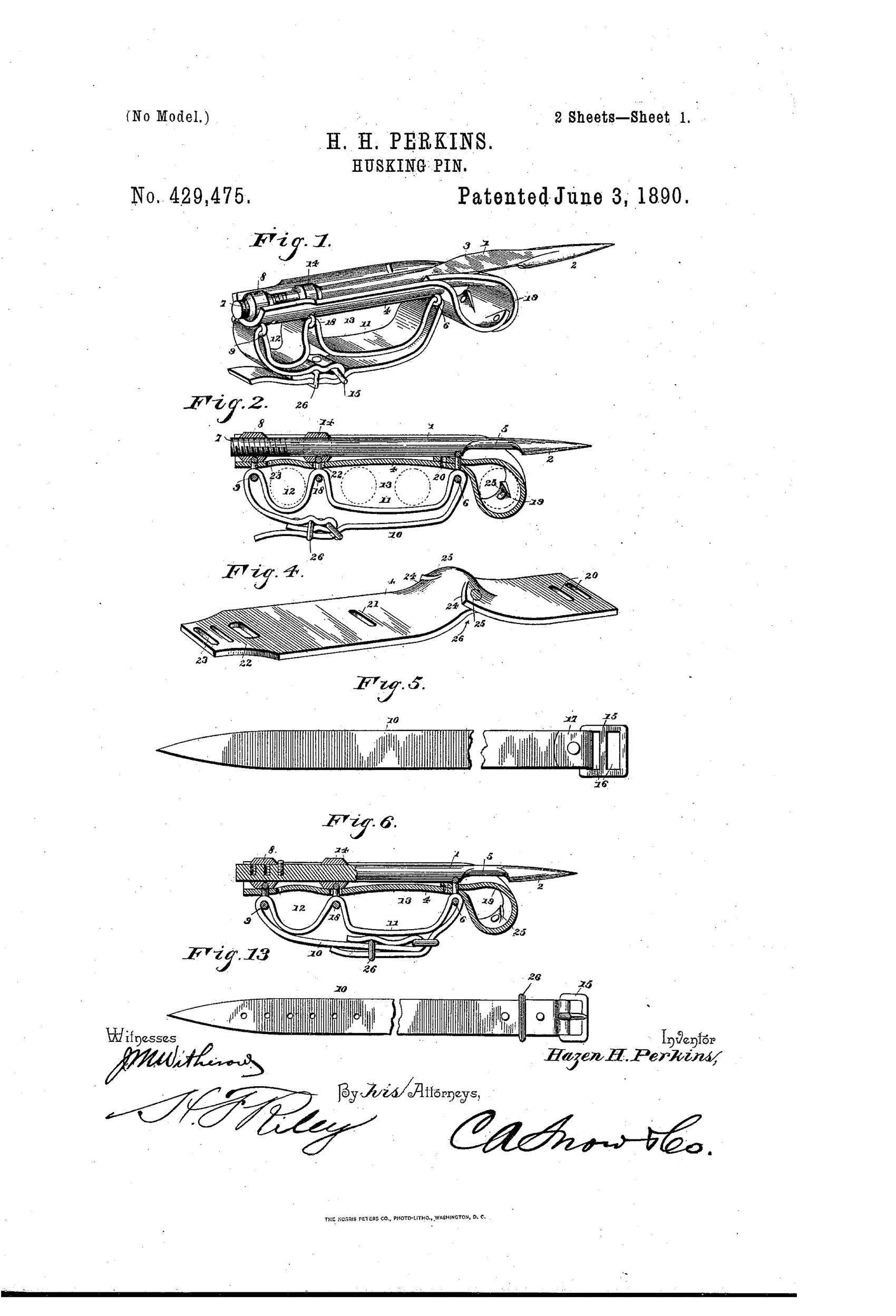
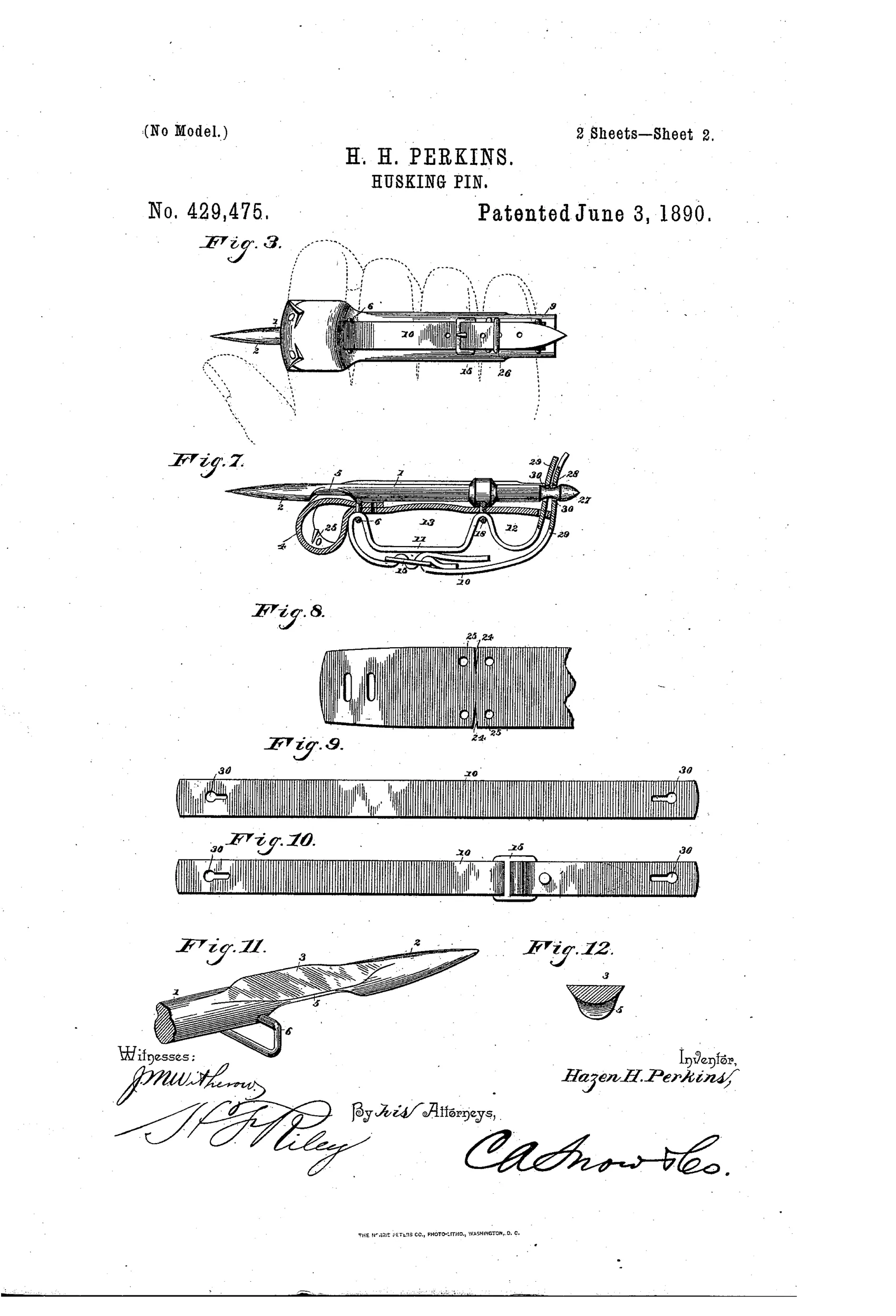
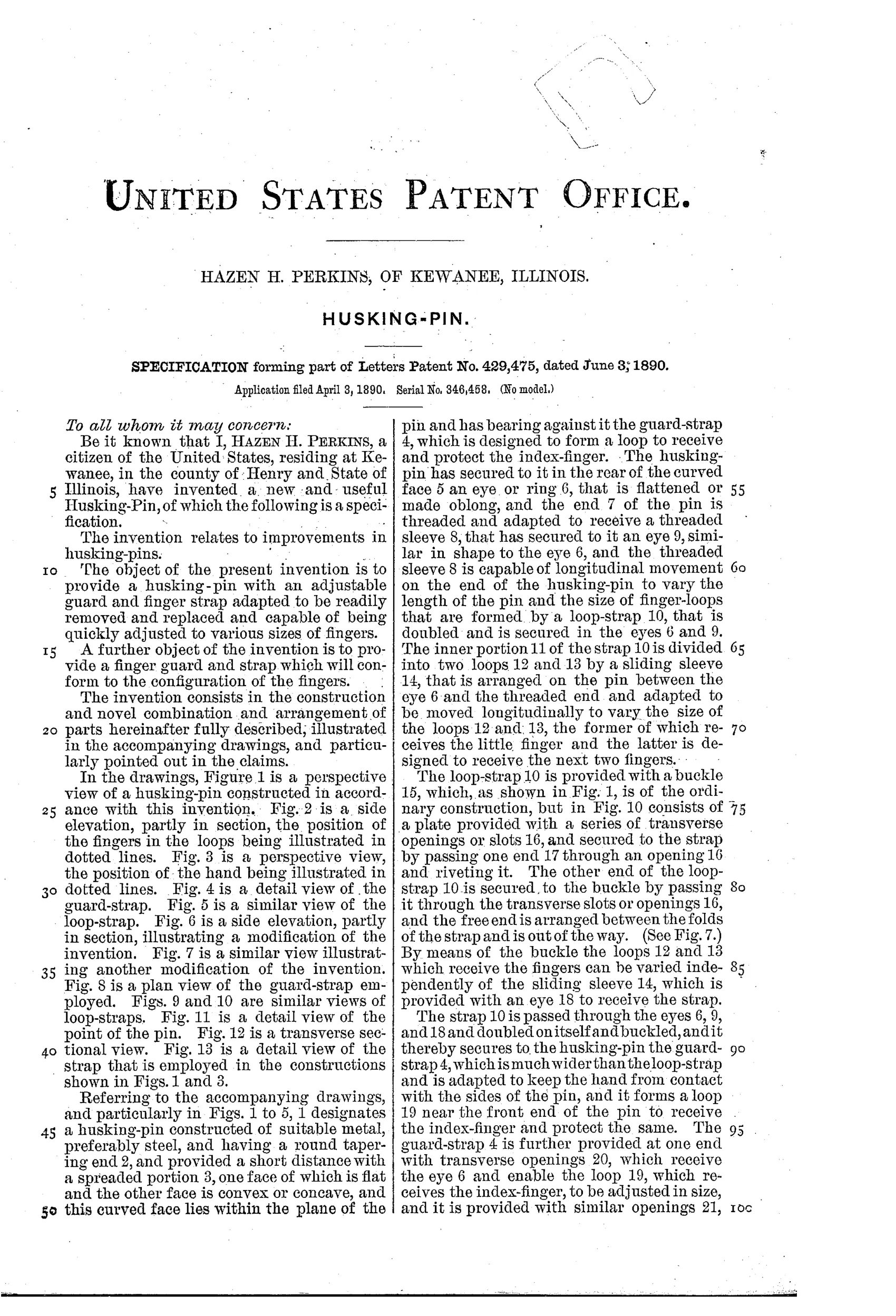
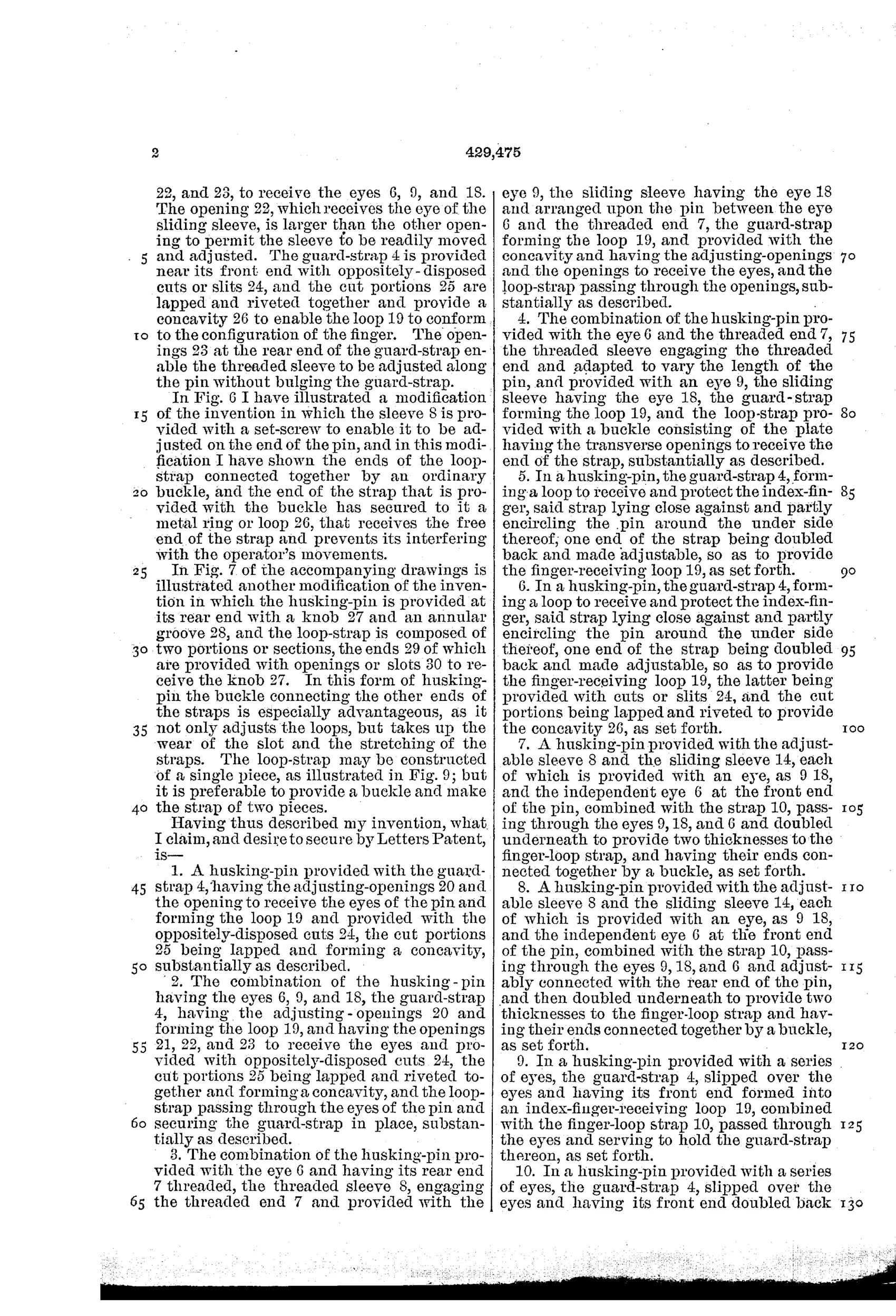
A metal pin with a pointed tapering tip is fitted with a threaded end that receives a longitudinally-adjustable sleeve to vary the pin's effective length. A loop-strap passes through eyes on the pin and a sliding sleeve to form finger loops sized for the little finger and the next two fingers, with a buckle allowing the loops to be tightened or loosened independently. A separate wider guard-strap, secured over the same eyes, forms an index-finger loop and lies against the underside of the pin to shield the hand, with lapped and riveted cut portions forming a concavity that conforms to the finger's shape.
❧ What was claimed
“A husking-pin provided with the guard-strap 4, having the adjusting-openings 20 and the opening to receive the eyes of the pin and forming the loop 19 and provided with the oppositely-disposed cuts 24, the cut portions 25 being lapped and forming a concavity, substantially as described.”
In plain English: The pin includes a guard-strap with adjustable openings that forms a finger loop and has lapped, cut sections forming a curved concavity to fit the finger, as described.
❧ In the inventor’s words
“The object of the present invention is to provide a husking-pin with an adjustable guard and finger strap adapted to be readily removed and replaced and capable of being quickly adjusted to various sizes of fingers.”— Hazen H. Perkins, from the specification
Fate unknown
Husking pins were a mass-market commodity, but I know of no documented example matching this specific adjustable-strap design; a marked specimen would settle it.
❧ More by Hazen H. Perkins
- CORN-HUSKER (1894)
- CORN-HUSKER. (1894)
- CORN-HUSKER. (1894)
- HUSKING-PIN. (1897)
- HUSKING-PIN. (1898)
❧ Commentary
Full disclosure: this is not an apple parer. Perkins of Kewanee, Illinois patented a husking pin — the pointed hand tool a corn husker strapped to the fingers to rip the shuck off an ear. It shares our category's DNA, though: it is a fruit-of-the-field tool from the same patent-office ecosystem, chasing the same prize of shaving seconds off a repetitive kitchen-and-barn motion, thousands of times a day.
What Perkins is actually selling here is fit. The pin itself is ordinary; the invention is in the leather. A threaded sleeve adjusts the pin's working length, a buckled loop-strap forms sized loops for the little finger and the next two, and — the part carrying the key claim — a wider guard-strap with lapped, riveted cuts that pull the flat leather into a concavity cupping the index finger. Fig. 4 shows it plainly: two opposed cuts, the tabs overlapped, so a flat strap becomes a curved cradle without wet-forming. That is a genuinely tidy bit of leatherwork, the sort of detail a man who had husked corn all November would care about.
Husking pins and hooks were made by the million and sold from every hardware counter; most were far simpler than this. Perkins' buckled, multi-strap version reads like a premium variant in a penny-tool market, which is usually a hard sell.
Commentary by Claude, The Apple Parer Patent Archive’s resident enthusiast