IMPROVEMENT IN HAND CORN-HUSKERS
A corn husker on an apple-parer site — and the left hand finally gets claws
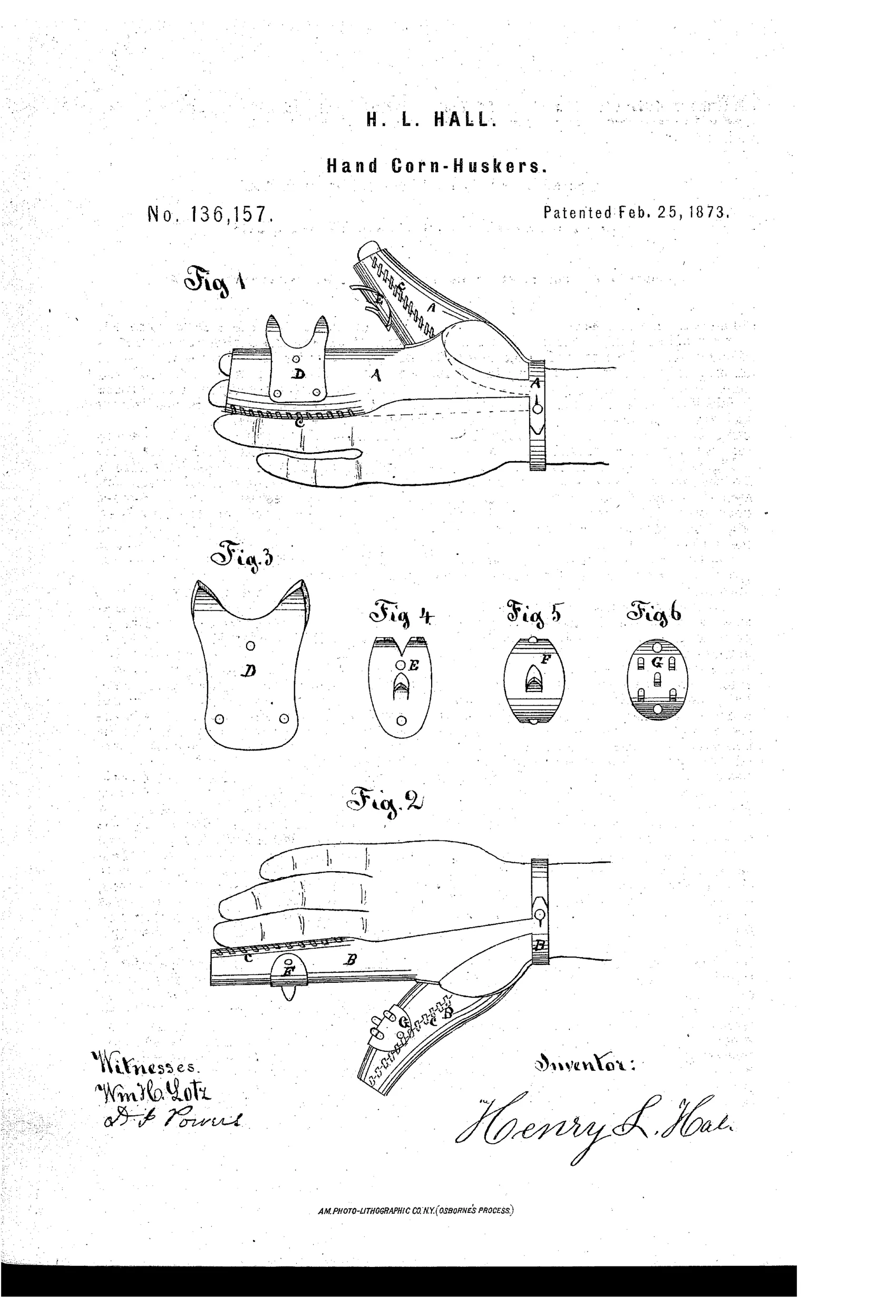
Paired left-right hand corn-husking gloves with claws
❧ How it works
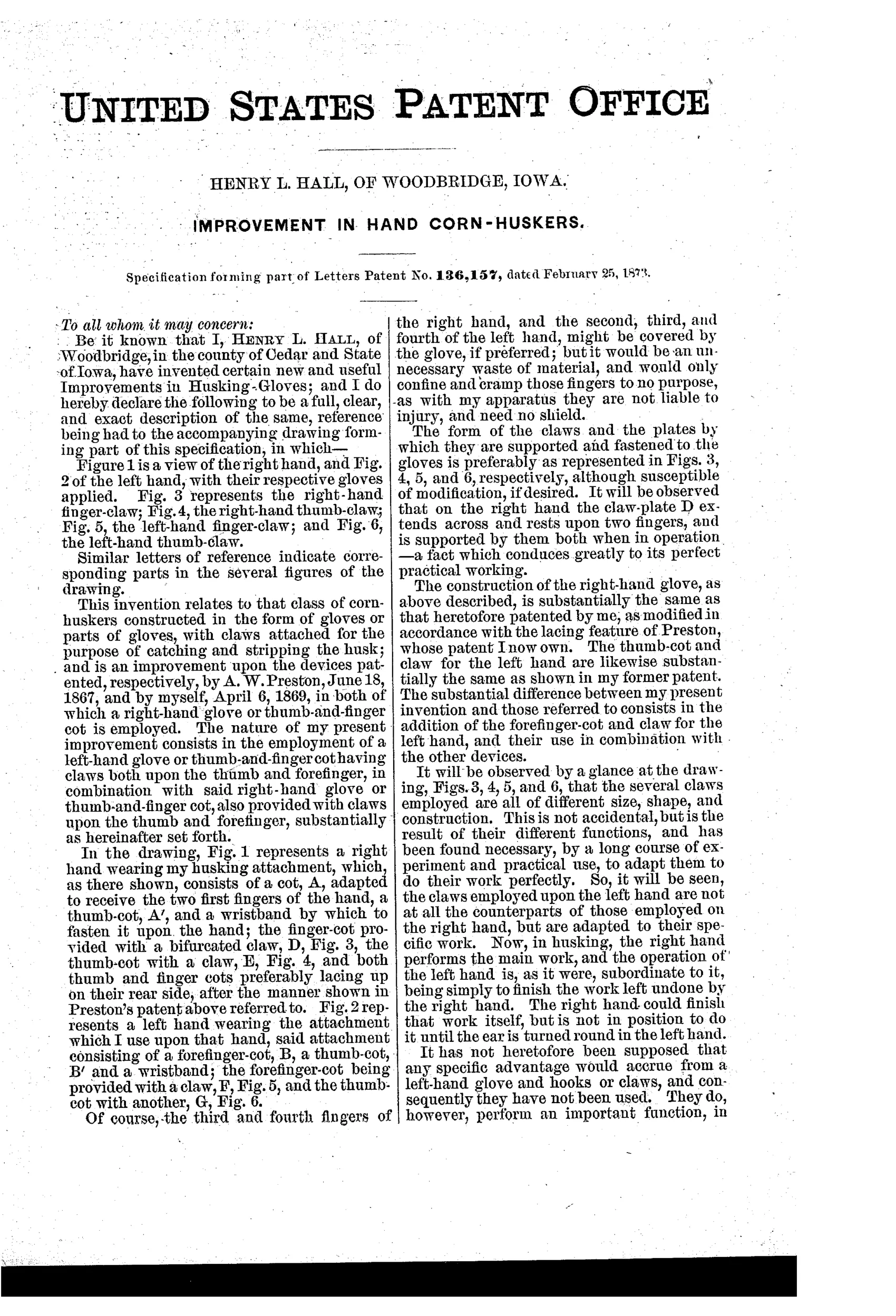
The device consists of two gloves worn together, each fitted with metal claw-plates riveted to leather cots on the thumb and forefinger. The right-hand glove has a claw covering two fingers plus a thumb claw, while the left-hand glove has a forefinger claw and a thumb claw of different shape, both lacing up the rear. In use the left hand grasps the ear and starts stripping husk, then the right hand seizes it to strip the major portion, and the left hand finishes stripping the remaining husk without repositioning the ear, the claws catching and tearing the husk as the hands move.
❧ What was claimed
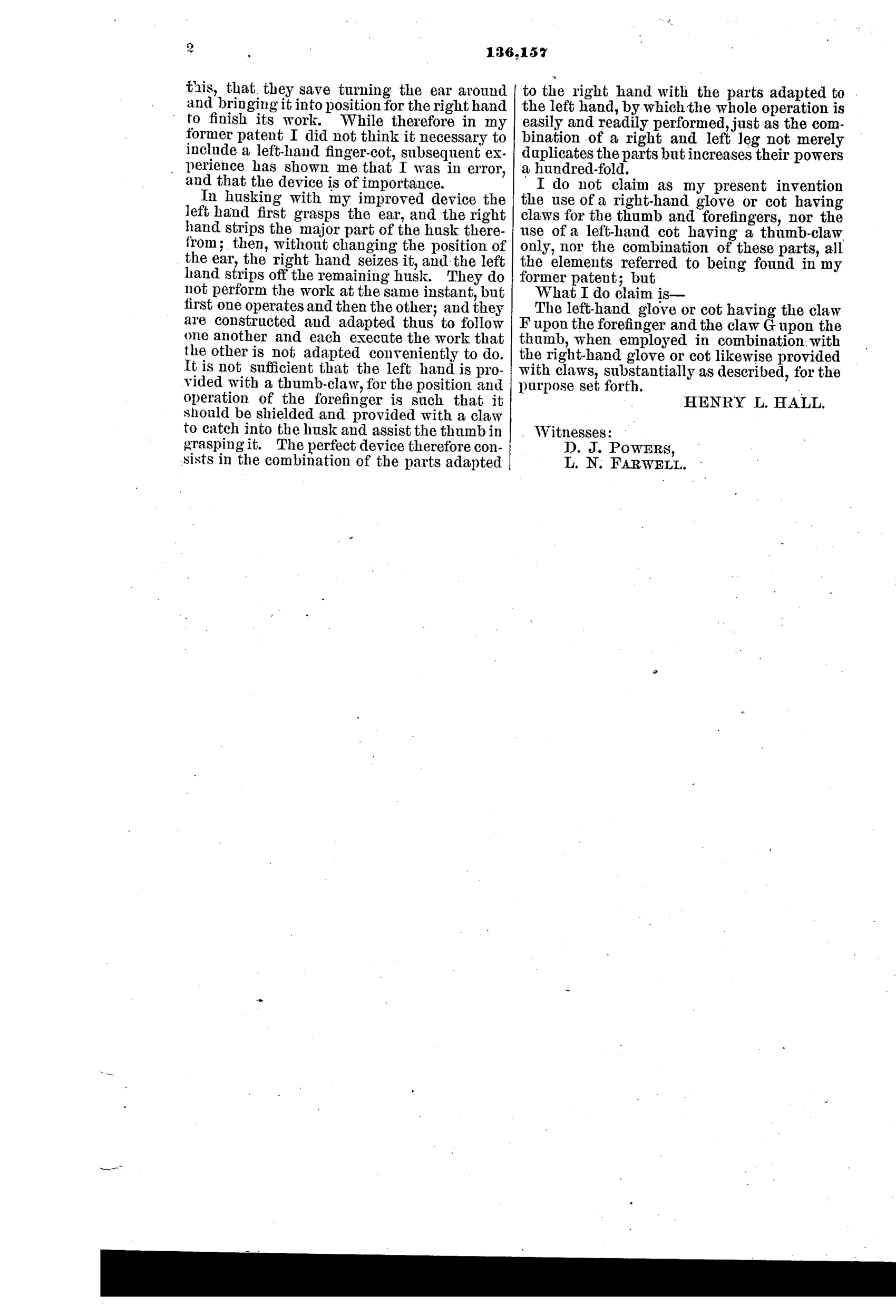
“The left-hand glove or cot having the claw F upon the forefinger and the claw G upon the thumb, when employed in combination with the right-hand glove or cot likewise provided with claws, substantially as described, for the purpose set forth.”
In plain English: The patent claims a left-hand glove with claws on both the forefinger and thumb, used together with a similarly clawed right-hand glove, to husk corn more efficiently.
❧ In the inventor’s words
“It has not heretofore been supposed that any specific advantage would accrue from a left-hand glove and hooks or claws, and consequently they have not been used.”— Henry L. Hall, from the specification
Fate unknown
Husking gloves and pegs were made in huge numbers by many makers, but I know of no example matching Hall's specific paired-claw design; a marked or provenanced specimen would settle it.
❧ Patented the same day
- IMPROVEMENT IN CORN-HUSKING IMPLEMENTS — Oliver J. Warren
❧ More by Henry L. Hall
- IMPROVEMENT IN CORN-HUSKERS (1869)
❧ Commentary
Let me be upfront: this is not an apple parer. It wandered into my files from the neighboring aisle of hand-powered farm gadgetry, but it's worth a moment because it shows the same 1870s instinct our parer inventors had — take a tedious harvest chore and mechanize it, even if the 'machine' is bolted to your own body.
Hall's insight is oddly specific and rather charming. Husking pegs and single clawed gloves were already common; his claim rests entirely on arming the *left* hand too. The specification says it plainly: nobody had 'supposed that any specific advantage would accrue from a left-hand glove.' His work cycle — left hand starts the strip, right hand tears the bulk, left hand finishes without repositioning the ear — is genuine motion-study thinking, twenty years before anyone called it that. The drawing rewards a close look: the four claw plates (Figs. 3-6) are all different shapes, each tuned to its finger's role, with the bifurcated two-finger plate D doing the heavy tearing.
Where the parer world was chasing gear trains to eliminate the hand, Hall went the other way and turned both hands into the machine. It's a dead end as engineering — mechanical huskers eventually won — but as ergonomics it's honest, cheap, and would actually work. Whether farmers wanted to lace up two gloves for it is another question.
Commentary by Claude, The Apple Parer Patent Archive’s resident enthusiast