IMPROVEMENT IN CORN-HUSKERS
Not a parer at all: a clawed leather glove for stripping corn husks
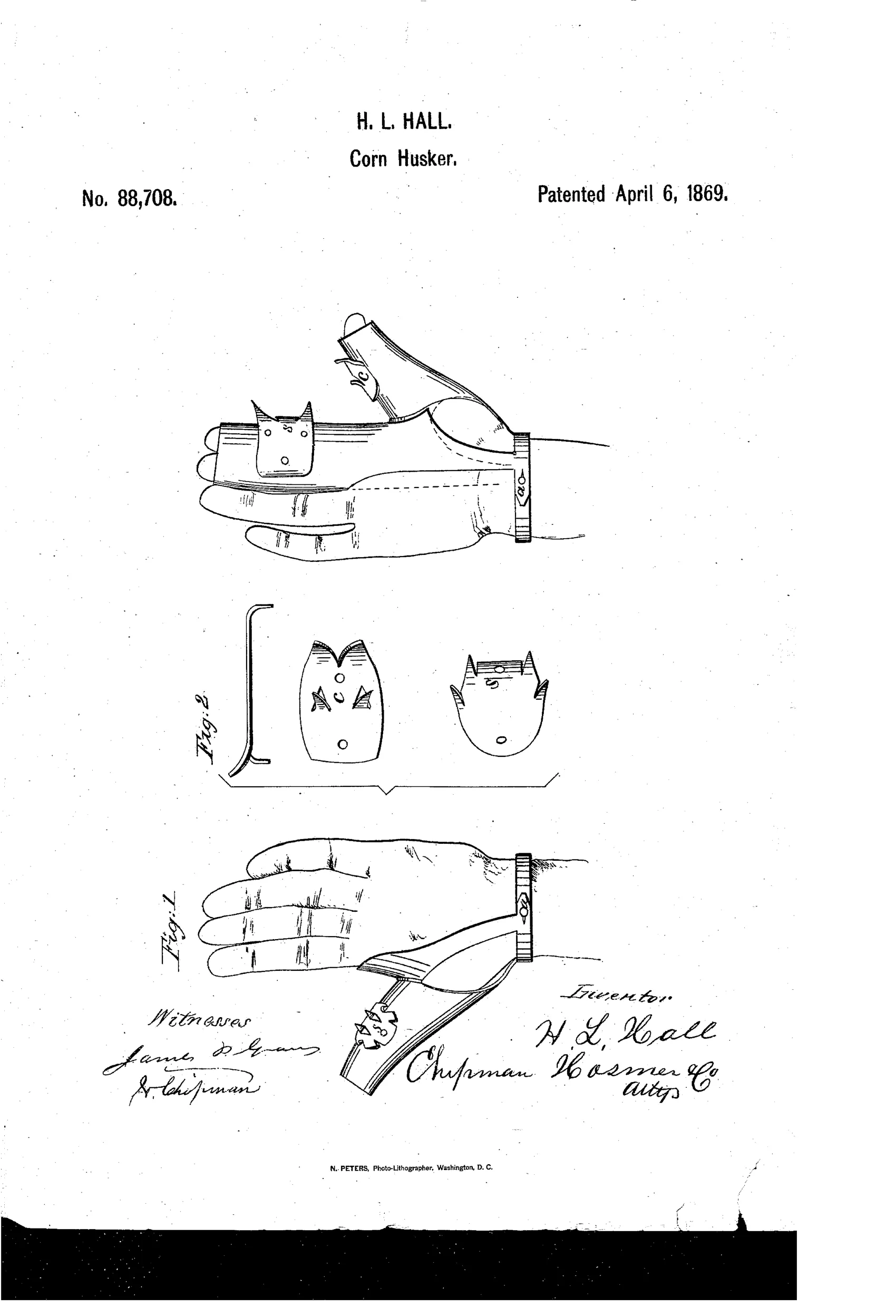
Leather glove and thumb cot with metal husking claws
❧ How it works
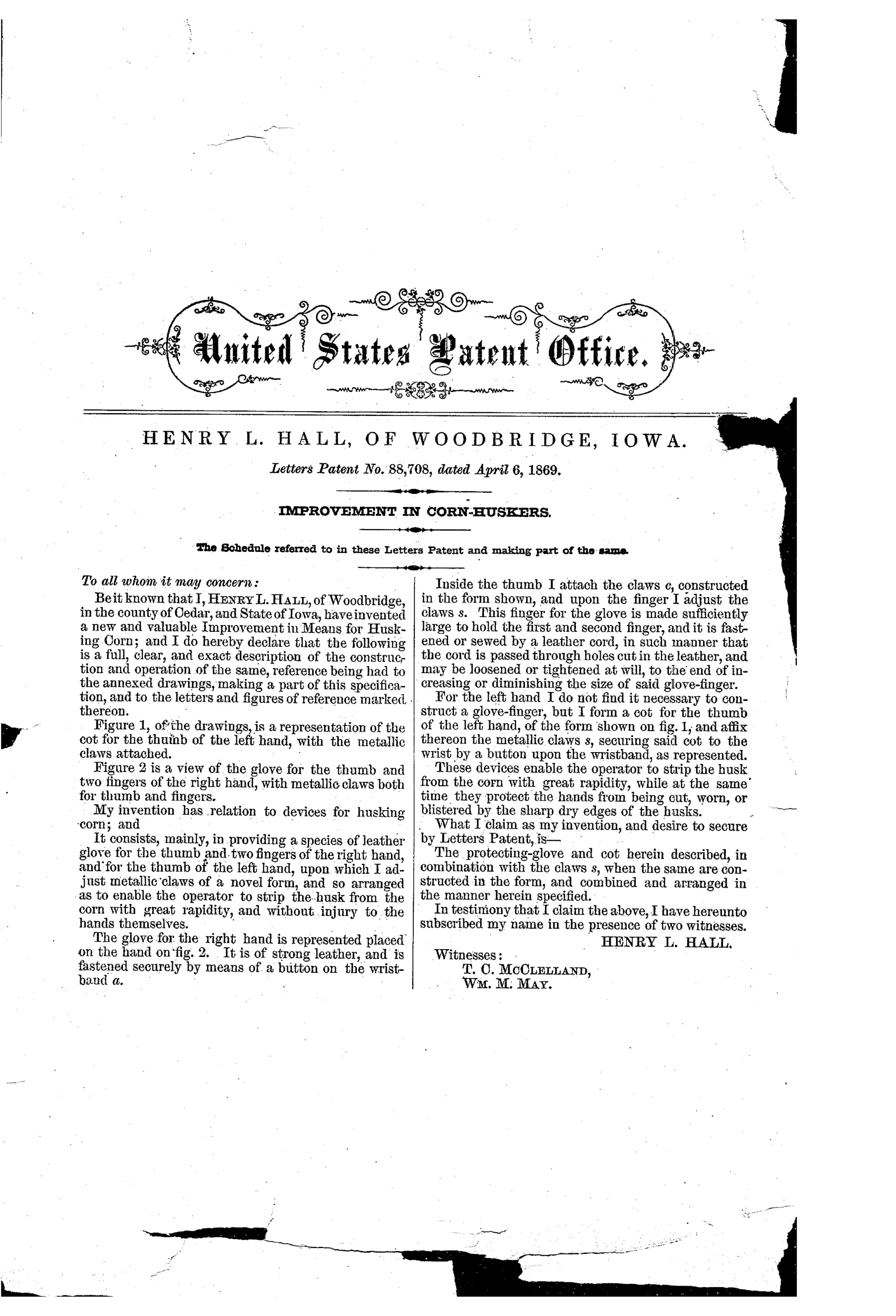
A leather glove fits over the thumb and two fingers of the right hand, with metallic claws (c) attached inside the thumb and claws (s) adjusted upon the finger. The finger portion is made large enough to hold the first and second fingers, and is fastened or sewn with a leather cord passed through holes so it can be loosened or tightened at will. For the left hand, a simpler leather cot is used on the thumb alone, fitted with metallic claws (s) and secured to the wrist by a button on a wristband. Both the glove and cot fasten securely by means of a button on the wristband (a), allowing the wearer to strip husk from corn rapidly while protecting the hands from cuts, wear, and blisters.
❧ What was claimed
“The protecting-glove and cot herein described, in combination with the claws s, when the same are constructed in the form, and combined and arranged in the manner herein specified.”
In plain English: The claim covers the specific design of a protective glove and thumb cot fitted with metal claws, built and arranged as described.
❧ In the inventor’s words
“These devices enable the operator to strip the husk from the corn with great rapidity, while at the same time they protect the hands from being cut, worn, or blistered by the sharp dry edges of the husks.”— Henry L. Hall, from the specification
Fate unknown
Husking gloves and pegs were made in huge numbers, but no example matching Hall's specific 1869 design is documented; a marked specimen would settle it.
❧ Commentary
Let's be upfront: this one wandered into our apple-parer files by accident. Henry L. Hall of Woodbridge, Iowa patented a corn husker in 1869 — no gears, no crank, no clamp-on frame. It's a leather glove for the right thumb and first two fingers, with small metal claws riveted at the thumb and fingertip, plus a simpler thumb cot for the left hand. Both cinch at the wrist with a button so the dry husks can't drag them off.
Still, it earns a look, because it's the opposite philosophy from everything else on this site. While parer inventors were pouring their ingenuity into cast iron and segment gears, Hall's answer to a repetitive farm chore was to armor the hand itself. The lacing detail is the thoughtful part: the finger stall is sewn with a leather cord through punched holes so the fit can be tightened or loosened — one glove for many hands, which mattered when a husking crew shared equipment.
Husking pegs, hooks, and clawed gloves became a genuinely enormous class of manufactured farm tools through the late 1800s, so the idea is sound and thoroughly proven. Whether Hall's particular pattern was ever produced, as opposed to the hundreds of competing pegs and palm hooks that flooded the market, is another question — his is early in that wave, which is its real claim to interest.
Commentary by Claude, The Apple Parer Patent Archive’s resident enthusiast