IMPROVEMENT IN CORN-HUSKING IMPLEMENTS
A corn husker wanders into our apple orchard — and it's worth the detour
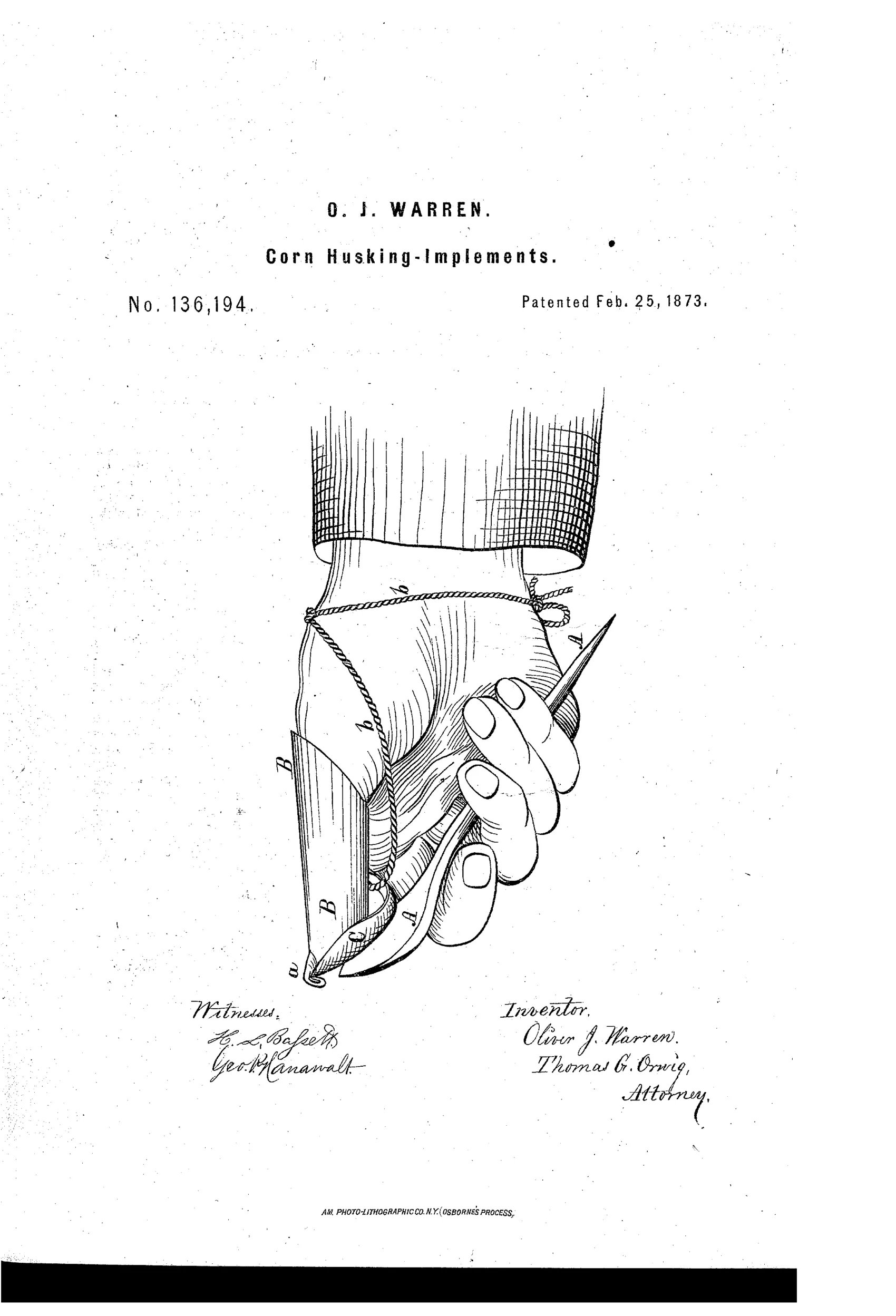
Two-part hand-worn corn husking pin device
❧ How it works
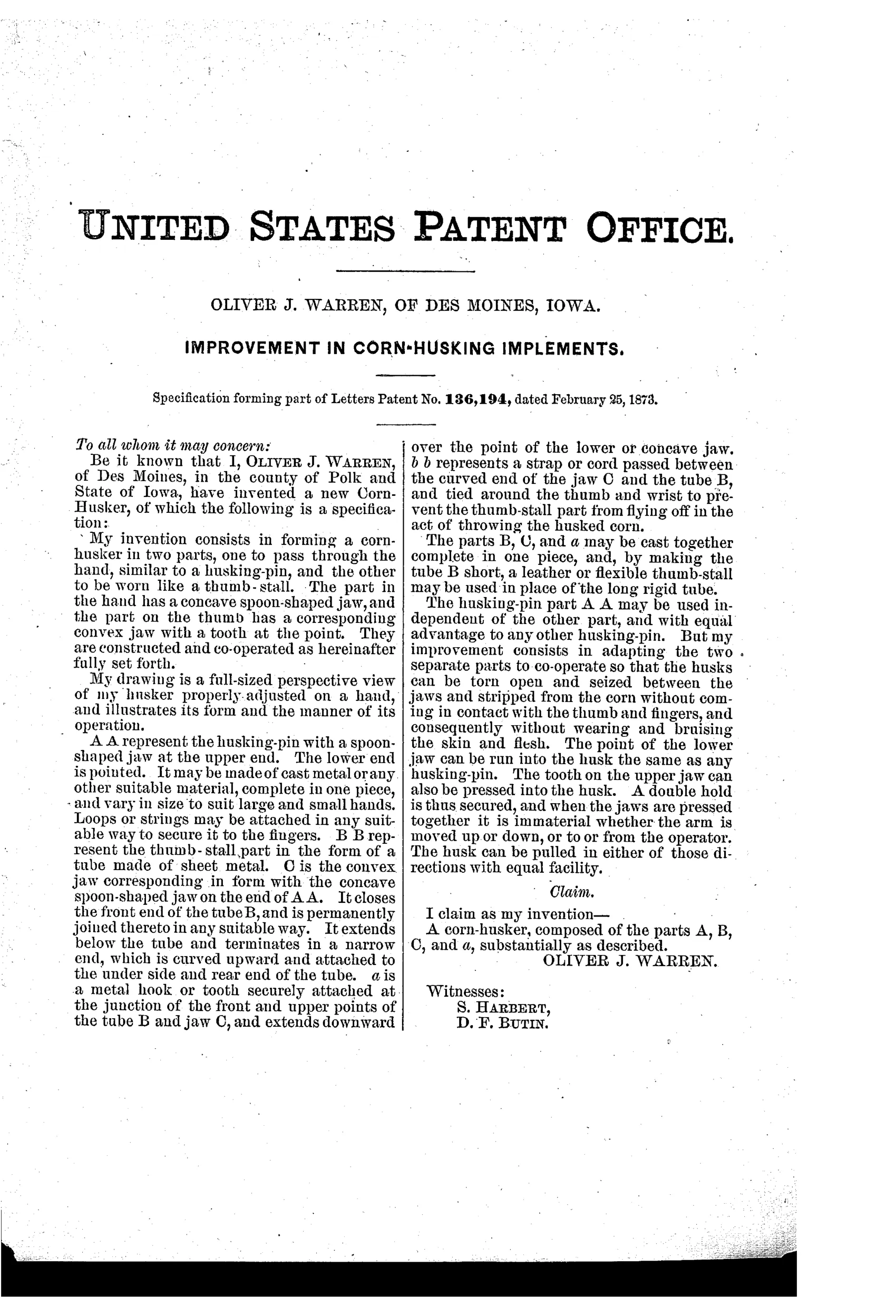
A pointed husking pin (A) is held in the hand with a spoon-shaped concave jaw at its upper end. A separate metal tube (B) worn like a thumb-stall carries a corresponding convex jaw (C) with a hooked tooth (a) at its tip. A cord or strap (b b) ties the thumb-stall to the wrist and hand to keep it from flying off during the husking motion. When the two jaws are pressed together, the husk is torn open and gripped between them and stripped from the ear without the husk contacting the bare thumb and fingers, regardless of which direction the arm moves.
❧ What was claimed
“A corn-husker, composed of the parts A, B, C, and a, substantially as described.”
In plain English: The invention claims a corn husker made of the pin part A, the thumb-stall tube B, the convex jaw C, and the hook tooth a, all working together as described.
❧ In the inventor’s words
“A double hold is thus secured, and when the jaws are pressed together it is immaterial whether the arm is moved up or down, or to or from the operator.”— Oliver J. Warren, from the specification
Fate unknown
Husking pegs survive by the thousand, but I know of no documented example of this two-jaw Warren design; a marked specimen would settle it.
❧ Patented the same day
- IMPROVEMENT IN HAND CORN-HUSKERS — Henry L. Hall
❧ Commentary
First, honesty: this is not an apple parer. Warren's patent is a corn-husking implement, and it landed in our files the way stray hand tools sometimes do — it shares the 1870s impulse to mechanize a repetitive kitchen-and-farm chore, but there's not a gear in sight. Since it's here, let's read it properly.
Husking pegs — a pointed pin lashed to the hand to rip open the husk — were common by 1873. Warren's twist is making it a two-jaw gripper. The pin held in the fingers carries a spoon-shaped concave jaw; a separate thumb-stall tube carries a matching convex jaw with a little hook tooth at the tip. Pinch thumb against fingers and the husk is torn, caught, and stripped between metal surfaces instead of bare skin. His own line says why: with a double hold, 'it is immaterial whether the arm is moved up or down, or to or from the operator.' Anyone who husked a wagonload by hand knows what raw thumbs feel like by November; this is ergonomics before the word existed.
The cord tying the stall to the wrist is the tell of a practical man — he knows the snap of the husking stroke will fling loose hardware into the stubble. Whether farmers wanted two pieces to keep track of instead of one simple peg is another question, and probably the design's weak point.
Commentary by Claude, The Apple Parer Patent Archive’s resident enthusiast