CORN-HUSKER
A Nebraska husking peg wanders into the parer files — hand tool, no gears
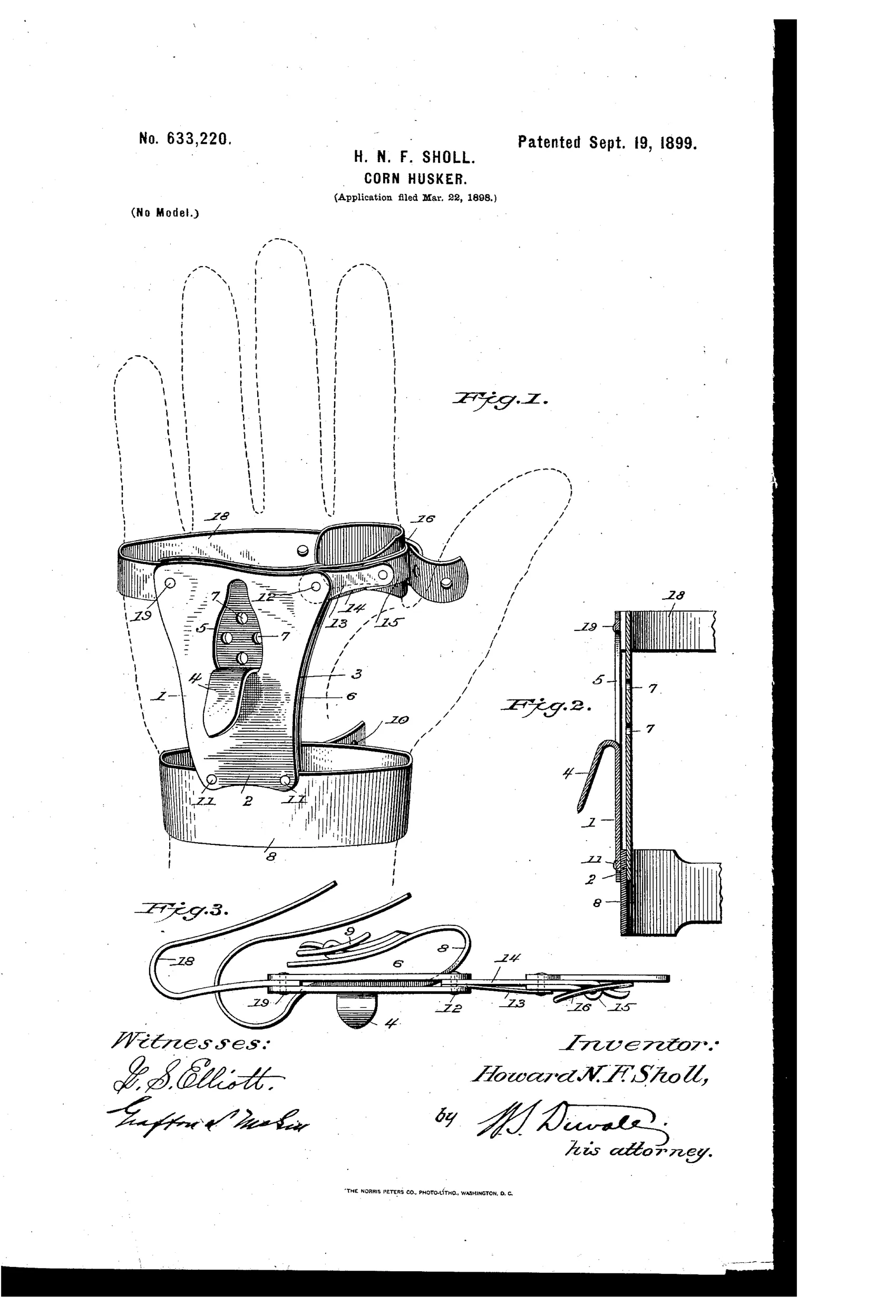
A leather-and-metal palm-strapped corn-husking peg glove
❧ How it works
A triangular case-hardened steel palm-plate is strapped into the hand with a wrist-strap and buckle, positioning it below the fingers where husking pressure is greatest. A triangular tongue is struck up from the plate and bent rearwardly to form a rigid husking-peg, leaving a ventilating opening beneath it. A perforated leather pad is riveted behind the plate to cushion the palm and allow air through the opening, while a pivoted metal link and buckle between thumb and index finger adjust the fit to different hand widths. The operator hooks the peg into the husk and draws the hand inward to tear the husk from the ear.
❧ What was claimed
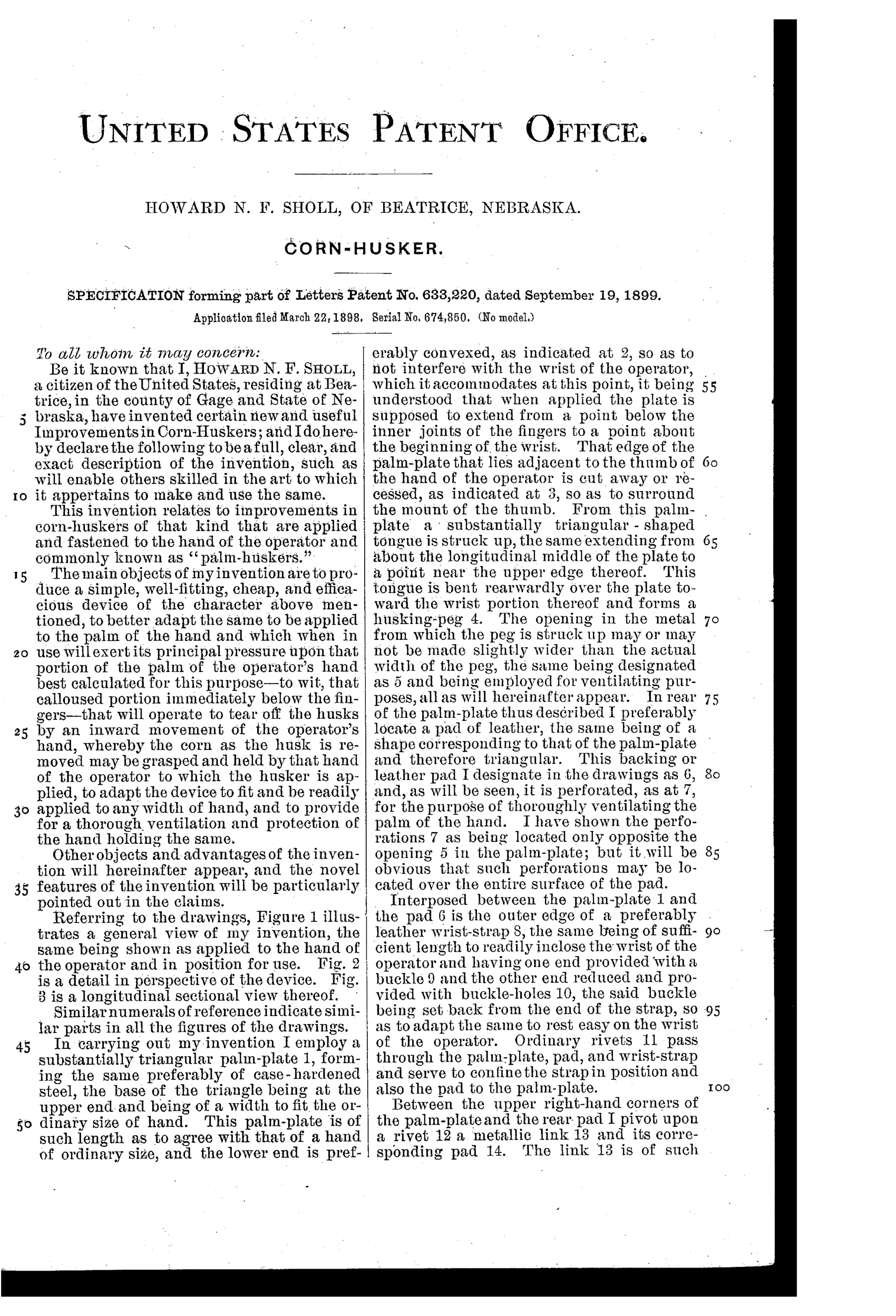
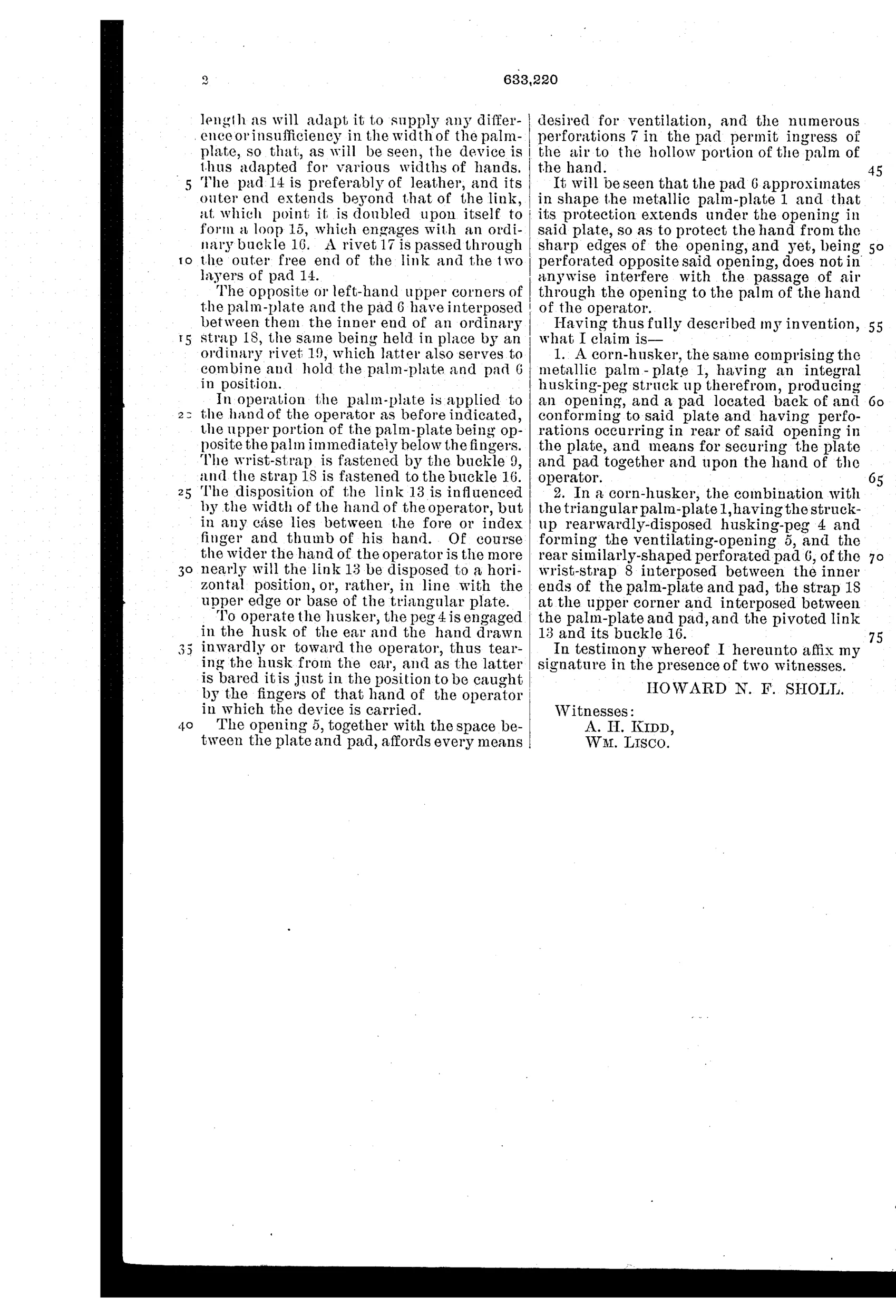
“A corn-husker, the same comprising the metallic palm-plate 1, having an integral husking-peg struck up therefrom, producing an opening, and a pad located back of and conforming to said plate and having perforations occurring in rear of said opening in the plate, and means for securing the plate and pad together and upon the hand of the operator.”
In plain English: The device is a metal palm-plate with a built-in husking peg bent up from it, backed by a matching perforated pad, all strapped onto the hand.
❧ In the inventor’s words
“To operate the husker, the peg 4 is engaged in the husk of the ear and the hand drawn inwardly or toward the operator, thus tearing the husk from the ear, and as the latter is bared it is just in the position to be caught by the fingers of that hand of the operator in which the device is carried.”— Howard N. F. Sholl, from the specification
Fate unknown
Palm huskers were manufactured in huge numbers, but I know of no example matching this specific struck-up-peg design; a marked specimen or trade-catalog listing would settle it.
❧ Patented the same day
- CORN HUSKER — John J. McDonald
❧ Commentary
Let me be upfront: this is not an apple parer. It's a corn husker, and how it landed in my stack I can't say — but since it's here, it deserves a fair reading, because it's actually a tidy little piece of thinking about the oldest problem in hand tools: how to put a blade edge exactly where the work happens without asking the hand to grip anything.
Sholl's move is economy of material. The husking peg isn't a separate piece riveted on — it's struck up from the triangular palm-plate itself, a tongue sheared and bent rearward. That single operation gives him three things at once: the peg, a ventilation hole where the tongue used to be, and one less joint to fail under the thousands of tearing strokes a husker makes in a day. The perforated leather pad behind the plate lines up with that hole so the palm can breathe. The pivoted link and buckle between thumb and forefinger is the fitting detail — hands vary, and a palm husker that shifts under load is worse than bare fingers.
Palm huskers were a genuinely crowded field in the 1890s Corn Belt, and thousands of variants were patented; most farmhands bought whatever the hardware store carried. Whether Sholl's particular struck-up-peg version was ever stamped out in Beatrice or anywhere else, I don't know — and it's a question for the farm-tool collectors, not the parer crowd.
Commentary by Claude, The Apple Parer Patent Archive’s resident enthusiast