VEGETABLE PARER AND CORER.
No gears at all: a pocket parer-corer from the golden age of cranks
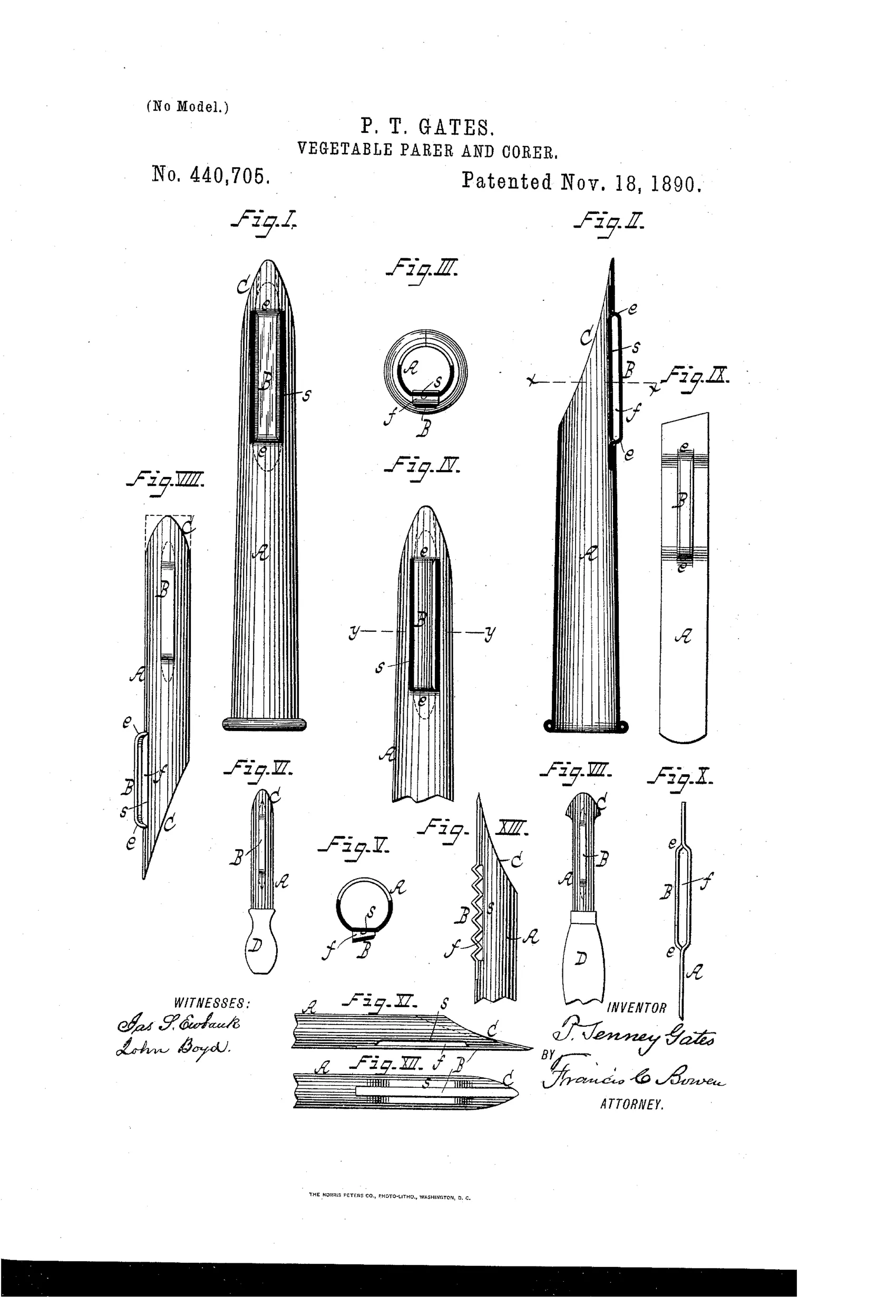
Combined hand-held vegetable parer and corer tool
❧ How it works
A tubular or flat metal stock is cut obliquely at one end to form a scoop-like corer, with the tapered end allowing cut cores to escape through the tube. A flat knife-blade is bent at both ends and joined to the stock, raised parallel to it, leaving an oblong opening for parings to escape without clogging. The stock may include a flattened transverse recess opposite the blade to enlarge this paring-escape opening. Both edges of the blade may be sharpened for right- or left-handed use, and the blade can be angled or corrugated in various embodiments.
❧ What was claimed
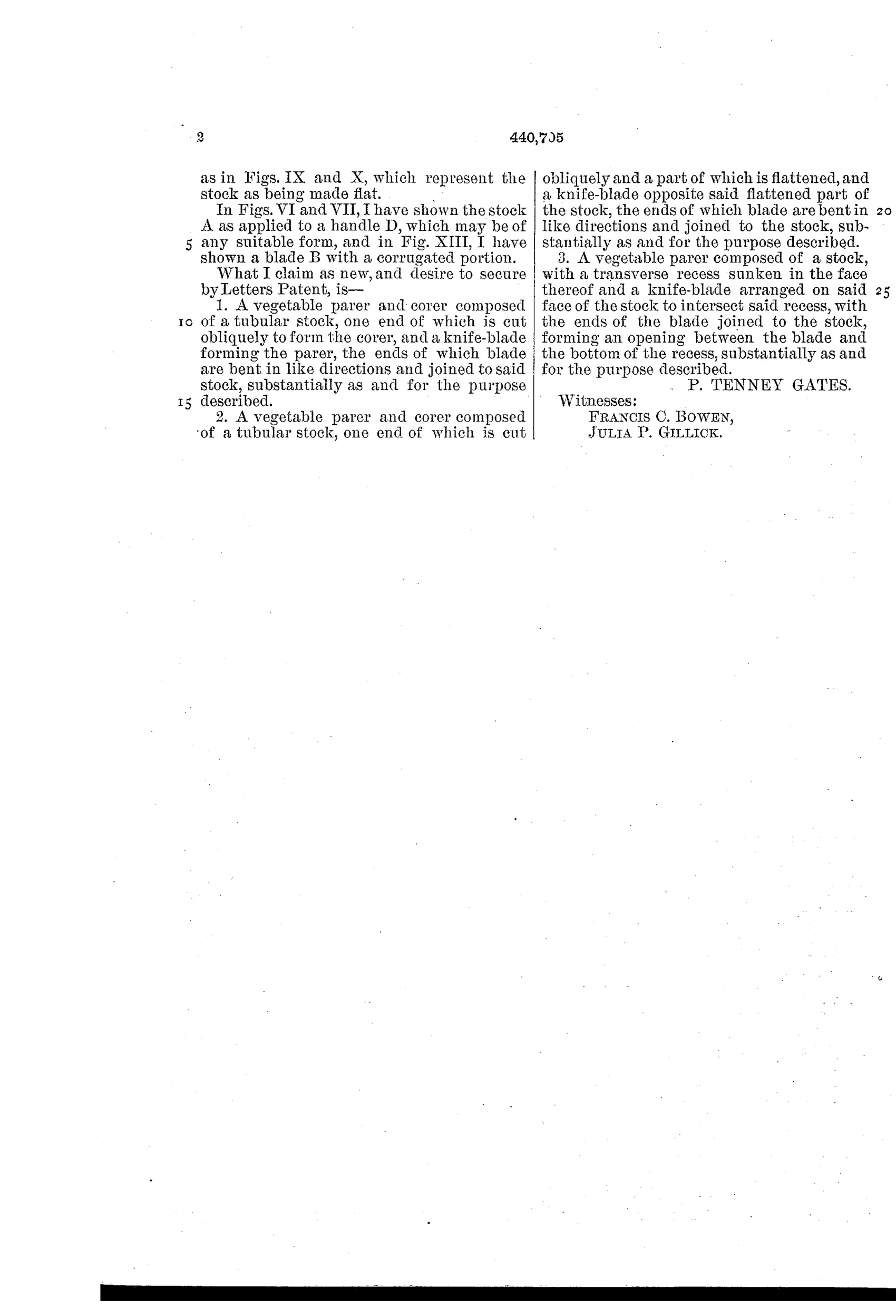
“1. A vegetable parer and corer composed of a tubular stock, one end of which is cut obliquely to form the corer, and a knife-blade forming the parer, the ends of which blade are bent in like directions and joined to said stock, substantially as and for the purpose described.”
In plain English: The tool combines a tube cut at an angle to core the vegetable with a bent knife blade attached to the same tube to pare it.
❧ In the inventor’s words
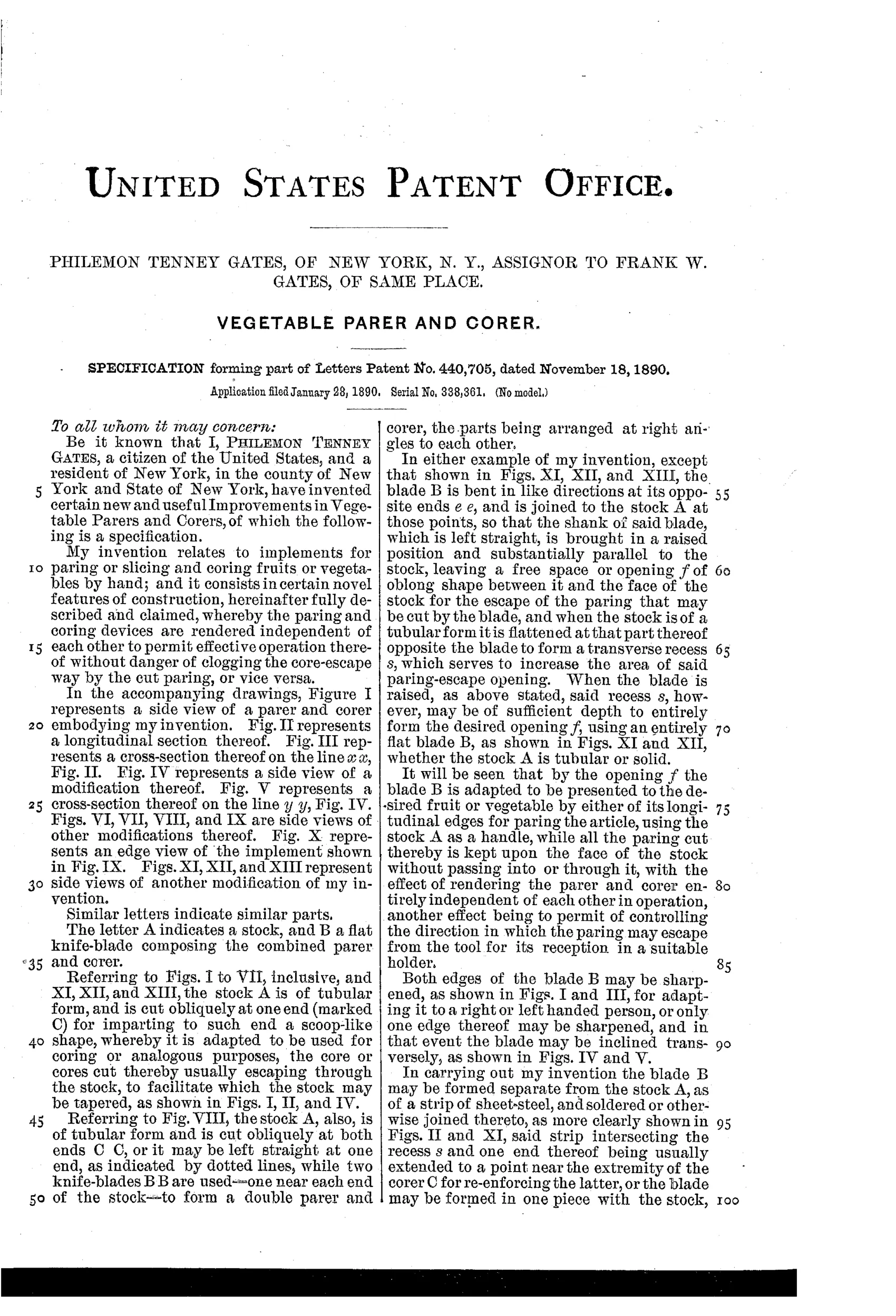
“My invention relates to implements for paring or slicing and coring fruits or vegetables by hand; and it consists in certain novel features of construction, hereinafter fully described and claimed, whereby the paring and coring devices are rendered independent of each other to permit effective operation thereof without danger of clogging the core-escape way by the cut paring, or vice versa.”— Philemon Tenney Gates, from the specification
Fate unknown
Simple enough to have been stamped out cheaply, but no marked example tied to this patent is documented; a specimen bearing the patent date would settle it.
❧ More by Philemon Tenney Gates
- PARER, SLICER, AND CORER. (1886)
❧ Commentary
While the rest of the field was piling segment gears onto cast-iron clamps, Philemon Gates went the other way entirely: a single piece of tube, cut on the bias at one end to make a corer, with a bent knife blade sprung along its side to make a parer. The whole invention is essentially two cuts and a bend. The oblique end scoops the core, which escapes back through the tube instead of jamming; the blade stands off the stock on its bent ends, leaving an open slot so parings curl away freely. Gates's stated obsession — keeping the coring channel and the paring channel from clogging each other — is the real substance of the patent.
The drawing sheet is worth a slow look. Thirteen figures show him working every variation: flattened recesses opposite the blade to widen the escape slot, double-edged blades for left- or right-handed users, a corrugated edge (Fig. XIII, presumably for decorative or gripping cuts), and versions with turned wooden handles. That double-edged detail is a genuinely thoughtful touch you rarely see claimed in this era.
Would it work? Almost certainly — this is the ancestor of the fixed-blade paring gadgets that flooded kitchens in the twentieth century. Within the crank-and-fork story it's a dead end, but as a cheap hand tool it points where the mass market actually went.
Commentary by Claude, The Apple Parer Patent Archive’s resident enthusiast