APPLE CORER, PARER, AND SLICER.
No gears, no crank: a pocket-sized answer to the cast-iron arms race
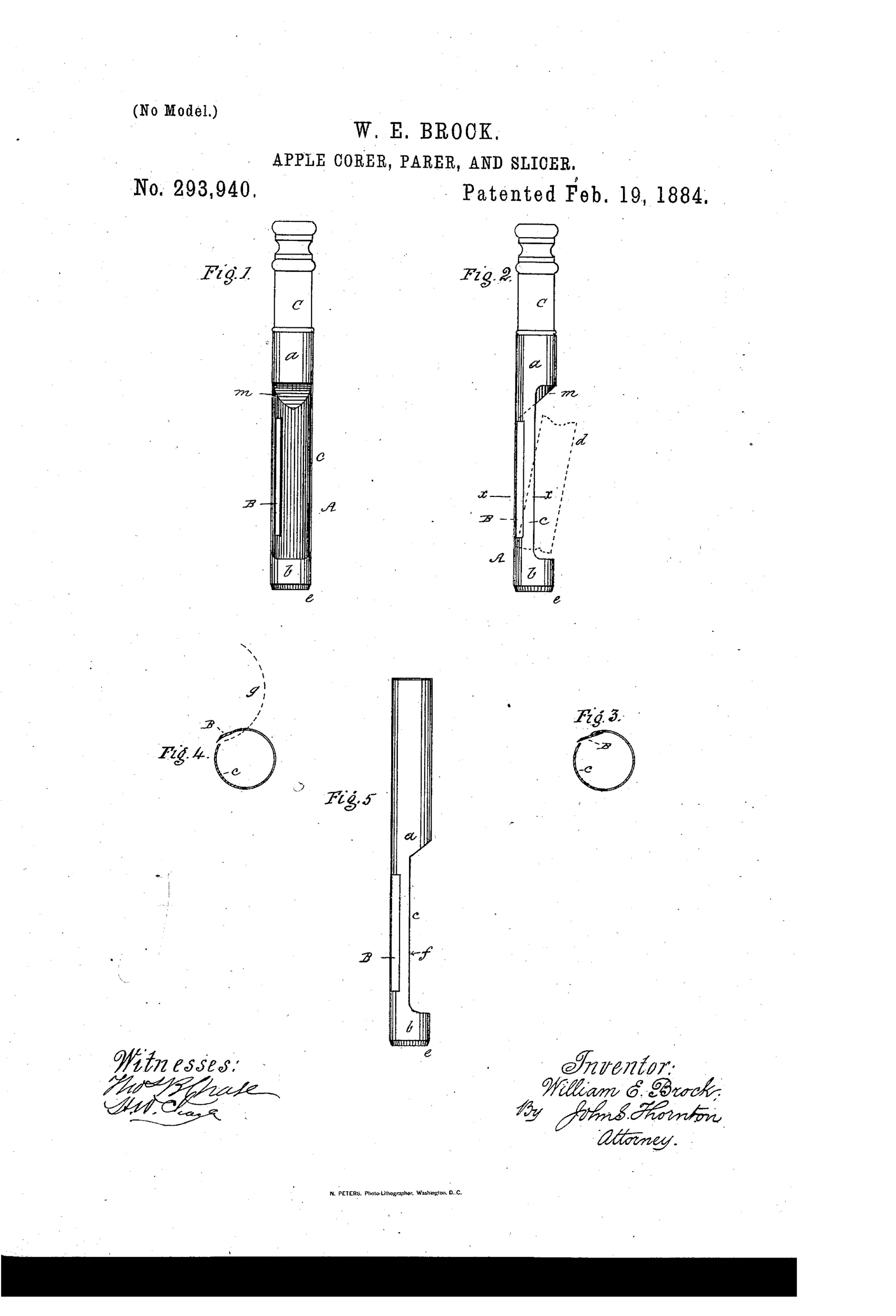
Hand-held tubular tool for coring, paring, slicing apples
❧ How it works
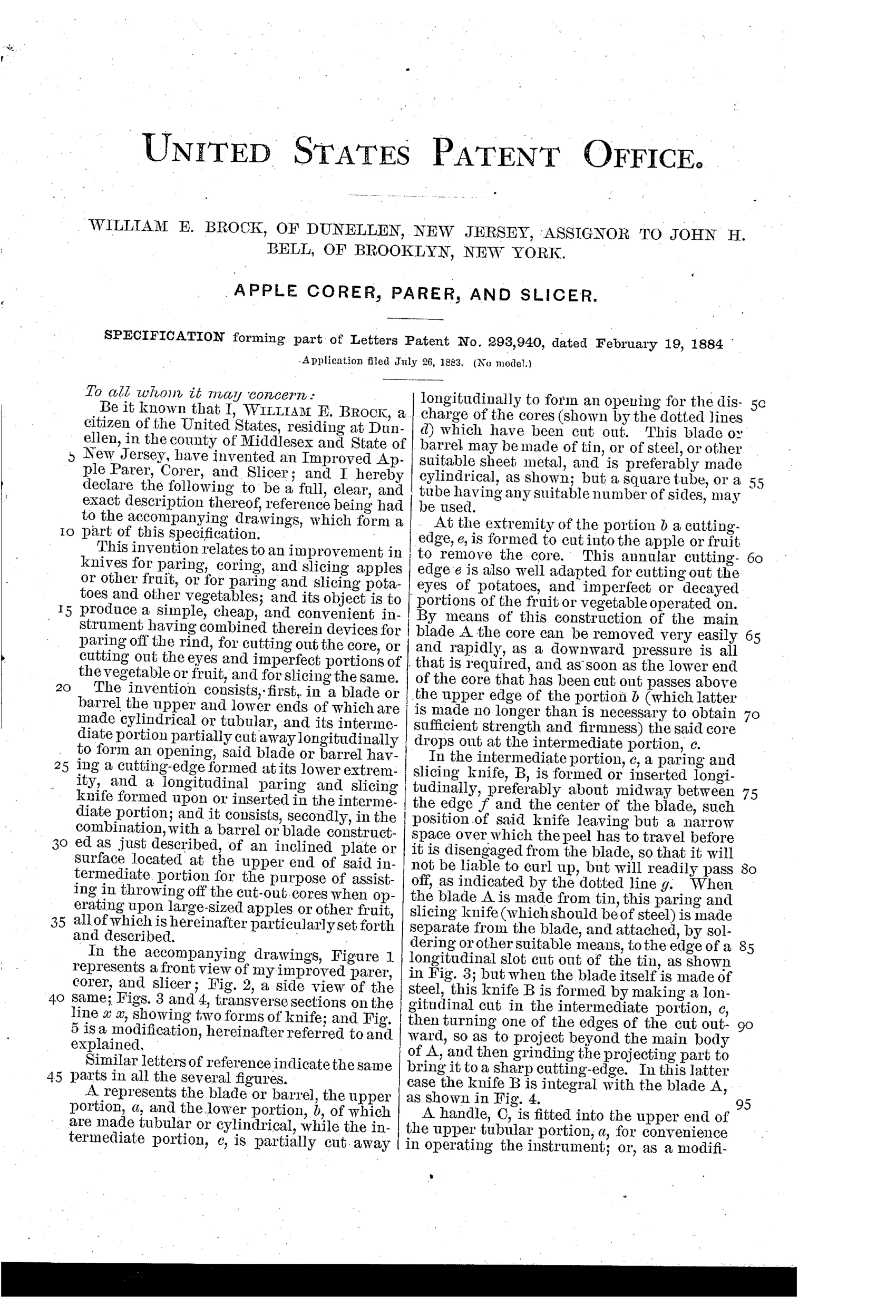
A tubular blade or barrel has cylindrical upper and lower ends with an intermediate portion cut away to form an open slot. A cutting edge at the lower tip is pushed downward into the fruit to core it, while a longitudinal paring and slicing knife set into the open portion pares off the rind as the tool is worked around the fruit. An inclined plate or surface at the top of the open slot helps push off cut-out cores from larger fruit. The knife may be a separate steel strip soldered to a tin blade or an integral turned-up edge when the blade itself is steel.
❧ What was claimed
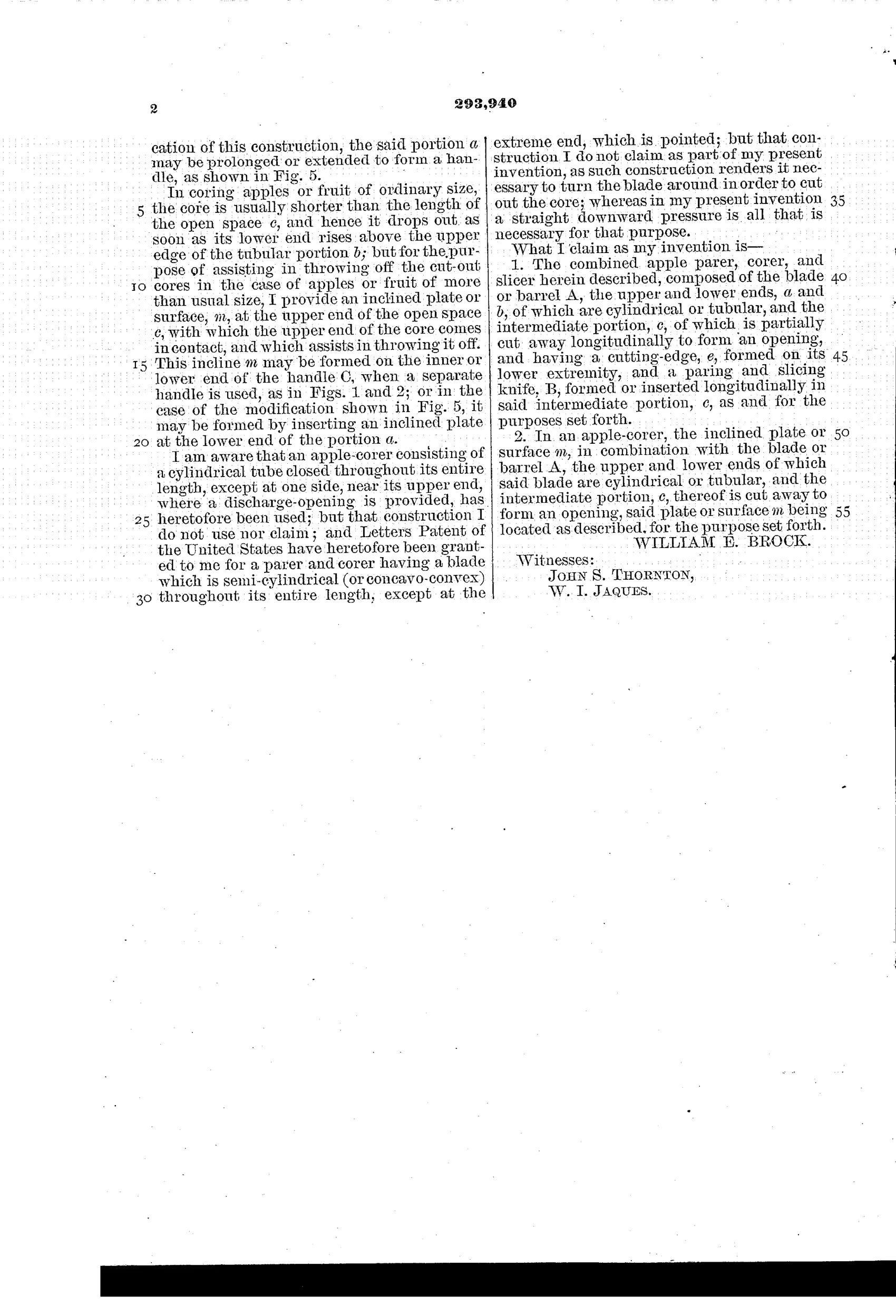
“The combined apple parer, corer, and slicer herein described, composed of the blade or barrel A, the upper and lower ends, a and b, of which are cylindrical or tubular, and the intermediate portion, c, of which is partially cut away longitudinally to form an opening, and having a cutting-edge, e, formed on its lower extremity, and a paring and slicing knife, B, formed or inserted longitudinally in said intermediate portion, c, as and for the purposes set forth.”
In plain English: A tubular apple tool with cylindrical ends and a cut-away middle section, having a cutting edge at the bottom for coring and a built-in paring/slicing knife along the open middle portion.
❧ In the inventor’s words
“By means of this construction of the main blade A the core can be removed very easily and rapidly, as a downward pressure is all that is required.”— William E. Brock, from the specification
Fate unknown
Tubular corers of this general kind were made widely, but no marked example of Brock's specific slotted parer-slicer design is documented in collector references like DATAMP; a surviving specimen would settle it.
❧ Commentary
In 1884 the apple parer world was deep in its gear-segment golden age — Reading, Goodell, and Lockey & Howland were competing over which clamp-on machine could pare, push off, and reset in a single crank turn. Brock walks in the opposite direction entirely. His patent is a hand tool: a tubular blade with a turned wooden handle, a sharpened lower rim for pushing straight down through the core, and a longitudinal knife set into a cut-away middle section for paring and slicing the flesh as you work the tool around the fruit.
The details are more thoughtful than the drawing's simplicity suggests. Fig. 2 shows the side discharge opening d and the inclined surface m at the top of the slot, which ejects the plug from a large apple instead of letting it jam the barrel — a real annoyance with plain tube corers. Figs. 3 and 4 quietly offer two manufacturing paths: a steel strip soldered into a cheap tin barrel, or an all-steel blade with a turned-up integral edge. That's an inventor thinking about who will actually stamp this thing out.
As a coring principle it clearly works — tubular push corers became a permanent kitchen fixture. The three-in-one paring claim is more optimistic; paring an apple by dragging a slot-mounted knife around it takes more skill than a plain knife. A modest, practical dead end beside the geared machines, but an honest one.
Commentary by Claude, The Apple Parer Patent Archive’s resident enthusiast