IMPROVEMENT IN APPLE PARERS AND CORERS
The slotted-blade depth gauge, seventy years before the Swiss peeler made it famous
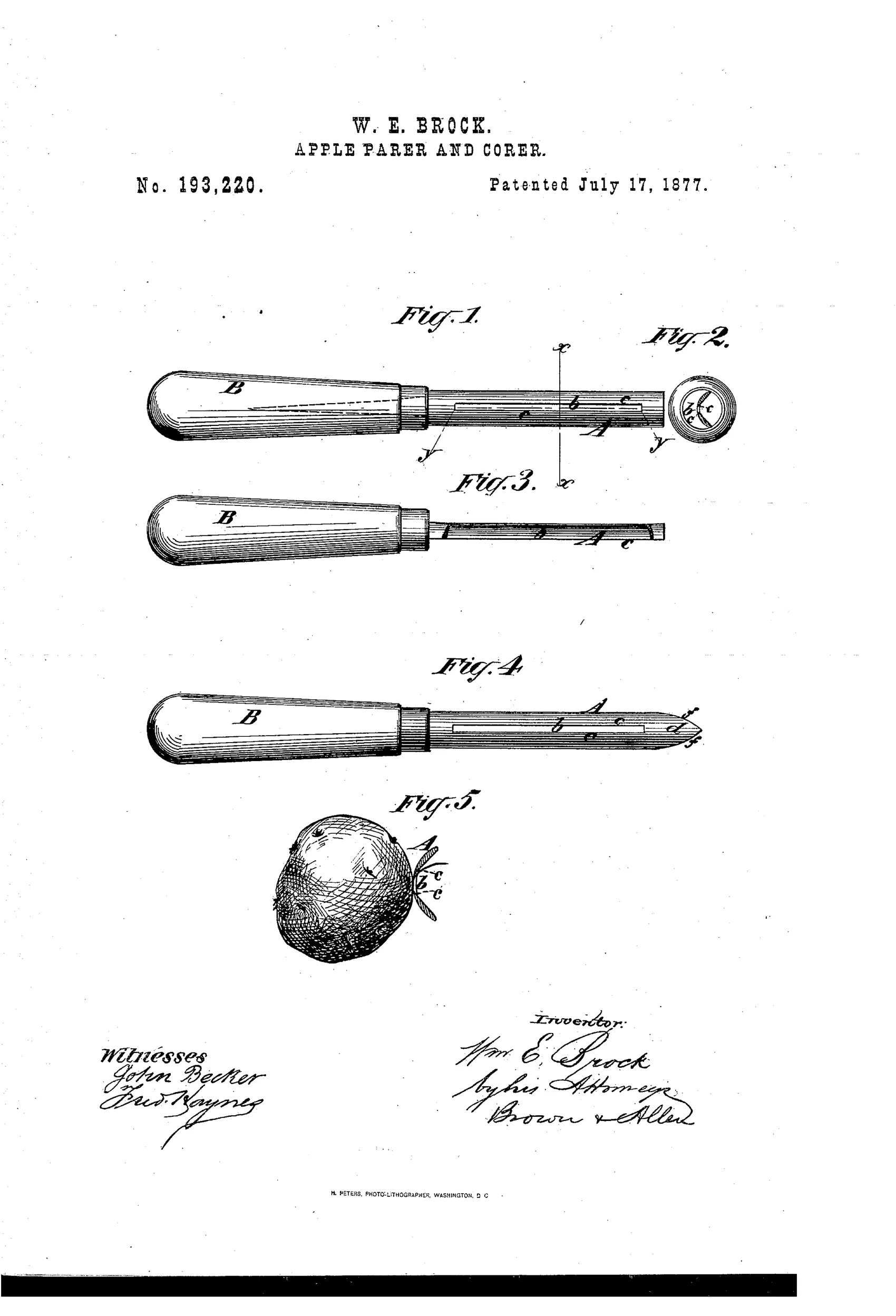
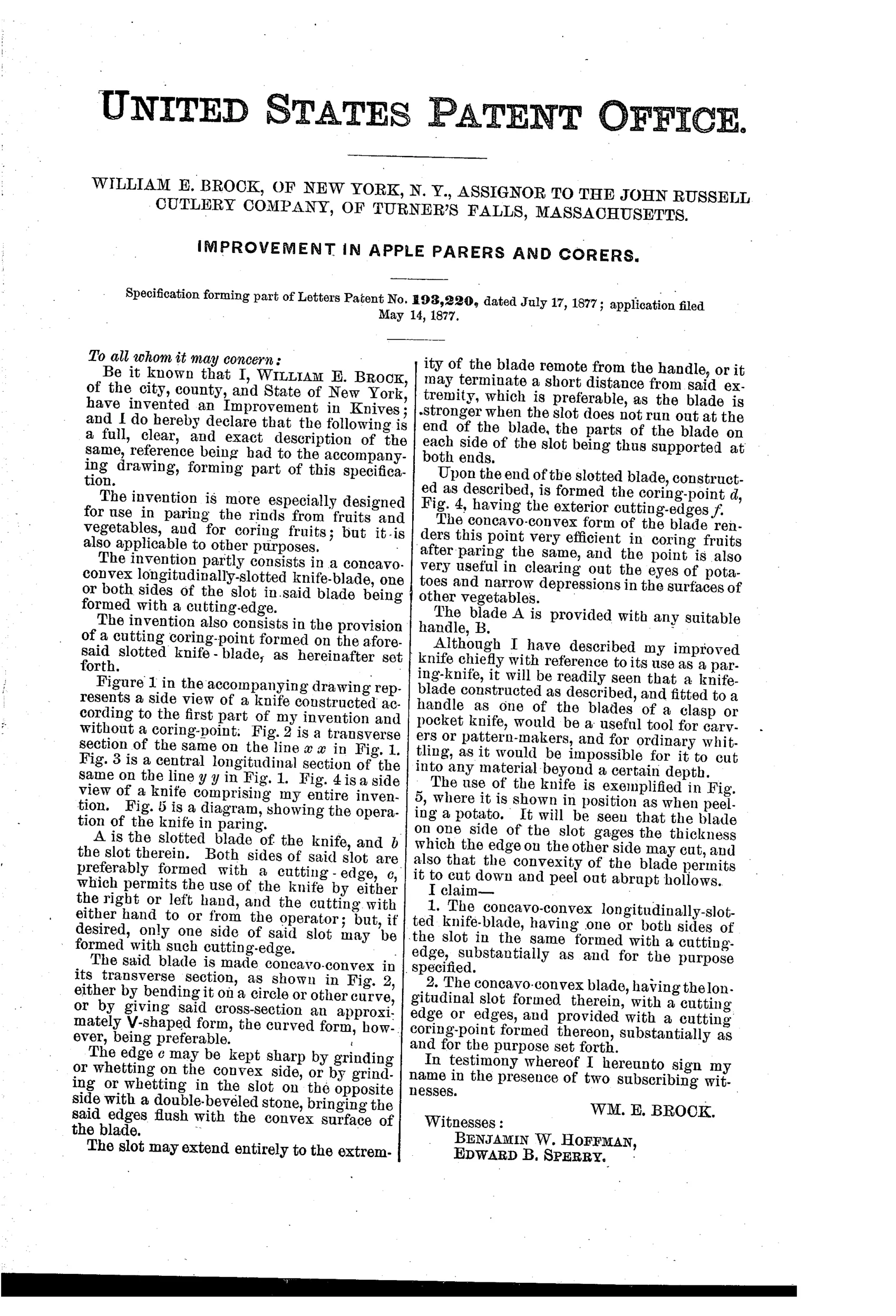
A slotted knife blade for paring and coring
❧ How it works
The blade is longitudinally slotted with one or both sides of the slot ground to a cutting edge, allowing use by either hand. The blade is bent concavo-convex in cross-section (curved or V-shaped) so the convex side gauges cutting depth and can peel out hollows. The slot may stop short of the blade tip for strength, and the resulting end is shaped into a sharp coring-point with exterior cutting edges for coring fruit or cleaning potato eyes. The blade is fitted to an ordinary handle for use as a paring knife or clasp-knife blade.
❧ What was claimed
“2. The concavo-convex blade, having the longitudinal slot formed therein, with a cutting edge or edges, and provided with a cutting coring-point formed thereon, substantially as and for the purpose set forth.”
In plain English: A curved knife blade with a slot cut lengthwise through it, sharpened on one or both edges of the slot, and ending in a pointed coring tip, all working together for paring and coring.
❧ In the inventor’s words
“It will be seen that the blade on one side of the slot gages the thickness which the edge on the other side may cut, and also that the convexity of the blade permits it to cut down and peel out abrupt hollows.”— William E. Brock, from the specification
Fate unknown
Assignment to John Russell Cutlery, an active manufacturer, makes production plausible, but I know of no documented marked example; a Russell knife with this slotted blade would settle it.
❧ Commentary
Amid all the cast-iron geared contraptions of the 1870s, Brock's patent is refreshingly quiet: no crank, no clamp, no fork. It's just a knife blade with a slot cut down its length, one or both slot edges sharpened, the whole blade bent into a shallow trough. That curve and slot do real work — the unsharpened side of the slot rides on the fruit and gauges how deep the cutting edge can bite. If that sounds familiar, it should: it's the same principle behind every modern slotted vegetable peeler, patented here in 1877 by a New York inventor and assigned to the John Russell Cutlery Company.
The details are better than they first appear. Fig. 2's cross-section shows the concavo-convex bend that lets the blade dig into hollows and follow an apple's shoulders instead of skating flat across them — Brock's own claim about peeling 'abrupt hollows' is the whole game with irregular fruit. Stopping the slot short of the tip keeps the blade stiff and leaves stock for the sharpened coring point, which Fig. 5 shows gouging potato eyes. Sharpening both slot edges makes it ambidextrous, a small courtesy most patentees never bothered with.
In this category's story it's a side channel — hand tools, not machines — but it's arguably the more durable lineage. The geared parers are collector shelf queens now; the slotted blade is still in every kitchen drawer.
Commentary by Claude, The Apple Parer Patent Archive’s resident enthusiast