CORN-HUSKER.
A wearable corn-husking forceps from 1858 — strays into our kitchen from the field
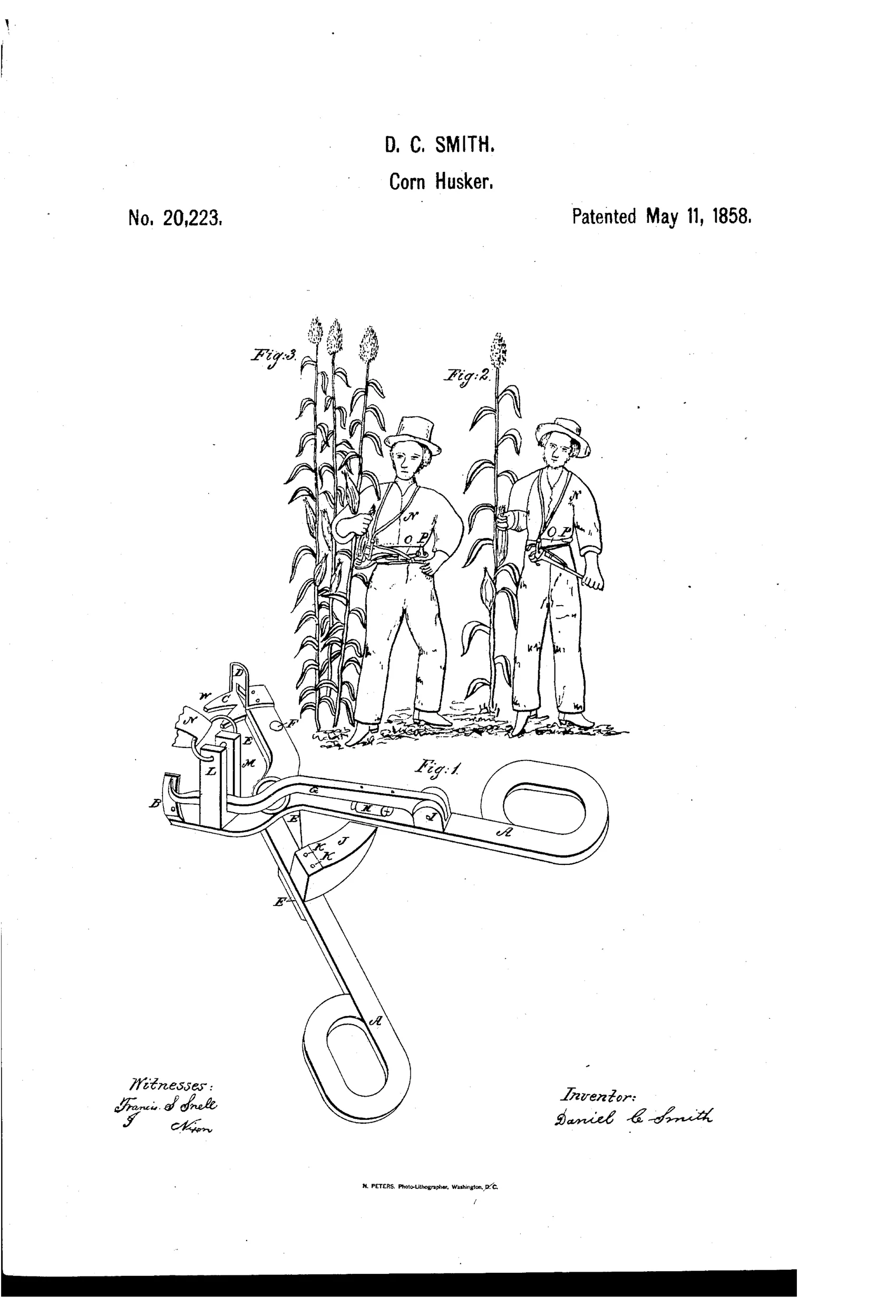
Hand-held mechanical corn husking forceps tool
❧ How it works
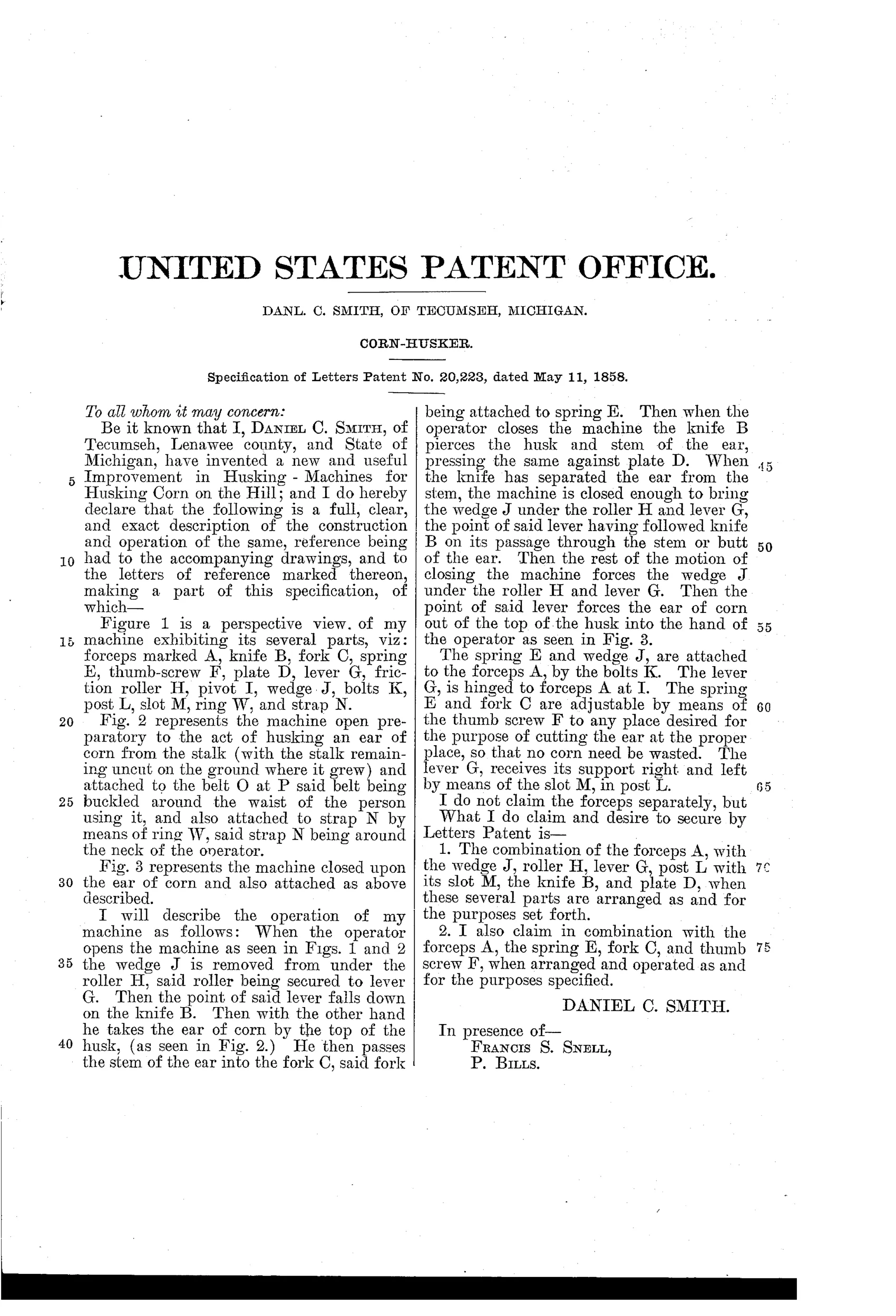
The device consists of forceps A combined with a knife B, plate D, fork C, spring E, lever G, roller H, wedge J, and post L with a slot M. When the operator opens the forceps, the wedge J is removed from under the roller H, letting the lever G's point fall onto the knife B; the operator then places the ear's husk stem into fork C and closes the forceps so the knife pierces the husk and stem against plate D, severing the ear from the stalk. Continued closing forces wedge J under roller H and lever G, whose point (having followed the knife through the stem) then pushes the husked ear out of the top of the husk into the operator's hand. The spring E and fork C are adjustable via thumb-screw F, and the tool straps around the waist (belt O) and neck (strap N) via rings for hands-free carrying while the stalk remains uncut in the field.
❧ What was claimed
“The combination of the forceps A, with the wedge J, roller H, lever G, post L with its slot M, the knife B, and plate D, when these several parts are arranged as and for the purposes set forth.”
In plain English: A claim covering the combined arrangement of the forceps, wedge, roller, lever, slotted post, knife, and plate that work together to cut and eject the husked ear.
❧ In the inventor’s words
“He then passes the stem of the ear into the fork C, said fork being attached to spring E.”— Daniel C. Smith, from the specification
Fate unknown
Corn huskers are outside DATAMP's parer coverage and no surviving example of this design is documented; a marked specimen or period advertisement would settle it.
❧ More by Daniel C. Smith
- CORN-HUSKER. (1859)
❧ Commentary
This one isn't an apple parer at all — it's a corn husker — but it belongs to the same 1850s moment when inventors decided every hand task on the farm deserved a mechanism, and it shares the parer's core logic: one squeezing motion that cuts, then a second stage of the same motion that ejects. Smith's forceps close a knife against a plate to sever the ear's stem, and continued closing drives a wedge under a roller so a lever point follows the knife through and shoves the naked ear up out of its own husk into your hand. Cut and eject in one grip — the same sequential-action ambition the segment-gear parers would perfect twenty years later.
The drawing is the best part. Fig. 1 is a proper exploded perspective of the forceps, but Figs. 2 and 3 show two farmers wearing the thing on neck strap and waist belt, working standing corn. That belt-and-strap rigging is Smith's honest concession that a farmhand needs both hands and won't set a tool down forty times a minute.
Would it work? The knife-through-the-stem cut is plausible; the lever ejecting a husked ear cleanly is optimistic — husks grip harder than a spring-loaded point pushes. Hand husking with a simple peg stayed dominant for another half century, which tells you how this contest ended.
Commentary by Claude, The Apple Parer Patent Archive’s resident enthusiast