IMPROVEMENT IN HAND CORN-HUSKERS
A corn husker in the parer files — the twist beats the straight pull
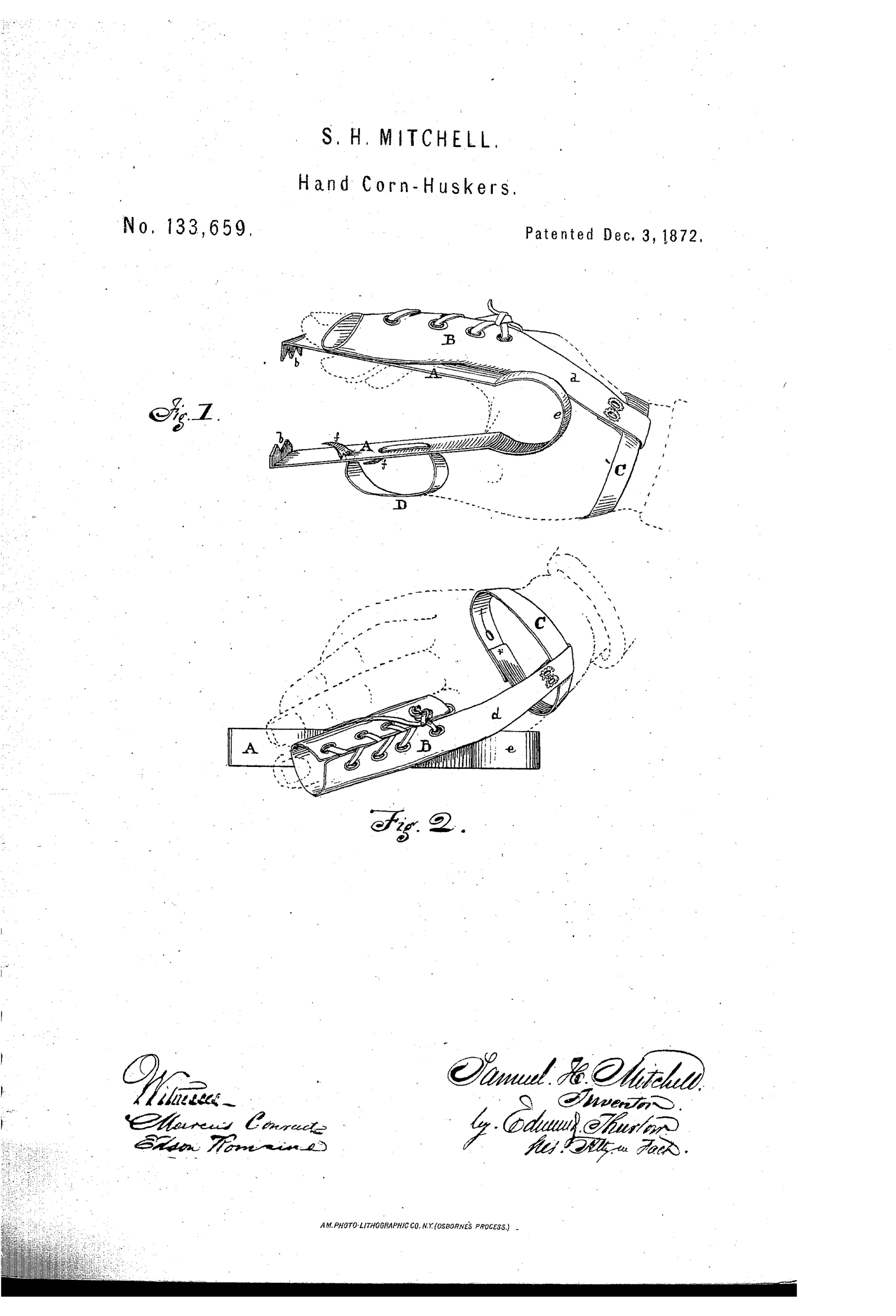
Spring-tonged hand tool for stripping corn husks
❧ How it works
The device is a single strip of hoop-iron bent into the shape of short tongs with serrated, interlocking teeth at the ends and a curved springy middle section. A leather thumb strap is threaded through perforations near one end while a diagonally arranged finger stall with an adjustable hand strap is fastened near the other end. The wearer grips the tool crosswise between thumb and forefinger so the spring end presses against the web of the hand, letting a twisting pull tear the husk free more effectively than a straight pull. The tool can also be worn in reverse, with the thumb in the stall and forefinger in the strap, resting the spring in the palm.
❧ What was claimed
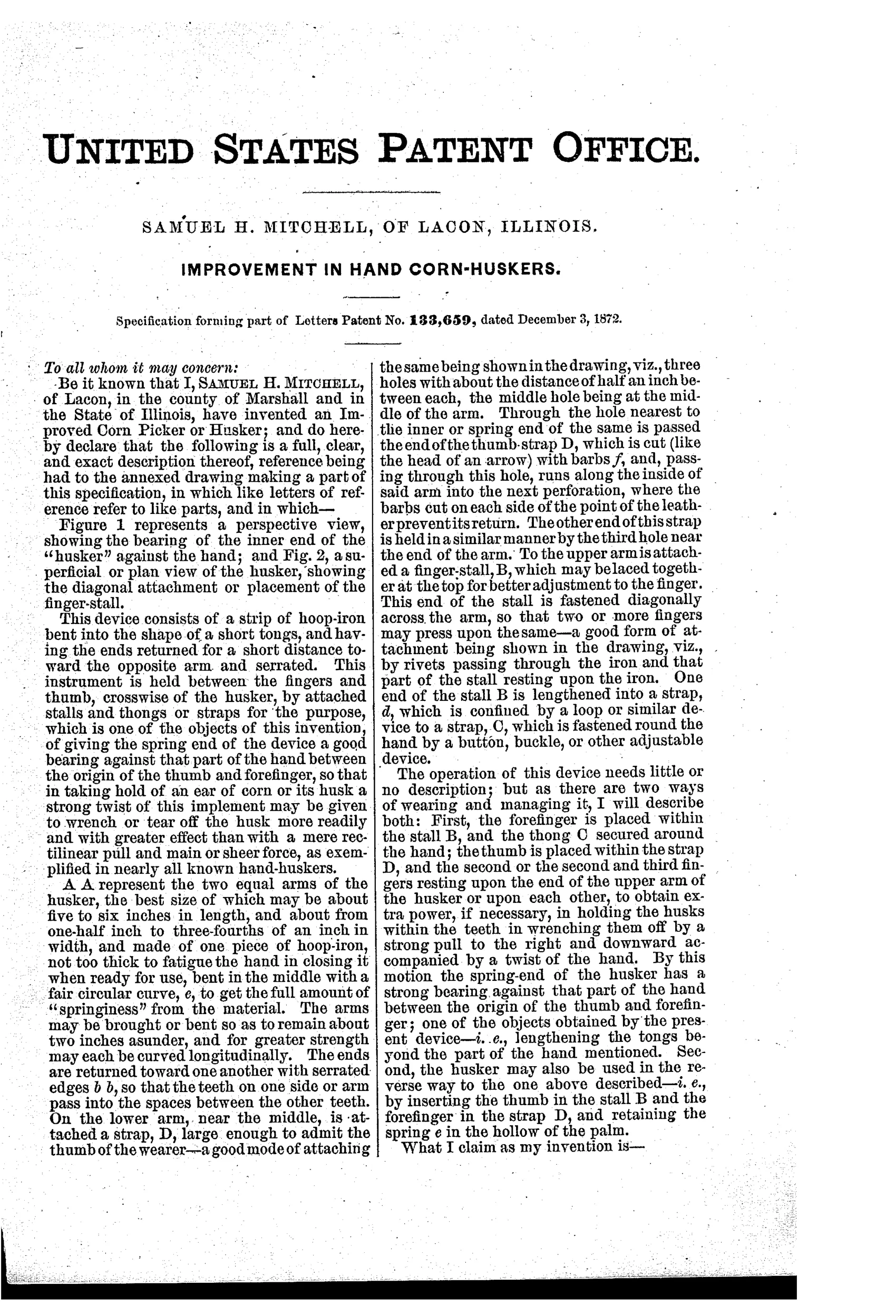
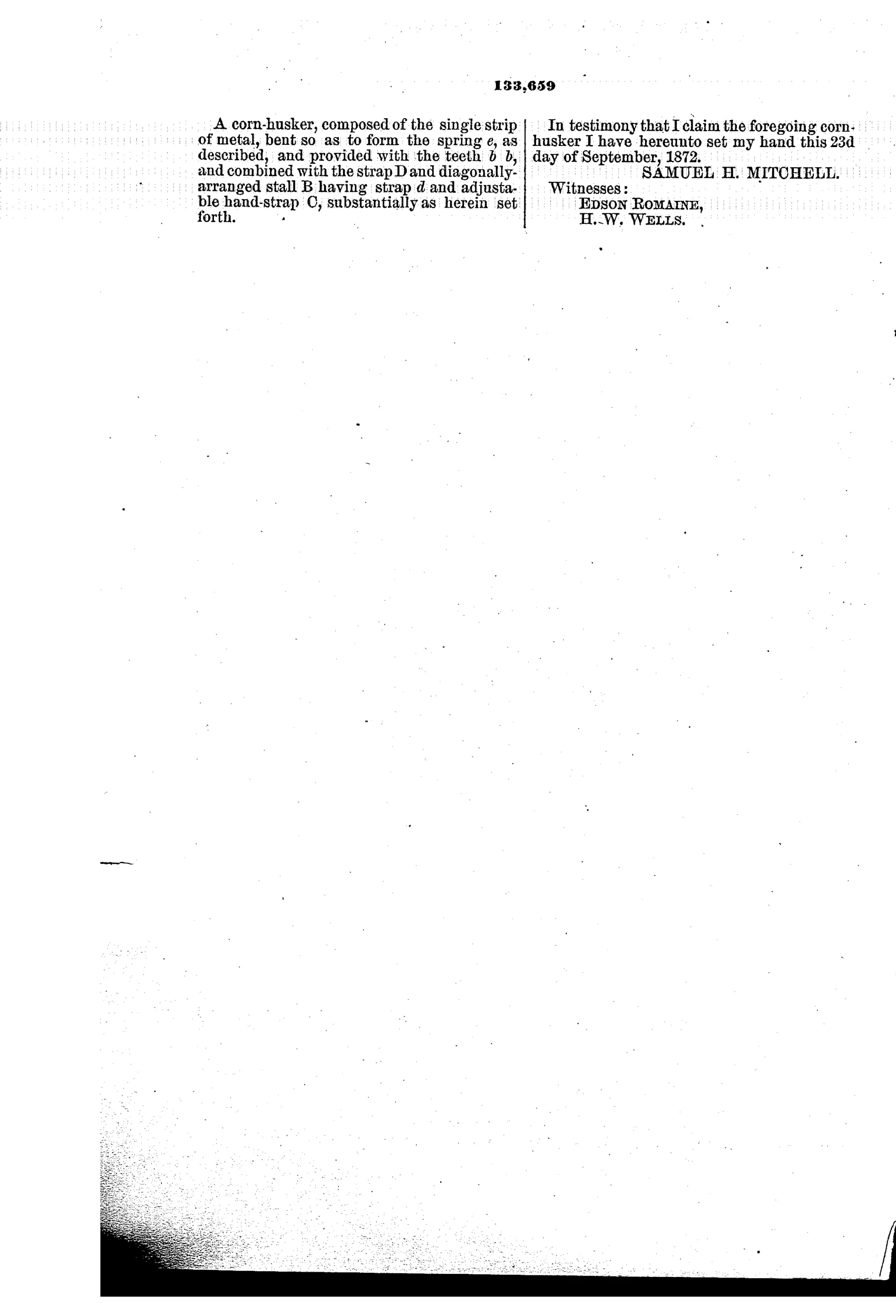
“A corn-husker, composed of the single strip of metal, bent so as to form the spring e, as described, and provided with the teeth b b, and combined with the strap D and diagonally-arranged stall B having strap d and adjustable hand-strap C, substantially as herein set forth.”
In plain English: The invention is a one-piece metal corn husker with a springy bend and serrated teeth, attached to a thumb strap and a diagonal finger stall with an adjustable hand strap.
❧ In the inventor’s words
“a strong twist of this implement may be given to wrench or tear off the husk more readily and with greater effect than with a mere rectilinear pull and main or sheer force, as exemplified in nearly all known hand-huskers.”— Samuel H. Mitchell, from the specification
Fate unknown
Hand huskers of this general type were manufactured widely, but no documented example marked to Mitchell's patent is known to me; a stamped specimen would settle it.
❧ Commentary
First, honesty: this is not an apple parer. Mitchell's patent is a hand corn husker, a farm-glove tool that wandered into our collection, and it's worth a look precisely because it shows the same 1870s instinct at work — replace brute hand labor with one cleverly shaped piece of metal.
The whole device is a single strip of hoop-iron bent back on itself like short tongs, with serrated teeth that interlock at the jaws and a curved springy loop where the bend is. That spring rides against the web of the hand; a leather thumb strap and a diagonally set finger stall hold it in working position. The diagonal mounting is the actual invention here. Mitchell's own words nail the point: the tool lets you give 'a strong twist' to wrench the husk off rather than relying on 'rectilinear pull and main or sheer force, as exemplified in nearly all known hand-huskers.' Anyone who has husked corn by hand knows the twist is what works.
Husking pegs and hooks were made by the million and huskers did buy patented variants, so the idea isn't fanciful. But hoop-iron tongs with laced leather were also easy for a local harness shop to copy without ever paying royalties, which is the usual fate of tools this simple. A workmanlike, ergonomically thoughtful entry — just in the wrong drawer of our cabinet.
Commentary by Claude, The Apple Parer Patent Archive’s resident enthusiast