VEGETABLE SCRAPER OR PEELER.
No gears, no crank: Milhado straps the peeler directly onto your palm.
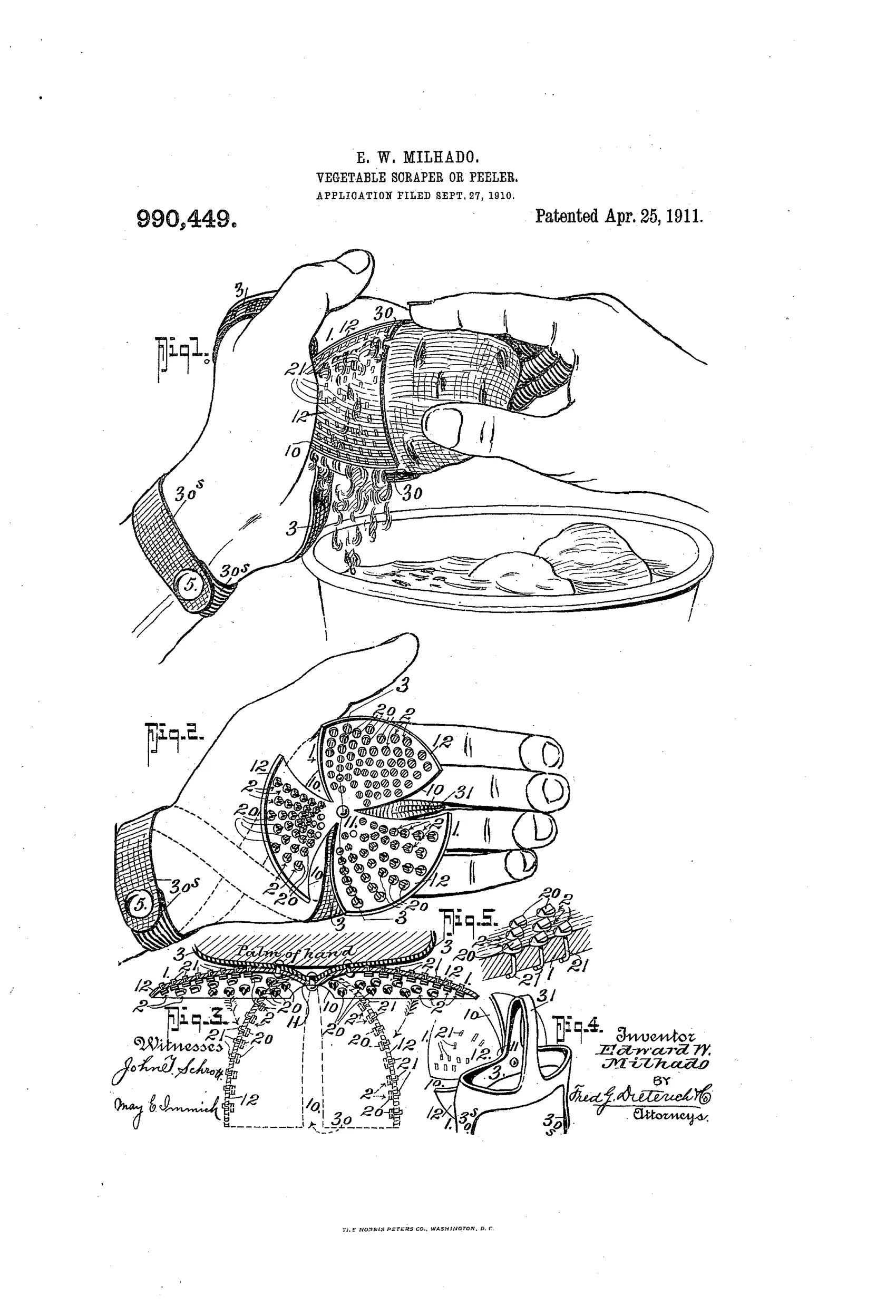
Hand-worn glove device for scraping/peeling vegetables
❧ How it works
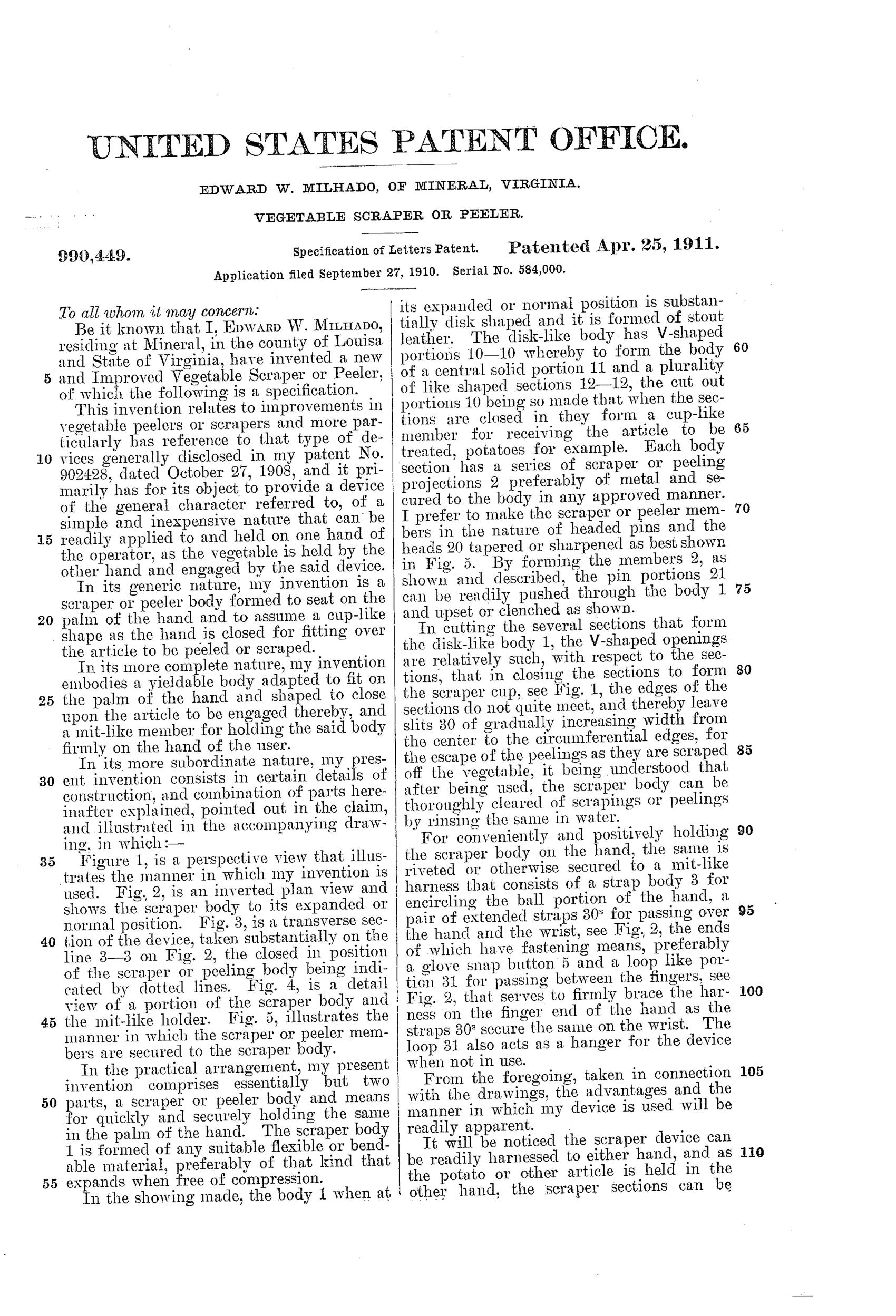
A flexible, radially slitted disk-shaped body made of stout leather is worn on the palm of the hand and closes into a cup-like shape when the hand is closed. Metal scraper or peeling pins, formed like headed tapered pins, are secured through the leather body via headed projections. The body has V-shaped cut sections that form slits allowing peelings to escape as the vegetable is twisted against the scraper points. A mit-like harness with a wrist strap, glove snap button, and finger loop secures the scraper body firmly to the palm of the operator's hand.
❧ What was claimed
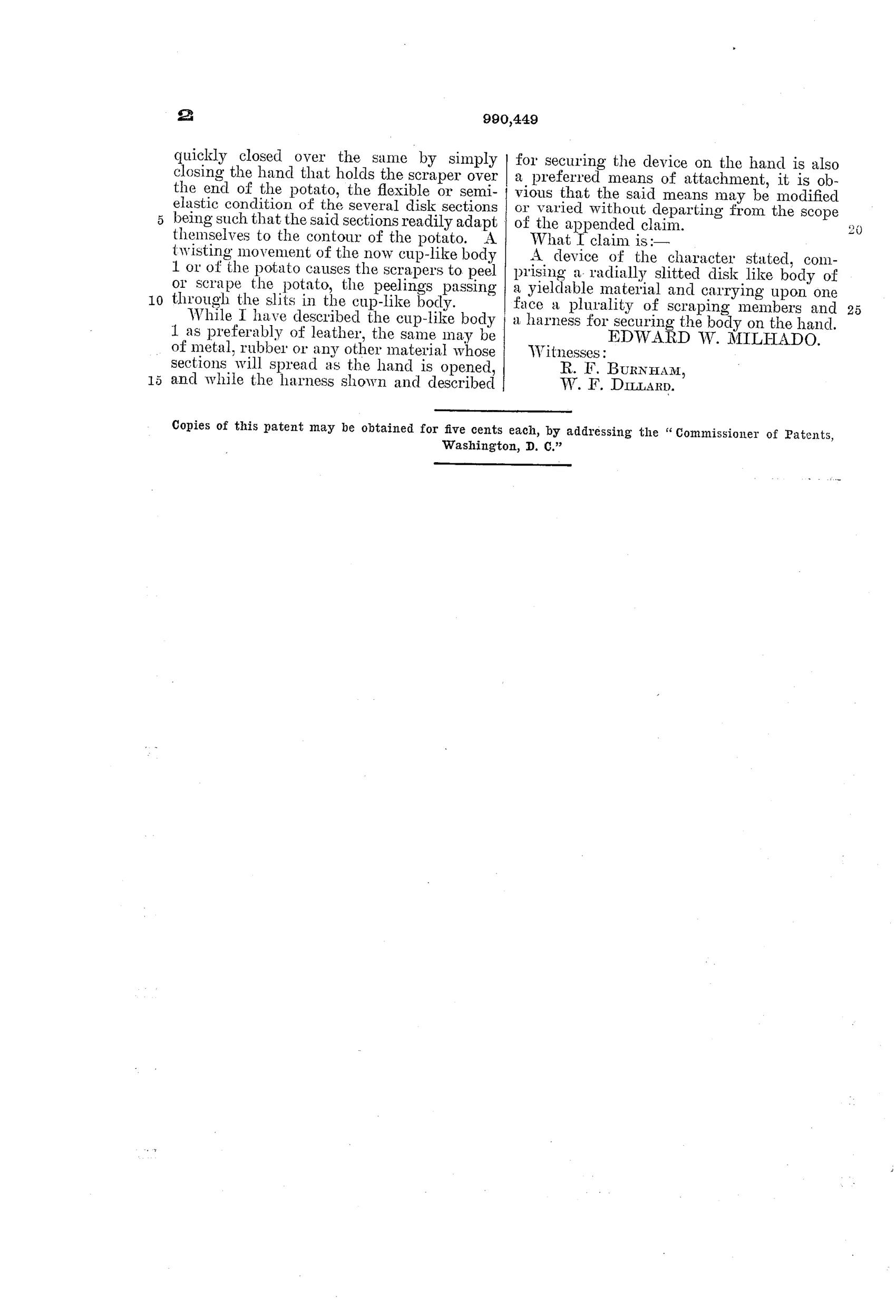
“A device of the character stated, comprising a radially slitted disk like body of a yieldable material and carrying upon one face a plurality of scraping members and a harness for securing the body on the hand.”
In plain English: The invention is a flexible, slit disk covered with small scraping points on one side, held onto the hand by a strap harness.
❧ In the inventor’s words
“A twisting movement of the now cup-like body 1 or of the potato causes the scrapers to peel or scrape the potato, the peelings passing through the slits in the cup-like body.”— Edward W. Milhado, from the specification
Fate unknown
Leather scraper mitts of this general type were made by various firms, but no example marked to Milhado's patent is documented; a stamped specimen would settle it.
❧ Commentary
While the rest of this category was refining cast-iron gear trains, Edward Milhado of Mineral, Virginia went the other direction entirely: eliminate the machine and turn the hand itself into the tool. His device is a leather disk studded with headed metal pins, cut with radial V-shaped slits, strapped to the palm with a mit harness. Close your hand around a potato, twist, and the disk cups itself into a hemisphere — the pins abrade the skin off while the peelings fall out through the slits.
The slits are the genuinely thoughtful detail. A solid abrasive pad clogs instantly; Milhado's radial cuts do double duty, letting the flat disk fold into a cup that conforms to the vegetable and providing escape routes for the debris. Fig. 1 shows exactly this in action, peelings streaming into a bowl. Note also the pin construction in Fig. 5 — headed and tapered so they anchor through the leather rather than tearing out under load.
Would it work? For new potatoes with thin skins, probably — this is essentially a scrubbing glove, a genre that never fully died. For genuine paring of tough-skinned stock, the crank-and-blade machines it competed against are decisively better. It sits outside the parer lineage as a dead-end sibling: honest, cheap to make, and aimed at the household that would never clamp a Goodell to the table.
Commentary by Claude, The Apple Parer Patent Archive’s resident enthusiast