IMPROVEMENT IN HUSKING-THIMBLE
A sheet-metal thumbnail for the corn crib, one stamping and a strap
An adjustable metal husking thimble for corn
❧ How it works
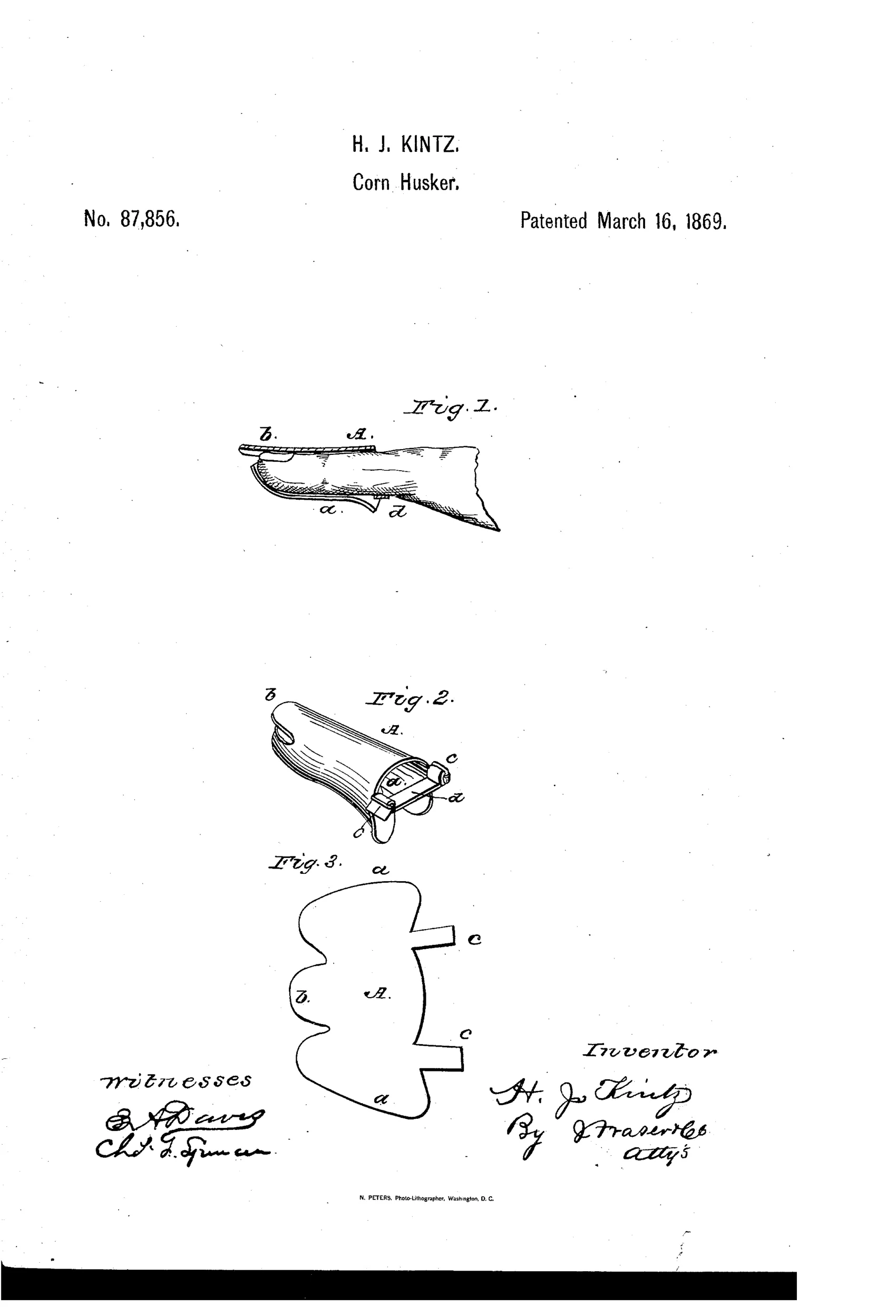
The thimble is stamped from a single flat piece of sheet metal shaped as shown in fig. 3. Its edges overlap and can slide against each other, expanding or contracting the size to fit different thumbs while also acting as a spring to clasp firmly. A sharp projecting edge on the front serves as a cutting thumb-nail to open corn husks, while two tongues at the rear anchor an elastic strap that binds the thimble to the thumb or finger.
❧ What was claimed
“The elastic strap, in combination with the husking-thimble, formed from a single piece of sheet-metal, provided with overlapping spring-edges, a a, and having combined therewith the sharp cutting-edge b, substantially as and for the purpose described.”
In plain English: The patent covers a one-piece sheet-metal husking thimble with overlapping spring edges and a sharp cutting edge, combined with an elastic strap to hold it on the finger.
❧ In the inventor’s words
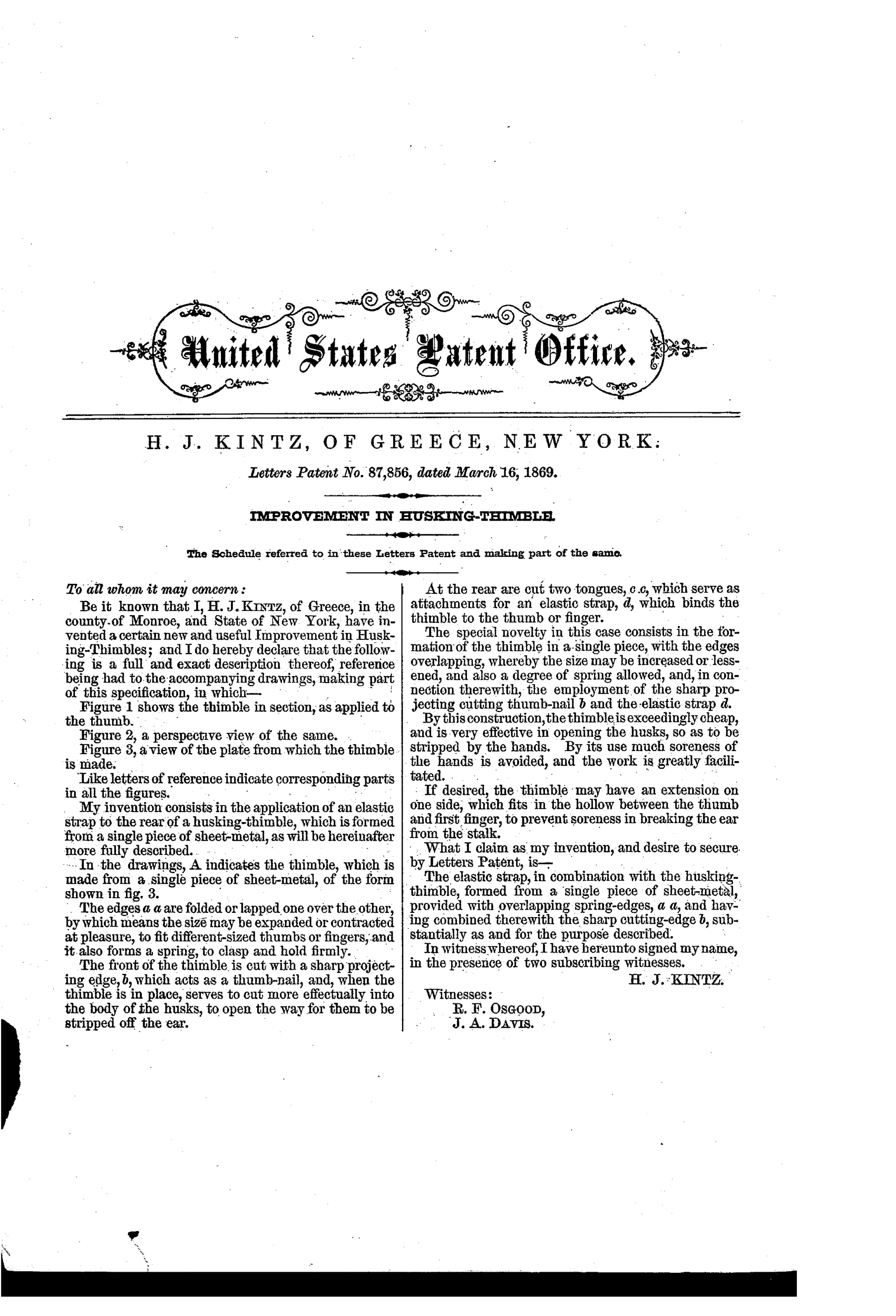
“By this construction, the thimble is exceedingly cheap, and is very effective in opening the husks, so as to be stripped by the hands.”— H. J. Kintz, from the specification
Fate unknown
Husking thimbles were made in huge variety in this era, but I know of no marked example matching this specific one-piece spring design; a surviving specimen would settle it.
❧ Commentary
Full disclosure: this is a corn husker, not an apple parer, so it sits at the edge of our beat. But it's worth a look because it solves the same problem our cast-iron parers were solving in the same decade — replacing a tedious hand motion with cheap metal — only at the opposite end of the cost spectrum. Where a Reading or Goodell parer needed gears, castings, and a clamp, Kintz needed one stamped blank of sheet metal, shown flat in Fig. 3.
The cleverness is all in that blank. Rolled up, the edges overlap rather than join, so the same spring tension that grips the thumb also lets the thimble expand or contract to fit different hands — sizing and fastening from a single piece, no rivets, no solder. The sharp edge at the front does the actual work, acting as an artificial thumbnail to slit the husk, and the two rear tongues anchor an elastic strap so the thing doesn't fly off mid-stroke. Fig. 1's section view shows how the rolled edge tucks under the thumb tip, keeping the cutting edge where a nail would be.
Husking pegs and thimbles were a genuinely crowded field through the late 1800s — corn was husked by hand at staggering scale — and most successful ones were leather-and-hook designs. Kintz's all-metal spring version is a plausible, honest entry: cheap to make, as he says himself, and mechanically sound. Whether his particular pattern reached farm stores is another question.
Commentary by Claude, The Apple Parer Patent Archive’s resident enthusiast