Bar Scraper
Not a parer at all — a box scraper that wandered into our orchard
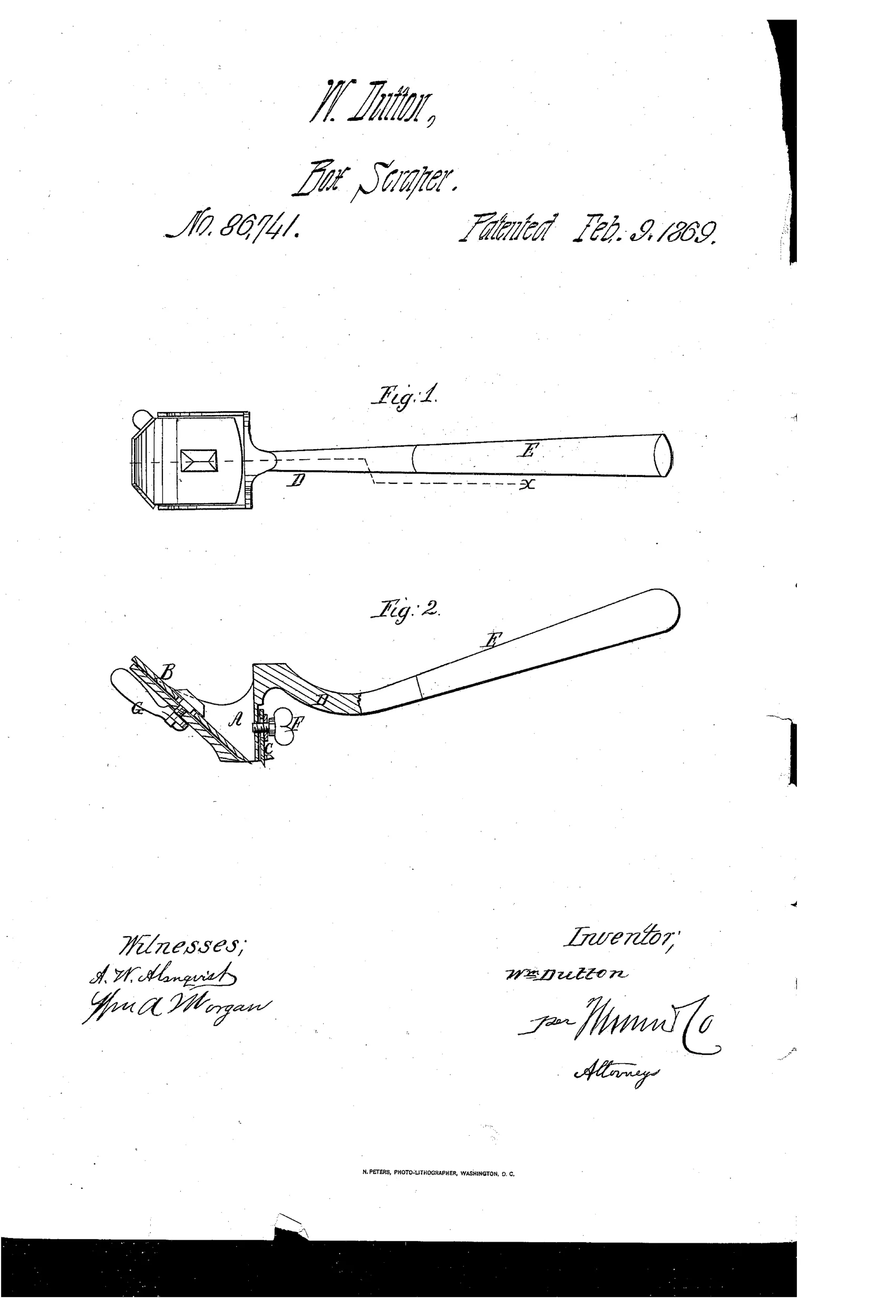
Combined adjustable planer and scraper tool
❧ How it works
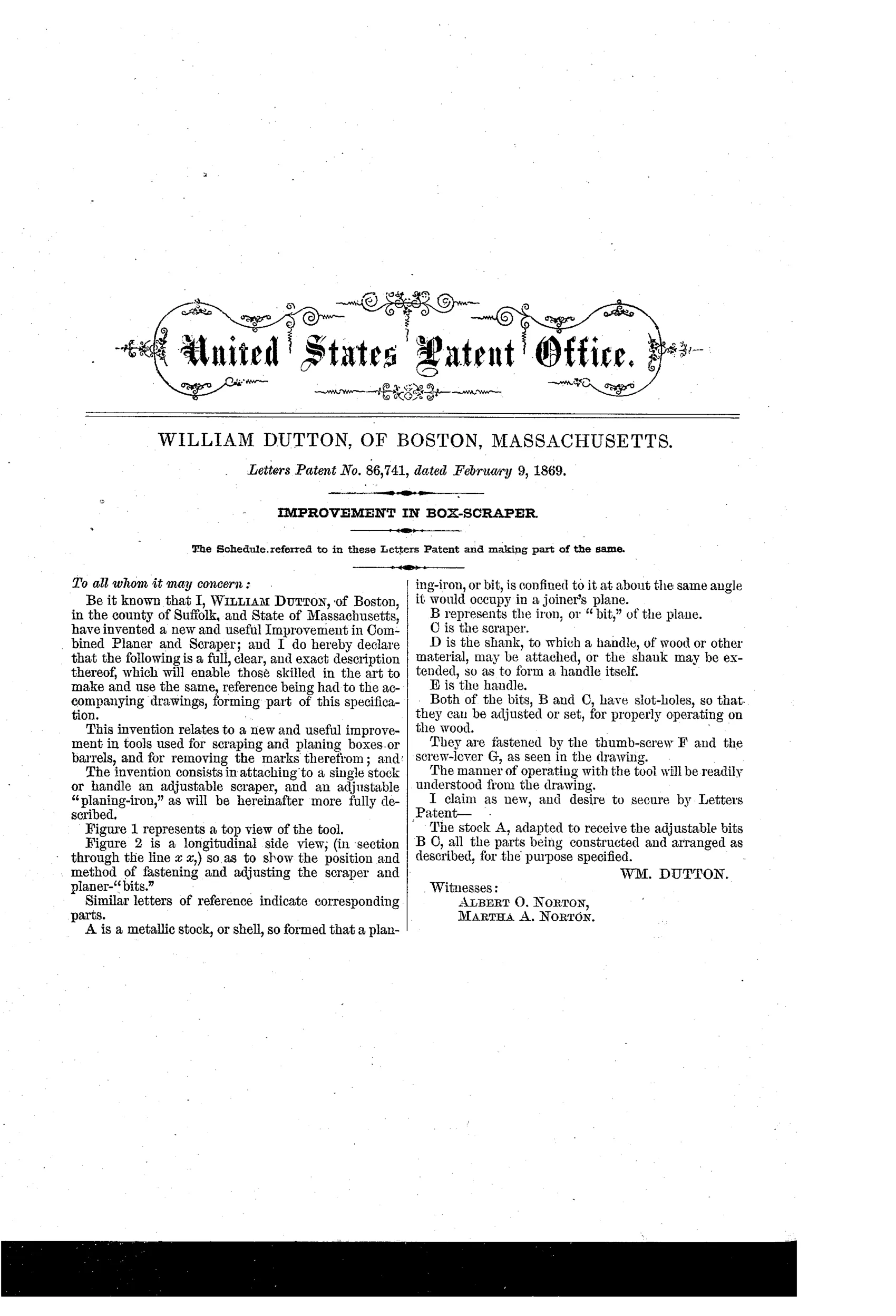
A metallic stock or shell A holds two adjustable bits, a planing-iron B and a scraper C, each confined at set angles as in a joiner's plane. Both bits have slot-holes allowing them to be adjusted or set for properly operating on the wood. The bits are fastened in place by a thumb-screw F and a screw-lever G. A shank D extends from the stock to receive a wooden handle E, or may itself be extended to form the handle.
❧ What was claimed
“The stock A, adapted to receive the adjustable bits B C, all the parts being constructed and arranged as described, for the purpose specified.”
In plain English: A metal tool body that holds two adjustable blades—a planer iron and a scraper—set and locked in place as described.
❧ In the inventor’s words
“This invention relates to a new and useful improvement in tools used for scraping and planing boxes or barrels, and for removing the marks therefrom.”— William Dutton, from the specification
Fate unknown
No marked example is documented to our knowledge; a surviving tool bearing Dutton's name or the patent date would settle it.
❧ Commentary
Let's be straight with you: this is not an apple parer. William Dutton's 1869 patent is a combined planer and scraper for cleaning up boxes and barrels — for removing old shipping marks and stenciling from the wood. The nearest it gets to our category is that the apples pared, cored, and dried on our machines traveled the country in exactly the boxes and barrels Dutton's tool was meant to refresh. Reused packaging was the norm in the produce trade, and a merchant needed the previous owner's marks gone.
Mechanically, it's a tidy little idea. The cast stock A carries two bits at fixed angles — a plane iron B and a scraper C — each with slotted holes so depth of cut can be set, locked down by a thumbscrew and a screw-lever. Fig. 2 is the one to study: the two blades sit at different pitches in the same shell, so you can shave with one edge and burnish-scrape with the other without swapping tools. The long lathe-turned handle in Fig. 1 says this was meant for fast, two-handed work over rough box lumber, not fine joinery.
As a patent it's a workmanlike entry in the hand-tool crowd of the late 1860s, when cast metal stocks were displacing wooden plane bodies everywhere. Whether anyone cast and sold it, we can't say.
Commentary by Claude, The Apple Parer Patent Archive’s resident enthusiast