IMPROVEMENT IN CANE-STRIPPER
A sugar-cane peeler by hand, not crank — the parer idea leaves the kitchen
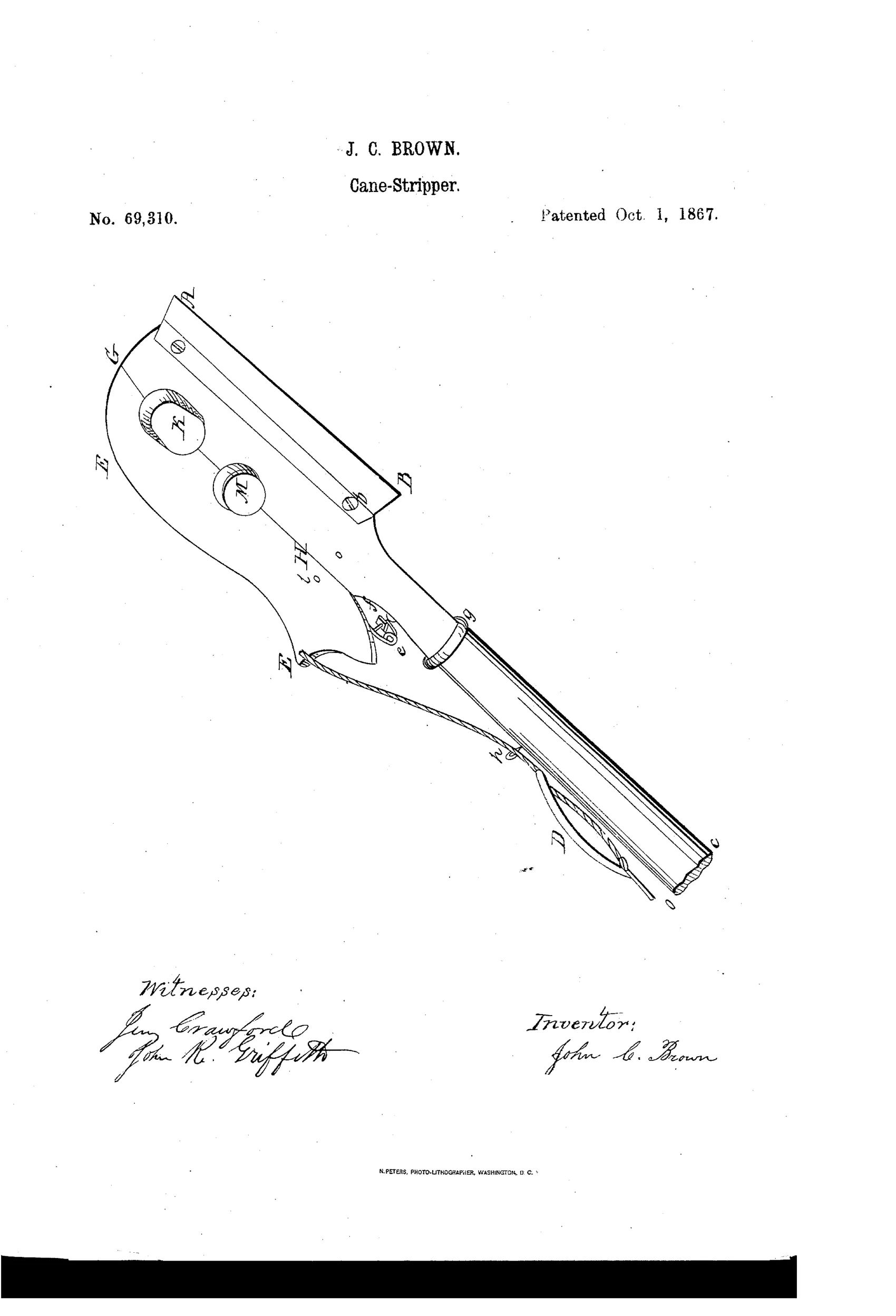
Hand tool for stripping and cutting sugar cane
❧ How it works
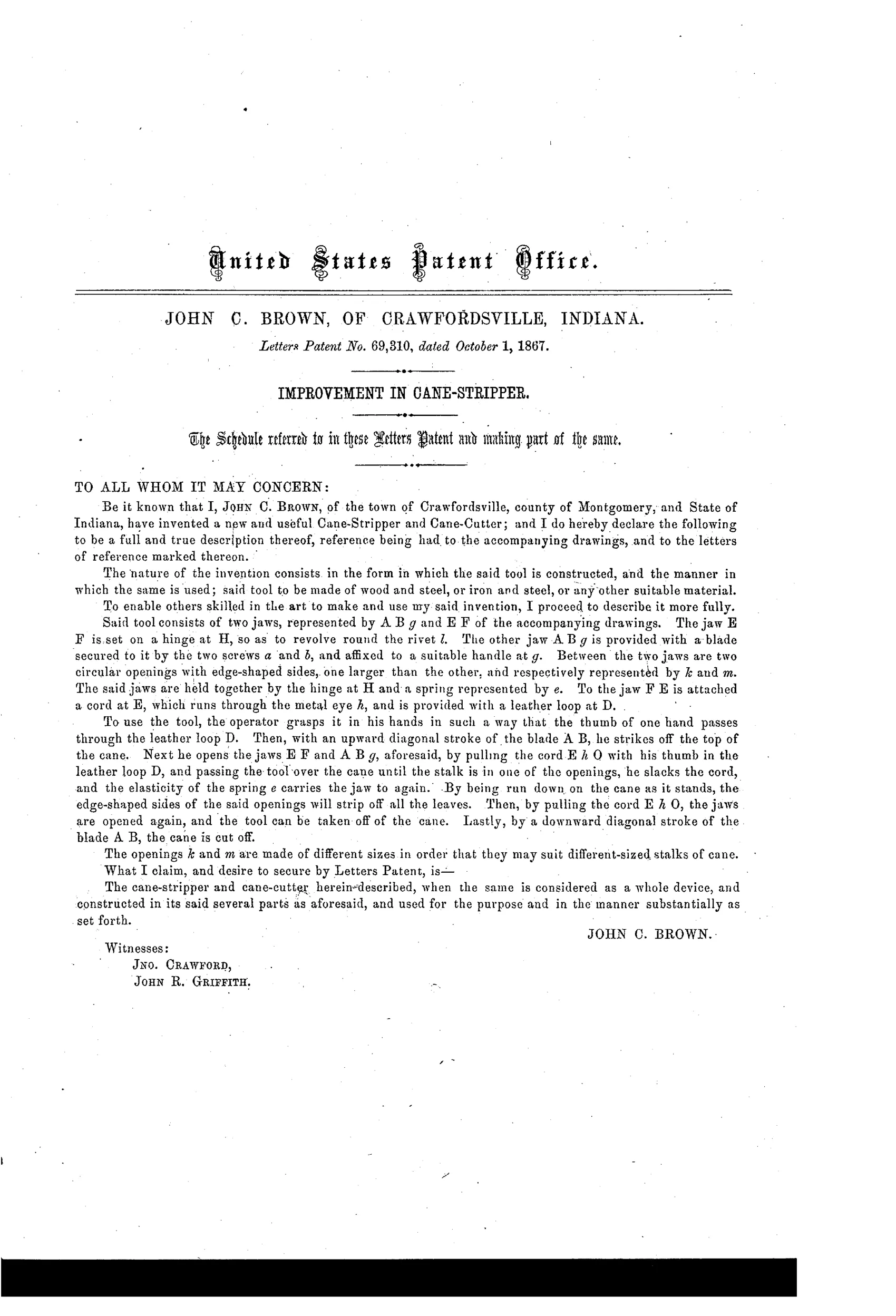
The tool has two hinged jaws, one fitted with a cutting blade and the other with a cord-operated release. Between the jaws are two edge-shaped circular openings of different sizes to grip stalks of varying thickness. A spring closes the jaws after the operator pulls a cord to open them, and the tool strips leaves as it is run down the standing cane. The blade is used with an upward stroke to top the cane and a downward stroke to cut it off.
❧ What was claimed
“The cane-stripper and cane-cutter herein-described, when the same is considered as a whole device, and constructed in its said several parts as aforesaid, and used for the purpose and in the manner substantially as set forth.”
In plain English: The claim covers the complete cane-stripping and cane-cutting tool as described, built and used in the manner explained in the specification.
❧ In the inventor’s words
“To use the tool, the operator grasps it in his hands in such a way that the thumb of one hand passes through the leather loop D.”— John C. Brown, from the specification
Fate unknown
No documented example of this tool is known to me; a marked surviving specimen or trade advertising would settle whether it went beyond the drawing.
❧ Commentary
Fair warning: this is not an apple parer. It's a field tool for sorghum and sugar cane, and it lands on this site only because it solves the same problem our category obsesses over — how do you strip the outside of a plant stalk fast, without a knife in one hand and the crop in the other. Brown's answer is a long-handled tool with two spring-closed hinged jaws, each pierced by a sharp-edged circular opening. Clamp the jaws around a standing stalk, run the tool down its length, and the edged rings shear the leaves off as they pass. Two hole sizes handle two stalk diameters.
The detail worth pausing on is the cord and leather thumb-loop running down the handle. A pull opens the jaws against the spring; release, and they snap shut around the next stalk. That's a one-motion reload, which matters when you're working an acre of cane. There's also a blade set into one jaw for topping the cane with an upstroke and felling it with a downstroke — stripper, topper, and cutter in one pass down the row.
Where the apple-parer men of the 1860s were adding gears, Brown went the other way: no crank, no rotation, just a shaped edge dragged along the work. It's the peeling problem solved by profile rather than by lathework. Whether cane leaves shear that cleanly in practice is another question — dry blades yes, green sheaths probably fought back.
Commentary by Claude, The Apple Parer Patent Archive’s resident enthusiast