IMPROVEMENT IN CORN-HUSKING SHIELD
A thumb thimble for corn husking, cut flat and bent to fit either hand
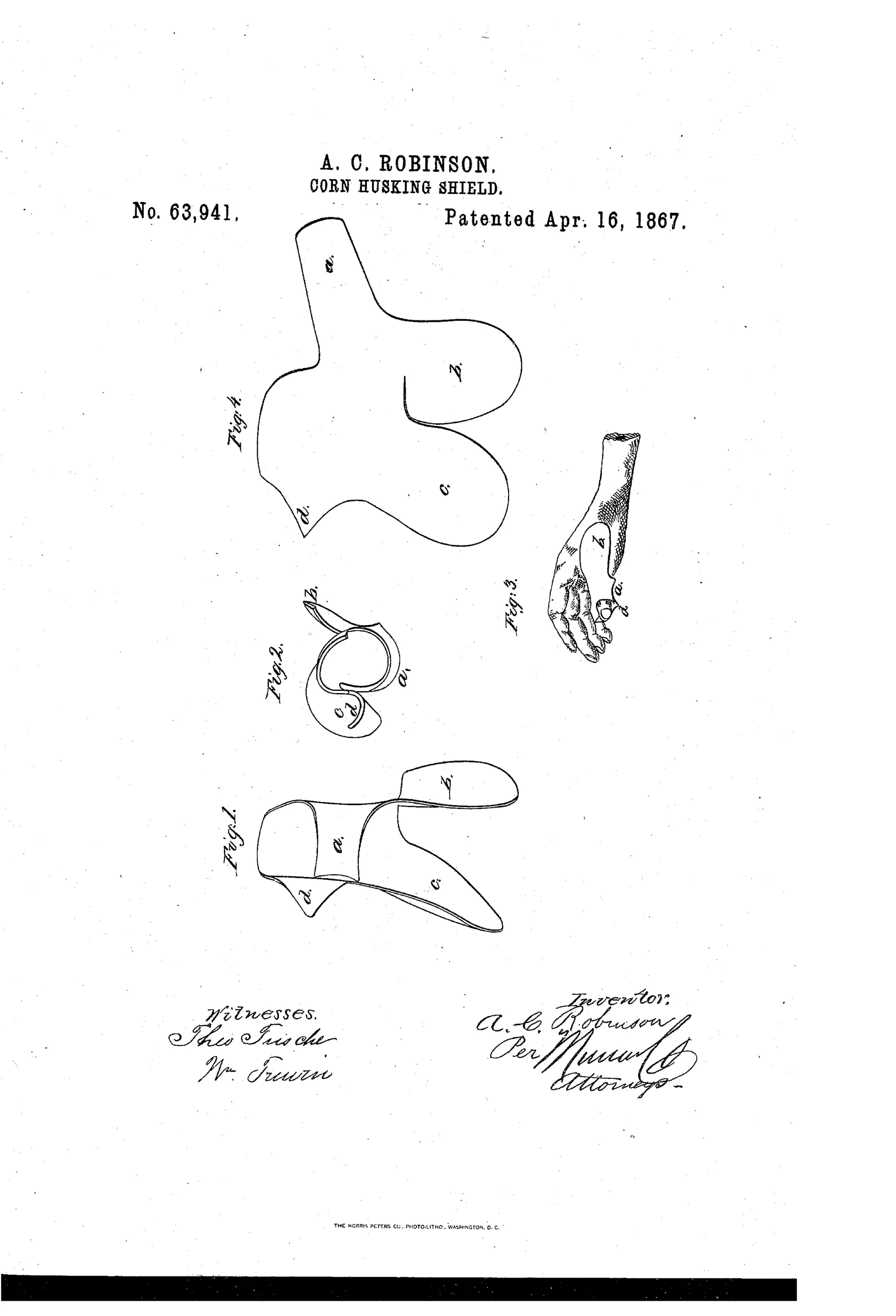
Metal thumb shield for husking corn.
❧ How it works
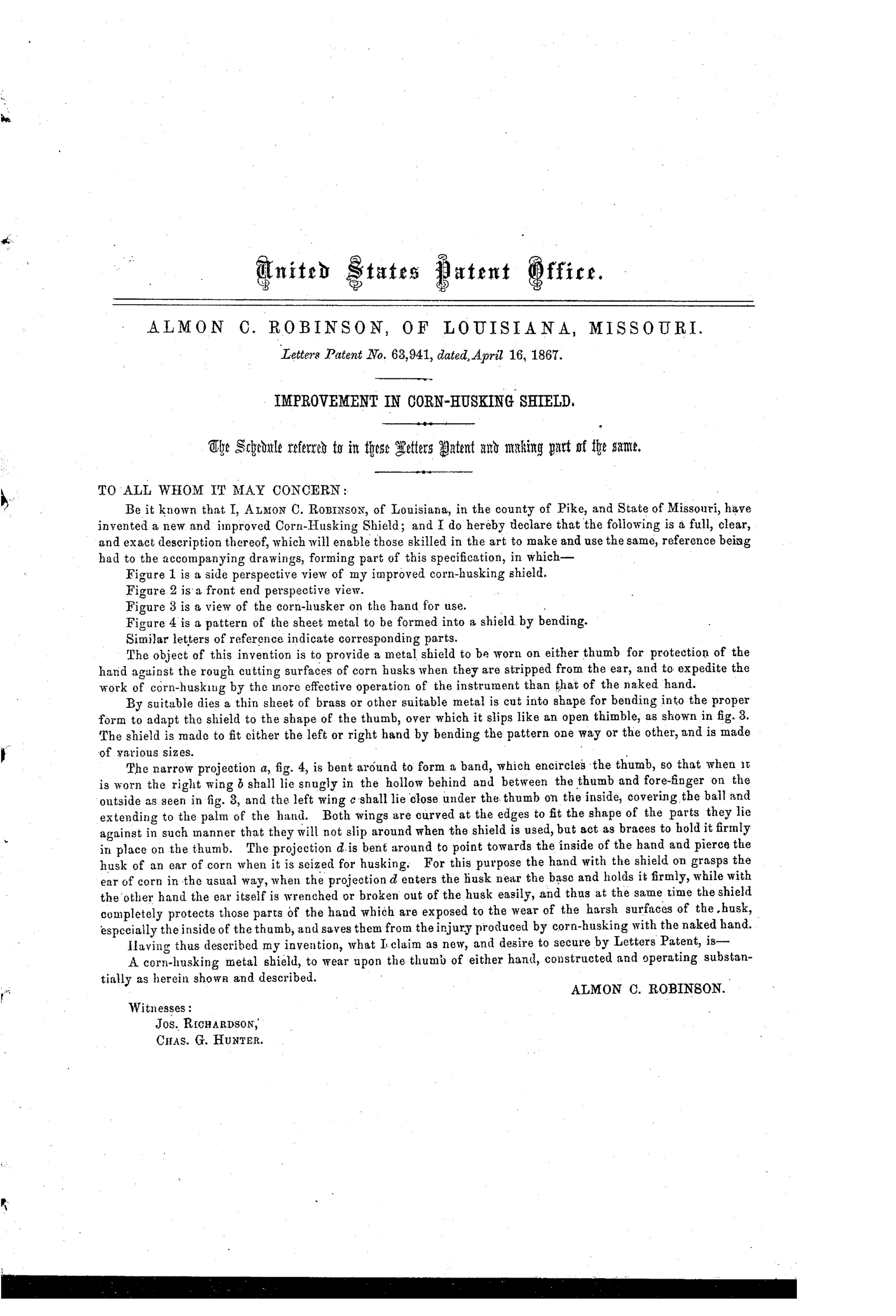
A thin sheet of brass or other metal is cut by dies into a pattern and bent into a thimble-like shape to fit over the thumb. A narrow band portion encircles the thumb, with a right wing lying between thumb and forefinger and a left wing covering the ball of the thumb and palm, both curved to grip the hand and prevent slipping. A projecting point bends toward the inside of the hand to pierce the husk near the base of the ear, holding it firmly while the other hand wrenches the ear free. The same pattern can be bent either way to fit the left or right hand, and shields are made in various sizes.
❧ What was claimed
“A corn-husking metal shield, to wear upon the thumb of either hand, constructed and operating substantially as herein shown and described.”
In plain English: A metal thumb shield for husking corn, made and used as described in the patent.
❧ In the inventor’s words
“By suitable dies a thin sheet of brass or other suitable metal is cut into shape for bending into the proper form to adapt the shield to the shape of the thumb, over which it slips like an open thimble, as shown in fig. 3.”— Almon C. Robinson, from the specification
Fate unknown
Husking pegs of this general type were common, but no marked example of Robinson's specific pattern is documented; a stamped specimen would settle it.
❧ Commentary
First, a confession: this isn't an apple parer. It wandered into our files, and it's worth a look precisely because it represents the opposite philosophy from everything else here. While the parer men were piling on gears, segment cams, and push-off arms, Almon Robinson of Louisiana, Missouri solved his kitchen-adjacent farm problem with a single piece of sheet brass and zero moving parts.
The clever bit is Fig. 4, the flat blank. Robinson designed the pattern so the same die-cut shape bends into either a right-hand or left-hand shield — flip the blank, bend the wings the other way, done. One die, two products. That's real manufacturing thinking for 1867, the same logic that would later make the stamped-steel parers of the 1890s cheap enough to give away as premiums. The piercing point near the thumb's base does the actual work: spear the husk, grip, wrench the ear free with the other hand.
Husking pegs and thumb hooks were made by the millions and were often homemade or blacksmith work, which is exactly why patented versions are hard to trace. Robinson's shield is a plausible, honest tool in a field where the barrier to entry was a piece of scrap metal and ten minutes. Whether anyone paid a royalty for it is another matter.
Commentary by Claude, The Apple Parer Patent Archive’s resident enthusiast