IMPROVEMENT IN CORN-HUSKERS.
A corn husker wanders into the parer files — and it's all hand, no crank.
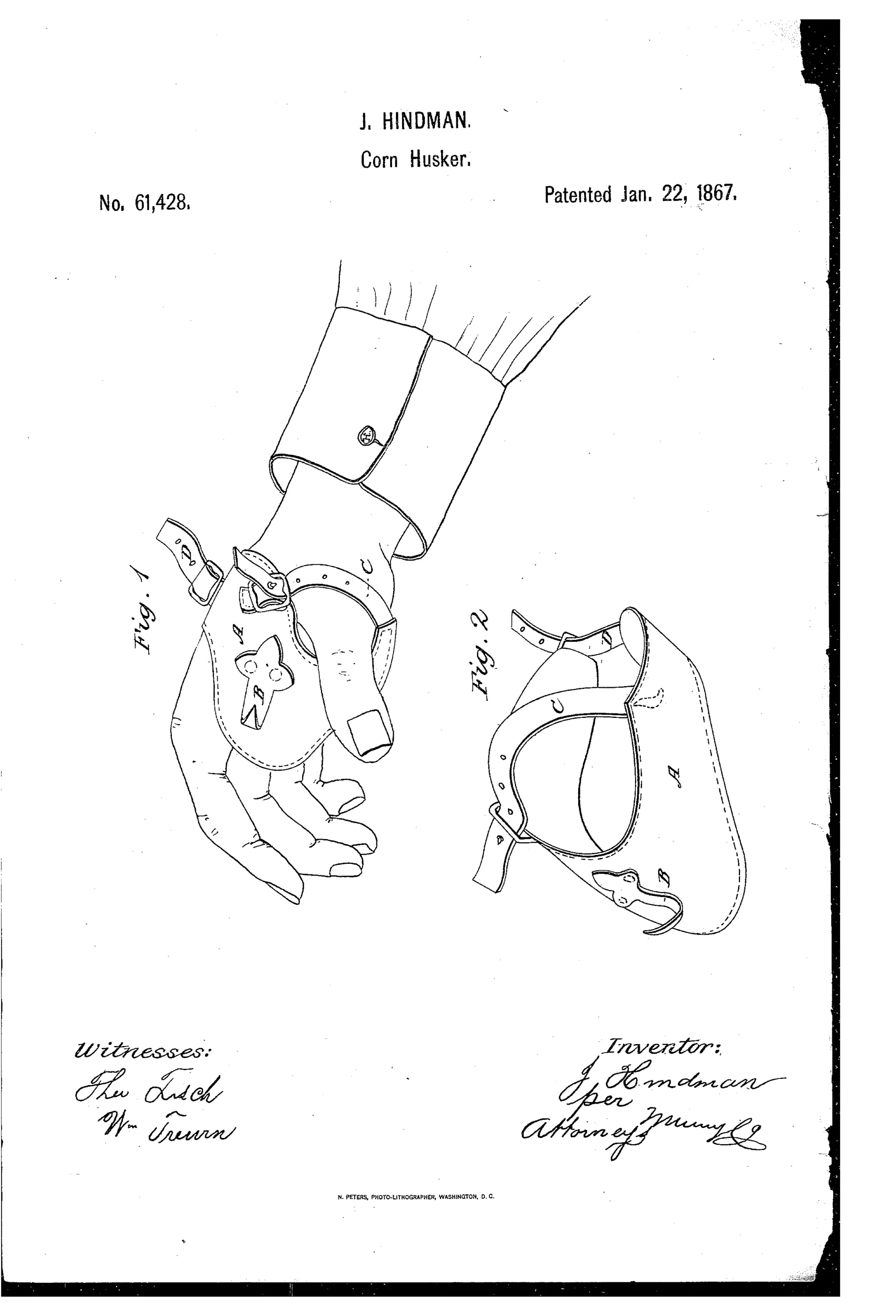
Hand-strapped leather corn-husking device with metal tang
❧ How it works
A broad leather strap (A) is fastened diagonally across the hand under the thumb, secured on the back of the hand by a strap and buckle. A second strap (C) runs over the thumb and buckles between the forefinger and thumb, allowing fit with or without a glove. A steel tang or hook (B) is fixed to the strap near the base of the forefinger, turned back and pointing toward the wrist. The ball of the thumb presses the ear of corn against the tang, and a natural thumb motion catches the husk against the strap so it can be jerked down and removed.
❧ What was claimed
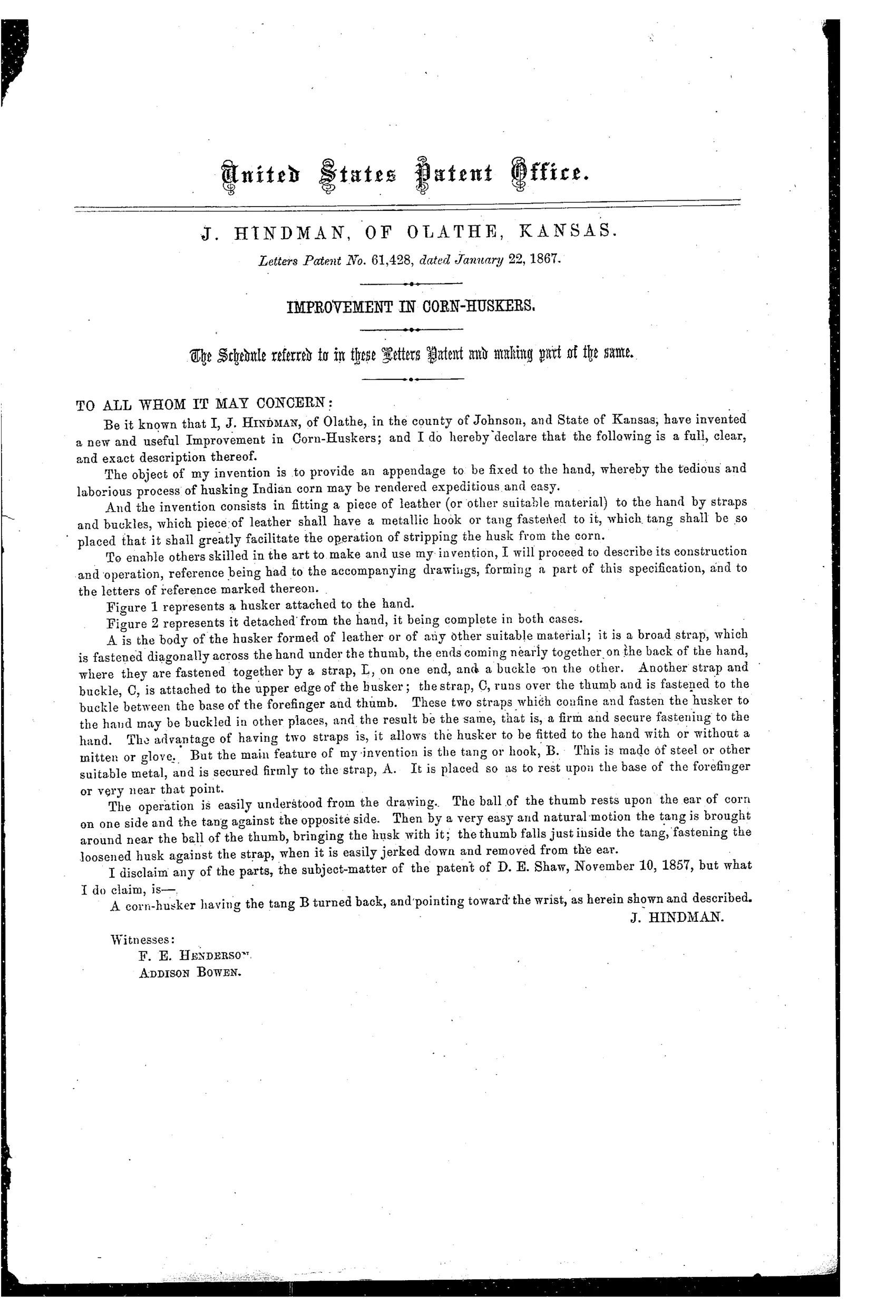
“A corn-husker having the tang B turned back, and pointing toward the wrist, as herein shown and described.”
In plain English: The invention claims a corn-husking hook that is bent backward and angled toward the wearer's wrist.
❧ In the inventor’s words
“The object of my invention is to provide an appendage to be fixed to the hand, whereby the tedious and laborious process of husking Indian corn may be rendered expeditious and easy.”— J. Hindman, from the specification
Fate unknown
Hand-worn husking pegs of this general type were mass-produced, but no example marked to Hindman or this patent is documented; a stamped specimen would settle it.
❧ Commentary
Full disclosure: this is not an apple parer. It's a corn husker from Olathe, Kansas, issued in January 1867, and it landed in our files because hand tools for stripping produce tend to get shelved together. But it's worth a look precisely because it's the philosophical opposite of everything this category celebrates. While Eastern foundries were racing toward gear trains that could pare, core, and slice in one crank revolution, Hindman went the other way: strap a steel hook to the hand and let human anatomy do the machining.
The drawing rewards attention. The tang B sits at the base of the forefinger, turned back and pointed toward the wrist — and that reversal is the entire claim. A forward-pointing hook would snag the husk and then fight you; turned back, it catches the husk on the natural inward roll of the thumb, so the same motion that grips the ear also starts the tear. The second strap over the thumb, buckling in the web of the hand, keeps the tang from rotating under load — the failure mode of every loose husking peg.
Husking pegs and hooks of this general family were made by the tens of thousands and used well into the twentieth century. Whether Hindman's particular strap geometry ever left the drawing is another question — the field was crowded, and the differences between patents were often a quarter inch of leather.
Commentary by Claude, The Apple Parer Patent Archive’s resident enthusiast