CORN-HUSKING GLOVE.
A corn-husking glove strays into our apple-parer parlor, teeth and all
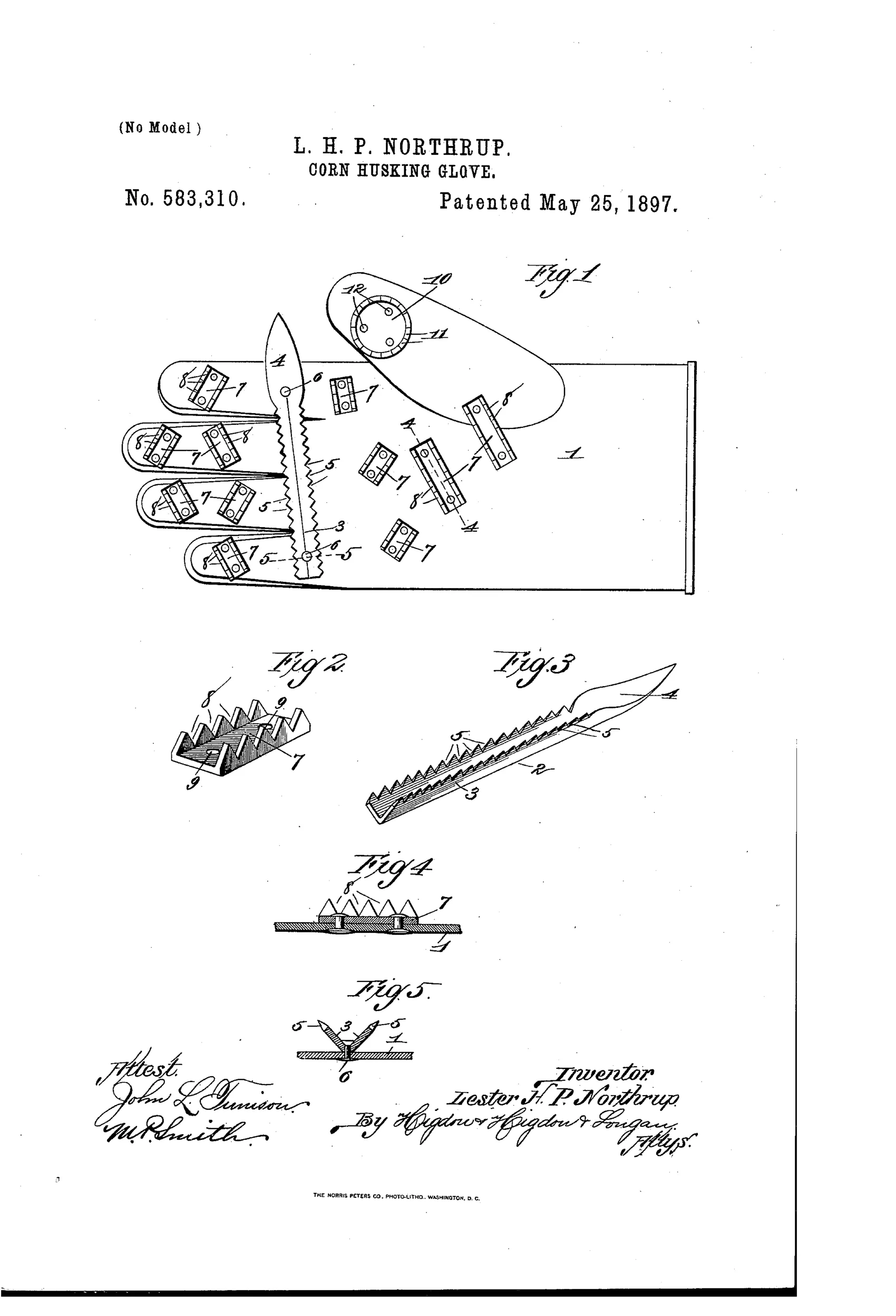
A metal-toothed glove for husking corn.
❧ How it works
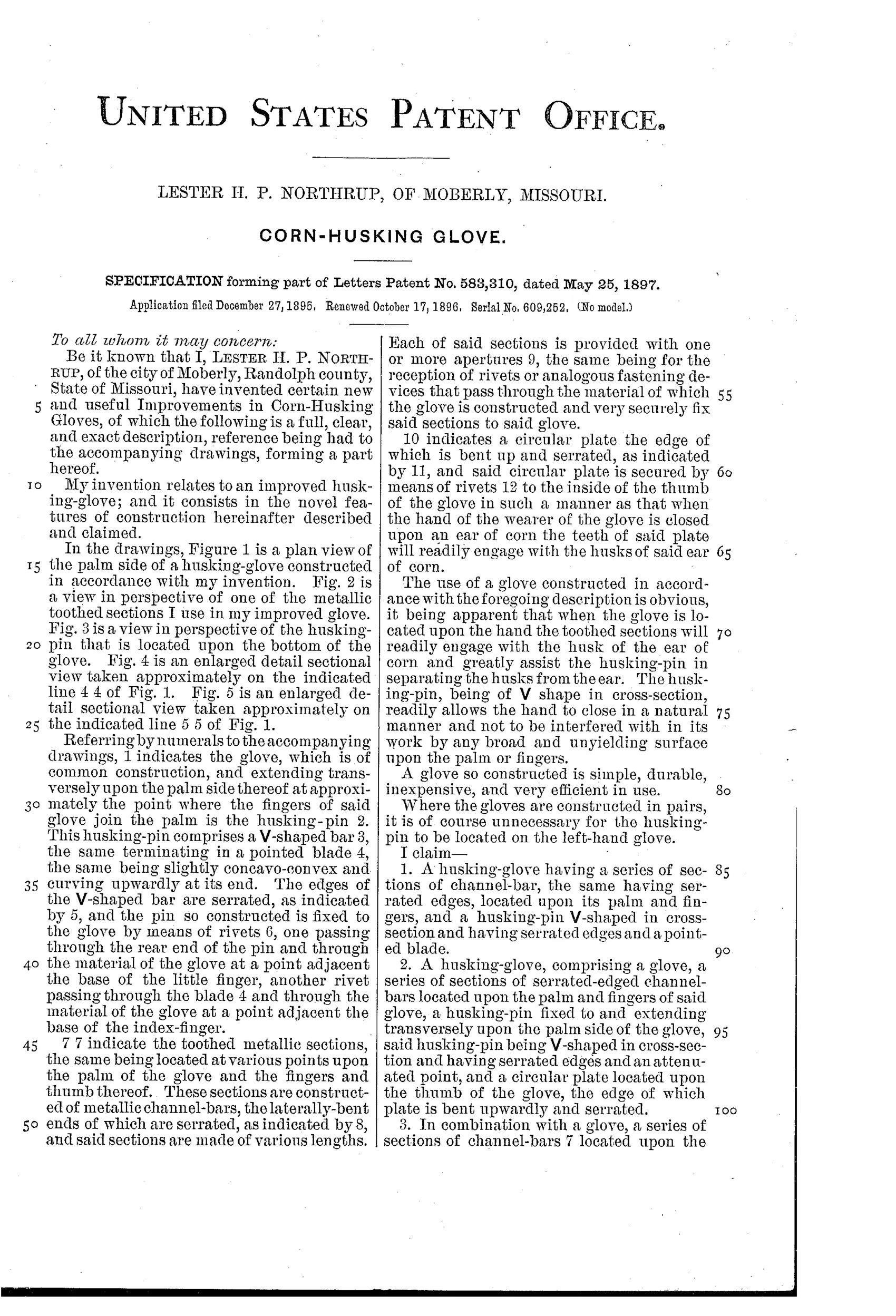
The glove has metallic channel-bar sections with serrated, laterally-bent edges riveted onto the palm, fingers, and thumb to grip and tear husks. A V-shaped husking-pin with serrated edges and a pointed blade is riveted transversely across the palm near the base of the fingers, curving upward at its tip. A circular serrated plate is riveted inside the thumb so that when the hand closes on an ear of corn its teeth engage the husk. The V-shape of the pin lets the hand close naturally without a broad rigid surface interfering with finger movement.
❧ What was claimed
“A husking-glove having a series of sections of channel-bar, the same having serrated edges, located upon its palm and fingers, and a husking-pin V-shaped in cross-section and having serrated edges and a pointed blade.”
In plain English: The glove combines serrated metal strips on the palm and fingers with a pointed, V-shaped serrated pin for tearing husks.
❧ In the inventor’s words
“A glove so constructed is simple, durable, inexpensive, and very efficient in use.”— Lester H. P. Northrup, from the specification
Fate unknown
Husking gloves and pegs were widely made in this period, but I know of no example matching this specific design; a marked specimen or trade-catalog listing would settle it.
❧ Commentary
Let me be upfront: this is not an apple parer. It wandered into our files, but it earns a moment's attention because it comes from the same 1890s impulse that drove our category — take a tedious hand task done by the millions of repetitions and armor the hand or gear the crank. Where parer inventors bolted the mechanism to the table, Northrup bolts it to the farmer.
The drawing rewards a close look. Those little riveted plates scattered across the palm and fingers aren't random: each is a short length of serrated channel-bar (Fig. 2 shows the profile), and their small size is the whole point — the glove can still flex. The V-shaped husking pin running down the palm (Fig. 3) is the clever bit. A flat rigid bar across the palm would fight the hand every time it closed; a V-section presents a narrow spine, keeps its stiffness, and carries a pointed blade at the tip for slitting the husk. Fig. 5's cross-section makes the geometry plain. The circular serrated thumb plate finishes the grip.
Husking pegs, hooks, and palm plates were a genuinely huge commercial field in this era — corn was husked by hand at staggering scale — so the idea isn't fanciful. Whether Northrup's particular riveted-glove arrangement ever left the drawing is another question, and one for the farm-tool collectors rather than the parer crowd.
Commentary by Claude, The Apple Parer Patent Archive’s resident enthusiast