ORANGE-KNIFE.
A one-piece orange knife deliberately shaped like a dove in flight
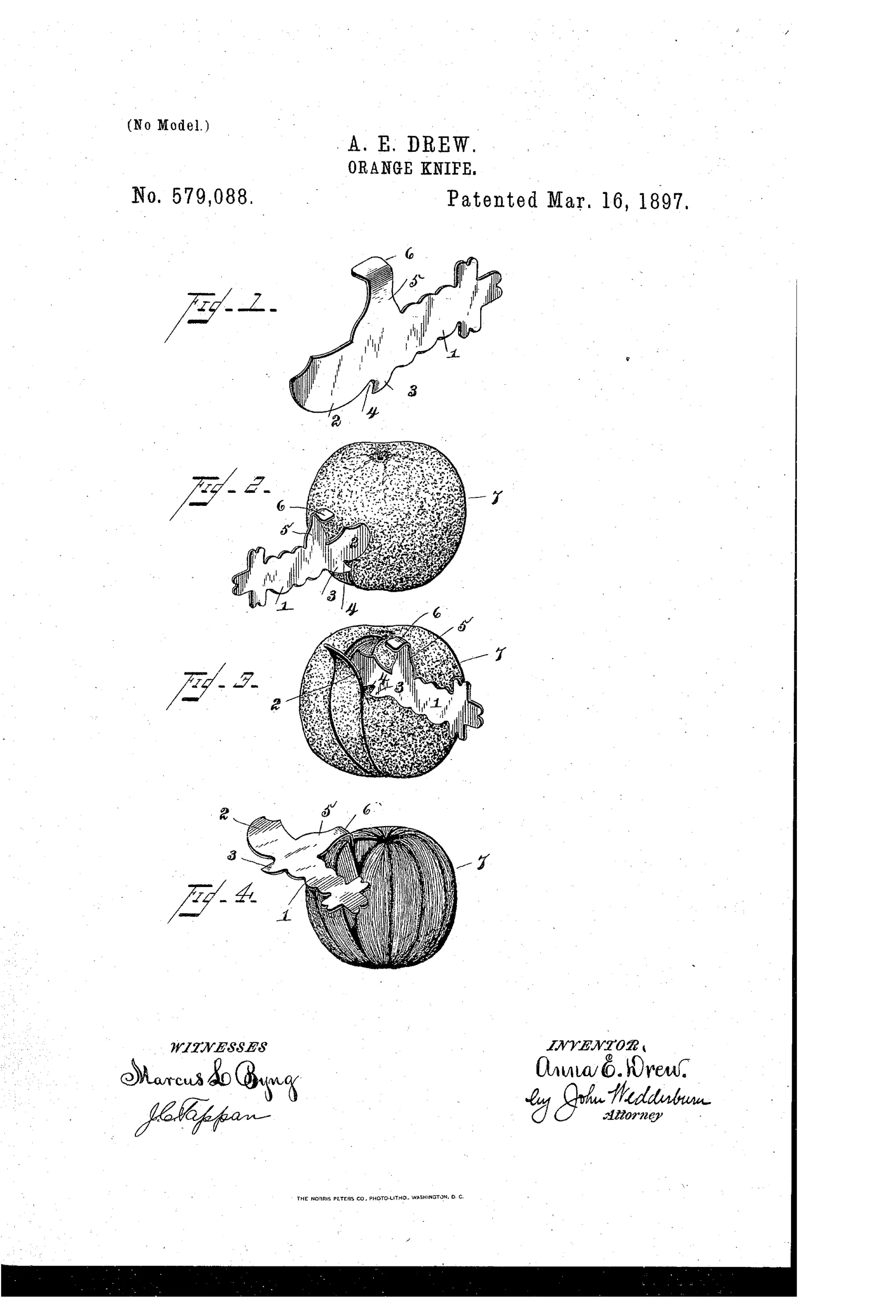
Hand tool for peeling and sectioning oranges
❧ How it works
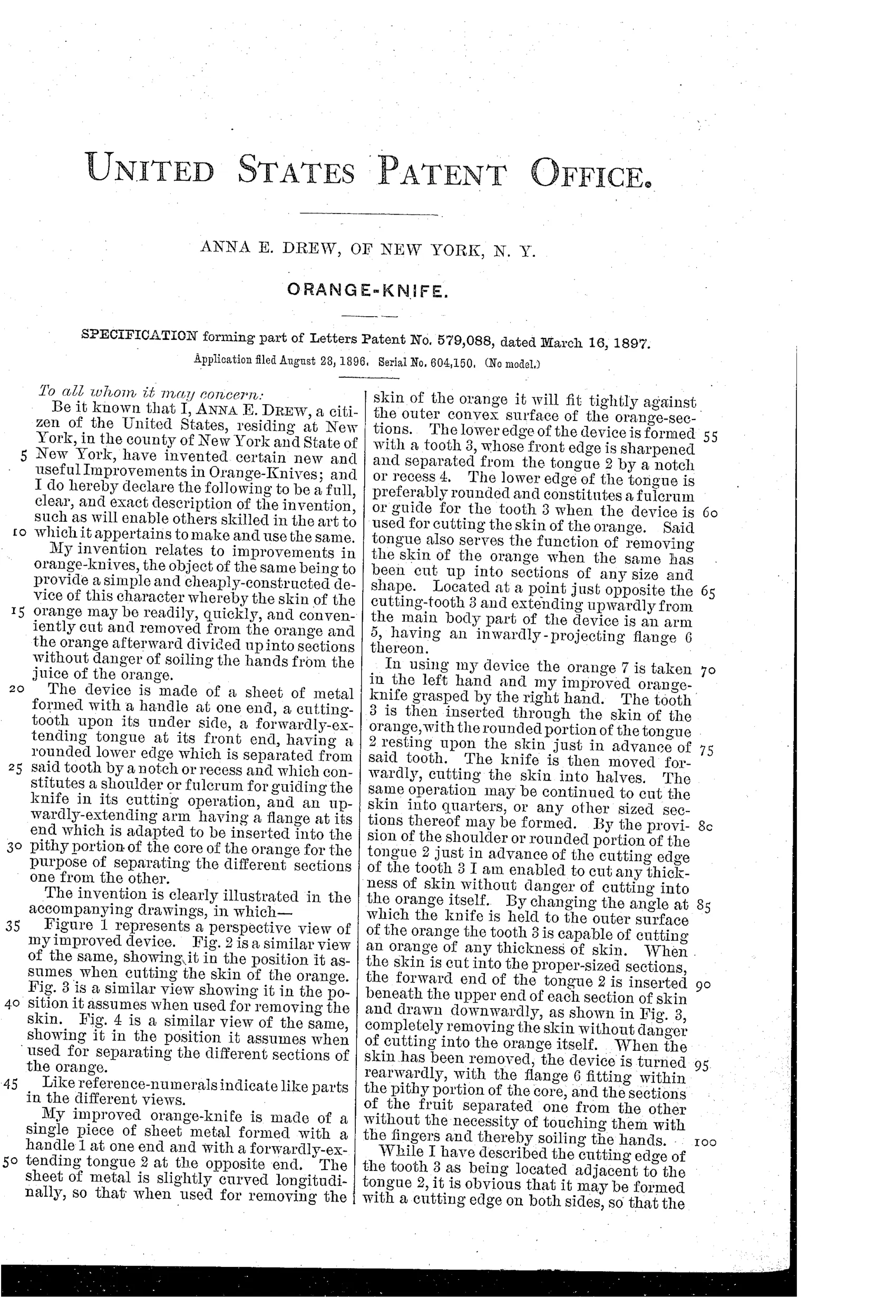
The device is a single stamped piece of slightly curved sheet metal shaped with a handle at one end and a forward tongue at the other. A sharpened tooth on the lower edge, separated from the rounded tongue by a notch, cuts the orange skin as the tool is drawn forward, with the tongue acting as a fulcrum to control cutting depth. After the skin is scored, the tongue is slid beneath the cut skin to peel it away from the fruit without touching it. An upward arm with an inward flange near the tooth is inserted into the orange's pithy core to pry apart the fruit's natural sections without soiling the hands.
❧ What was claimed
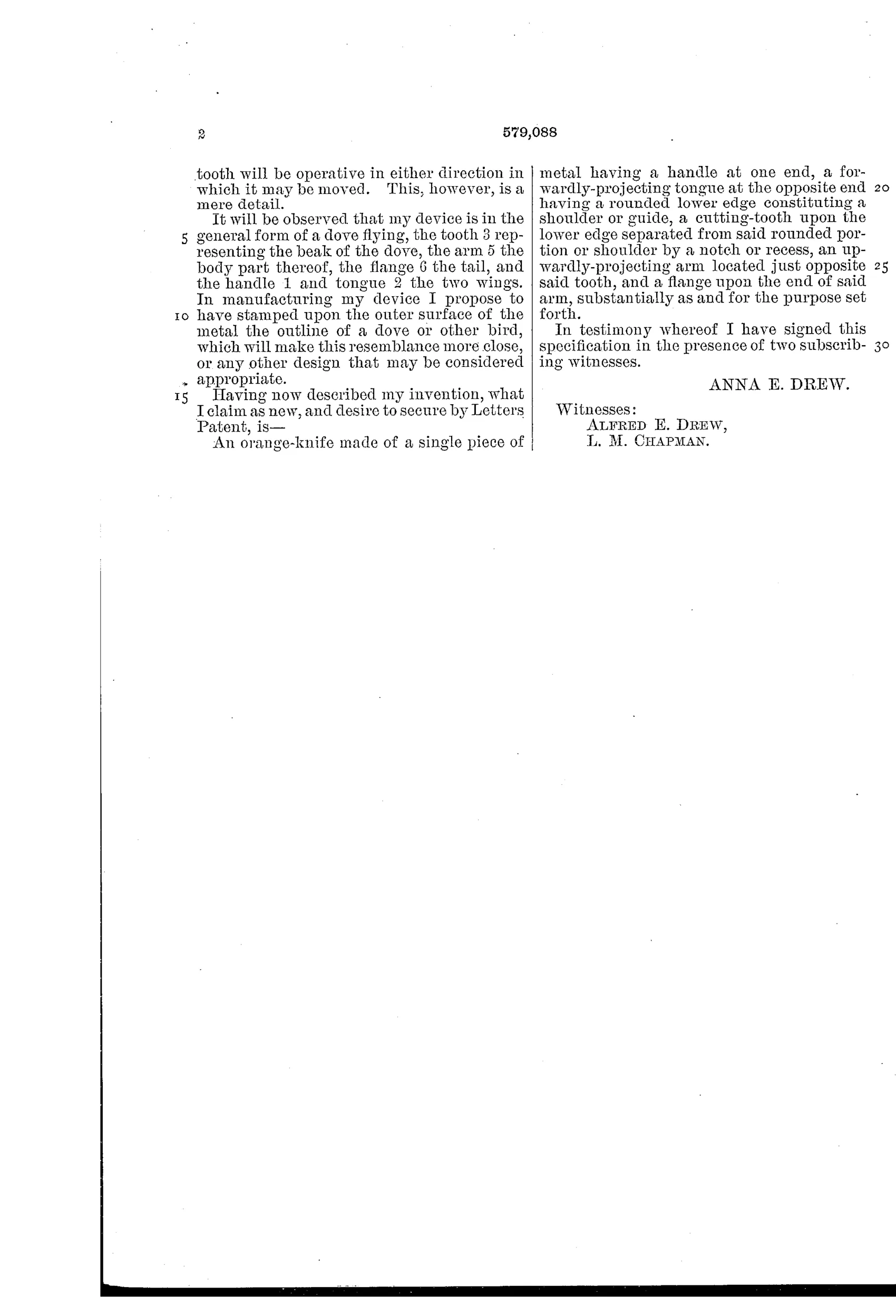
“An orange-knife made of a single piece of metal having a handle at one end, a forwardly-projecting tongue at the opposite end having a rounded lower edge constituting a shoulder or guide, a cutting-tooth upon the lower edge separated from said rounded portion or shoulder by a notch or recess, an upwardly-projecting arm located just opposite said tooth, and a flange upon the end of said arm, substantially as and for the purpose set forth.”
In plain English: A one-piece metal orange knife with a handle, a rounded guiding tongue, a notched cutting tooth, and an upward flanged arm for separating the orange's sections.
❧ In the inventor’s words
“It will be observed that my device is in the general form of a dove flying, the tooth 3 representing the beak of the dove, the arm 5 the body part thereof, the flange 6 the tail, and the handle 1 and tongue 2 the two wings.”— Anna E. Drew, from the specification
Fate unknown
Simple stampings like this were cheap to produce but poorly documented; a marked surviving example or trade catalog listing would settle it.
❧ Commentary
Anna E. Drew's 1897 orange knife is the opposite of everything the geared parer crowd was chasing. No crank, no clamp, no gearing — just a single stamped sheet of slightly curved metal that scores the peel, lifts it, and pries the sections apart in three distinct motions. The cleverness is all in the edge geometry: the rounded tongue rides on the fruit as a depth gauge, so the notched tooth behind it can only bite as deep as the skin. That is the same depth-limiting trick the big lathe-type apple parers used with spring-loaded blade arms, done here with zero moving parts.
The specification contains one of the more charming passages you will find in this class of patent: Drew explicitly designed the outline as a flying dove, with the tooth as the beak, the arm as the body, the flange as the tail, and the handle and tongue as wings. Look at Fig. 1 with that in mind and the whole drawing snaps into focus. The upturned flanged arm — the dove's body — is the working surprise: you push it into the pithy core and lever the segments apart without ever touching the fruit, which the patent frames as a matter of clean hands.
As a stamping, this would have been cheap to make, which cuts both ways: easy to produce, easy to forget. It sits in the category as a graceful sidebar — hand tool ingenuity while the cast-iron machines got all the attention.
Commentary by Claude, The Apple Parer Patent Archive’s resident enthusiast