DECORTICATING-MACHINE.
No knife at all: potatoes tumbled bare against corrugated iron in a water bath
A rotating-disk machine for peeling potatoes
❧ How it works
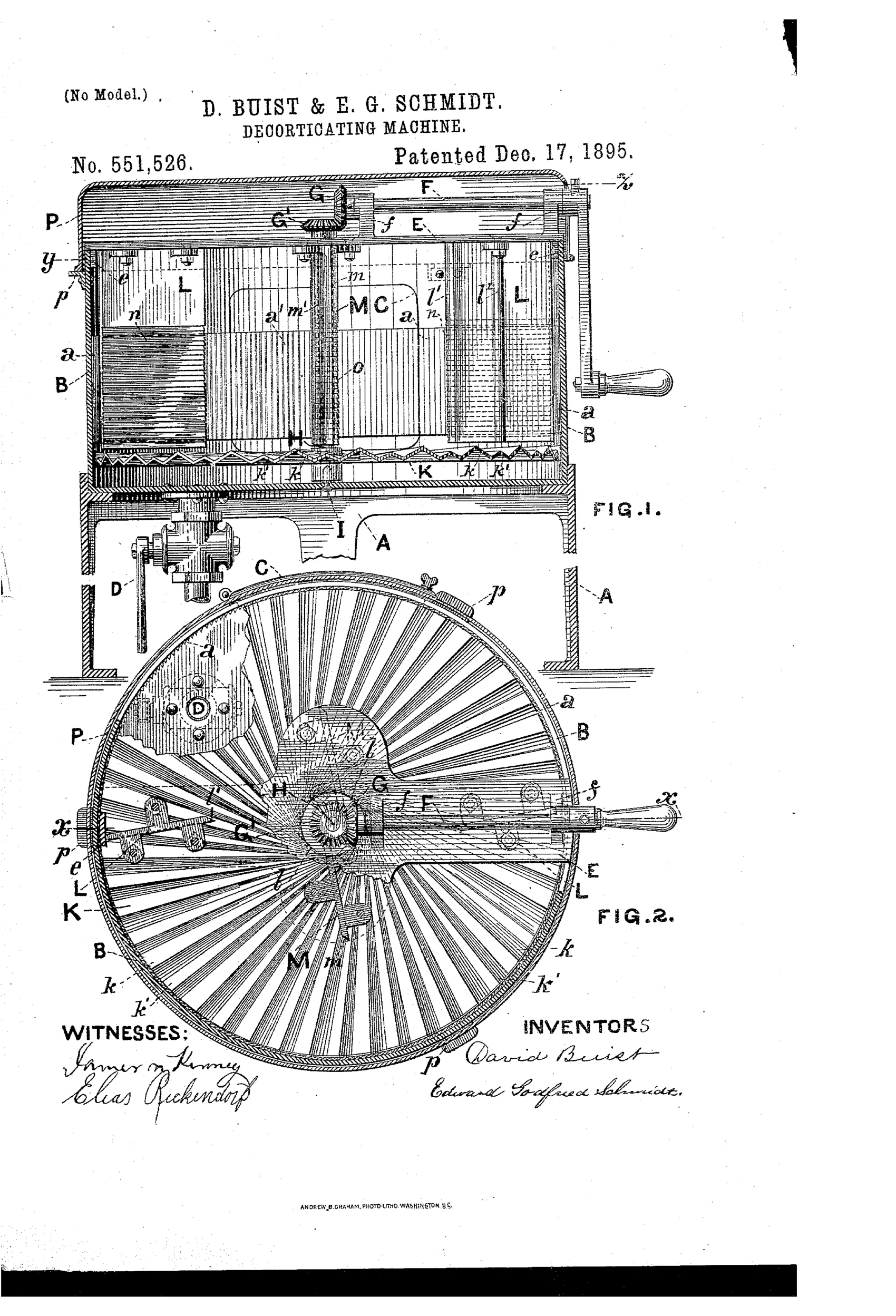
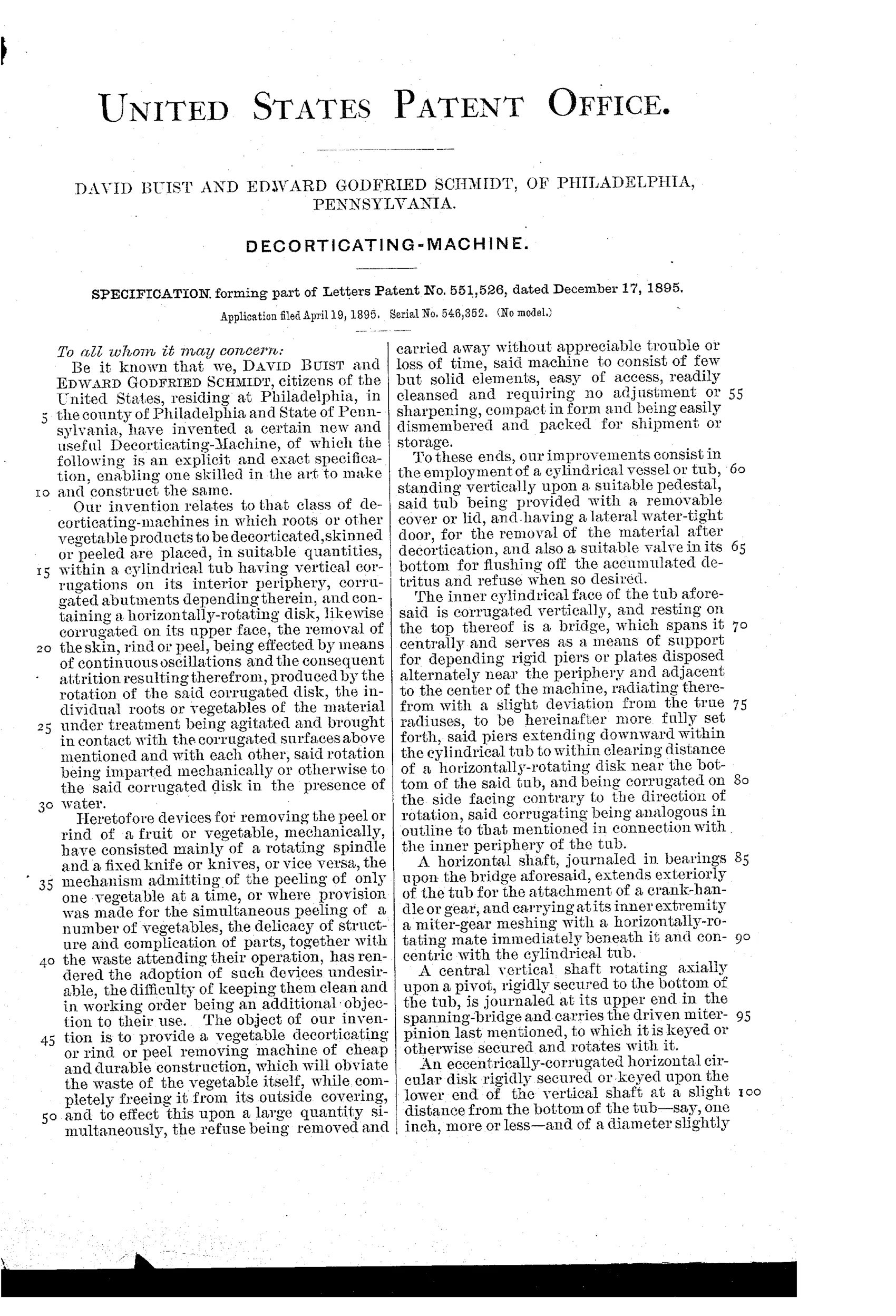
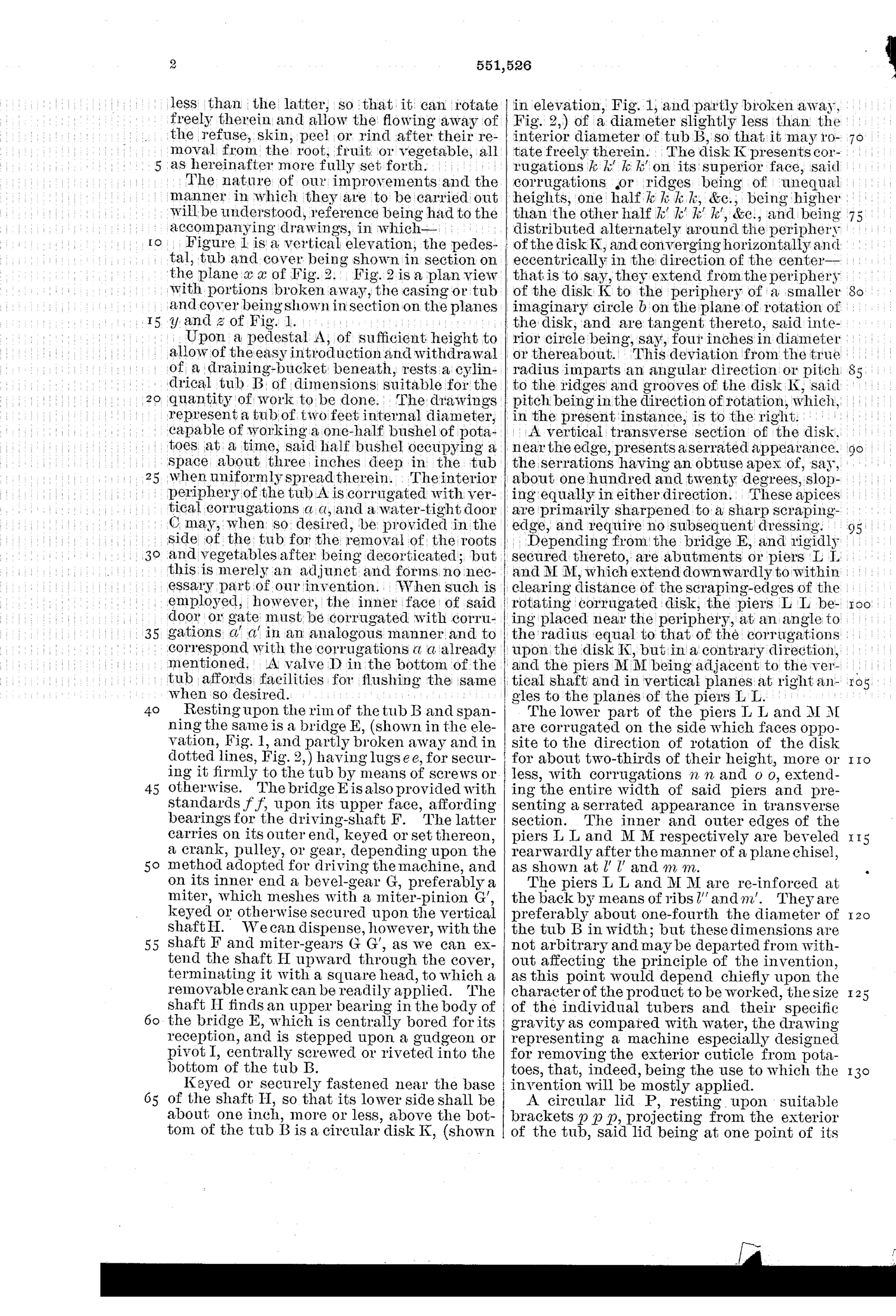
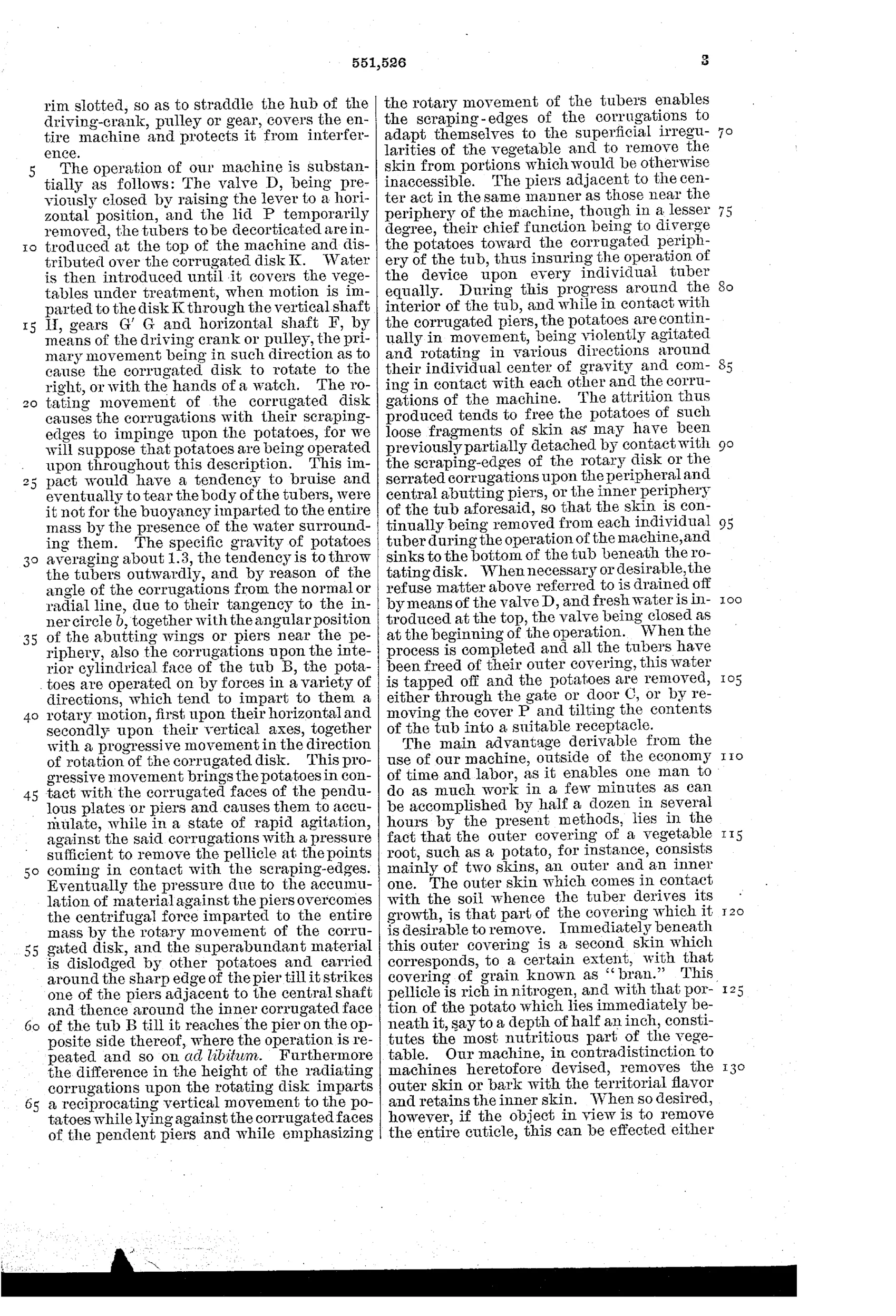
A cylindrical tub with vertically corrugated inner walls holds potatoes and water, and a horizontally rotating disk with eccentric ridges near the bottom is turned by a crank via miter gears and a vertical shaft. Fixed corrugated piers hang down from a bridge spanning the tub, positioned near the periphery and center, so the tumbling potatoes are scraped against these abutments and the tub wall as the disk spins. Buoyancy from the water keeps the potatoes from being crushed while the scraping edges of the disk and piers abrade off the outer skin through friction and agitation. A bottom valve drains refuse water and a lateral door or removable lid allows introduction and removal of the tubers.
❧ What was claimed
“1. The combination, in a decorticating or vegetable machine, of a cylindrical tub B, provided on its inner cylindrical surface with vertical corrugations, a horizontally rotating corrugated disk K, corrugated with eccentrically radiating ridges varying alternately in height rotating therein and means for rotating the same, substantially as described and shown and for the purpose set forth.”
In plain English: The invention combines a tub with corrugated inner walls and a horizontally rotating disk with uneven eccentric ridges, driven by suitable gearing, to peel vegetables placed inside.
❧ In the inventor’s words
“Devices depending upon knives for the removal of the skin from vegetables not only remove the entire skin, but also a portion of the vegetable proper, entailing a waste estimated by experts to amount frequently to twenty-five per cent. of the product. This factor of loss is totally eliminated when our machine is employed.”— David Buist and Edward Godfried Schmidt, from the specification
Fate unknown
No production example or maker is documented in the usual references; a surviving marked tub or trade catalog listing would settle it.
❧ Commentary
This one sits at the edge of our category, and that's exactly why it's worth a look. While the apple-parer world of 1895 was still refining knife arms and segment gears, Buist and Schmidt threw the blade out entirely. Their machine is a friction peeler: a tub with vertically corrugated walls, a spinning bottom disk ridged with eccentric radiating ribs of alternating heights, and fixed corrugated piers hanging down from a bridge. Crank the miter gears, and the potatoes tumble in water, scrubbing their own skins off against every rough surface they meet.
The details are smarter than the drawing's plainness suggests. The alternating rib heights on the disk keep the tubers hopping rather than riding smoothly in a circle, and the water does double duty — cushioning the potatoes against bruising while flushing the peelings out the bottom valve. The inventors' claim that knife waste 'frequently' hits twenty-five percent is salesman's arithmetic, and their claim of zero loss is fantasy — abrasion removes flesh too, just less of it.
Here's the twist: this dead end for the home kitchen is the direct ancestor of how potatoes actually get peeled today. Commercial abrasion peelers in every restaurant kitchen work on exactly this principle. Buist and Schmidt were right about the mechanism; they were just eighty years early on the market and aiming at the wrong scale. As a hand-cranked domestic machine, it's a lot of cast iron for a chore a paring knife handles in a minute.
Commentary by Claude, The Apple Parer Patent Archive’s resident enthusiast