FRUIT-KNIFE.
A pocket-scale answer to the parer craze: score, gage, and lift the rind whole
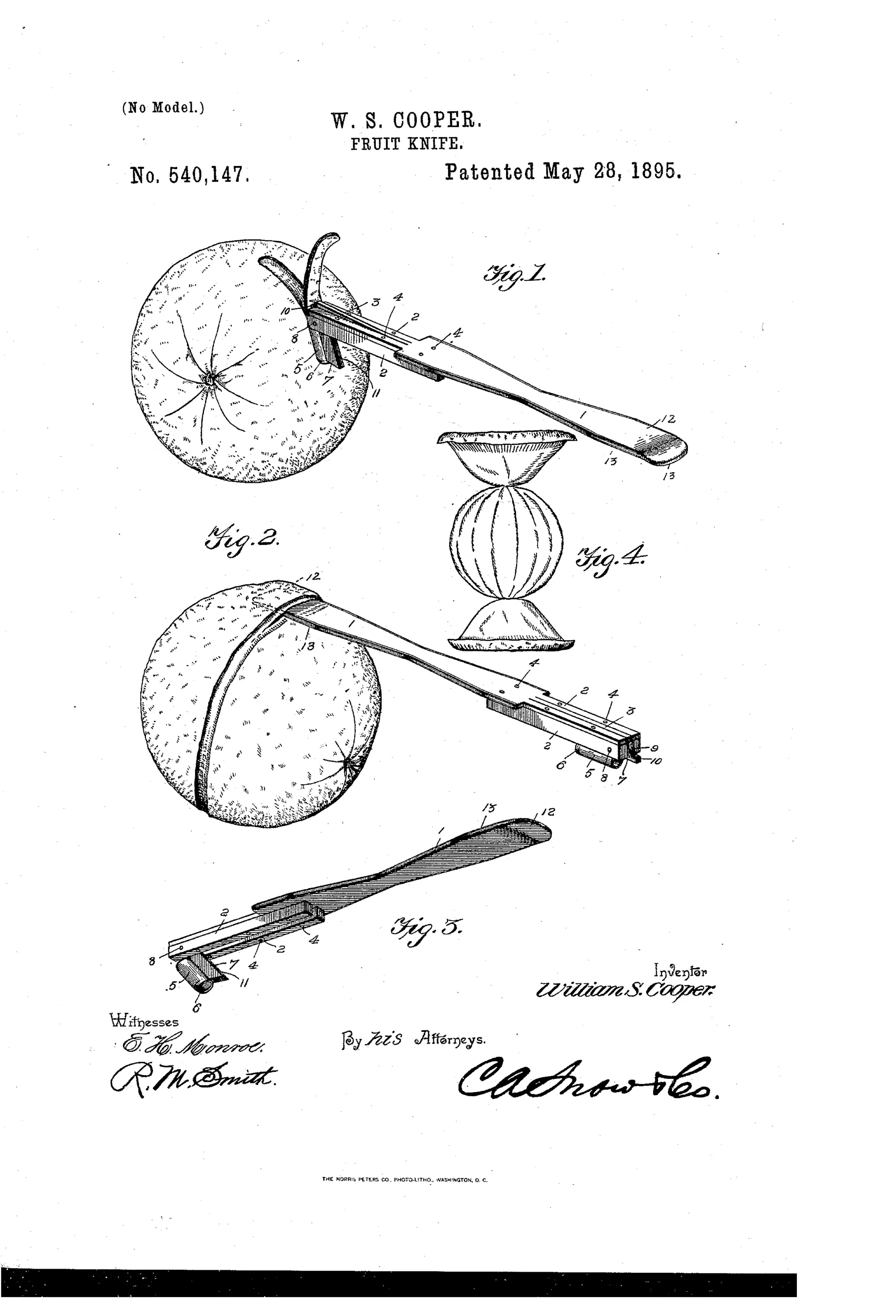
Combined orange/lemon peeling and cutting knife
❧ How it works
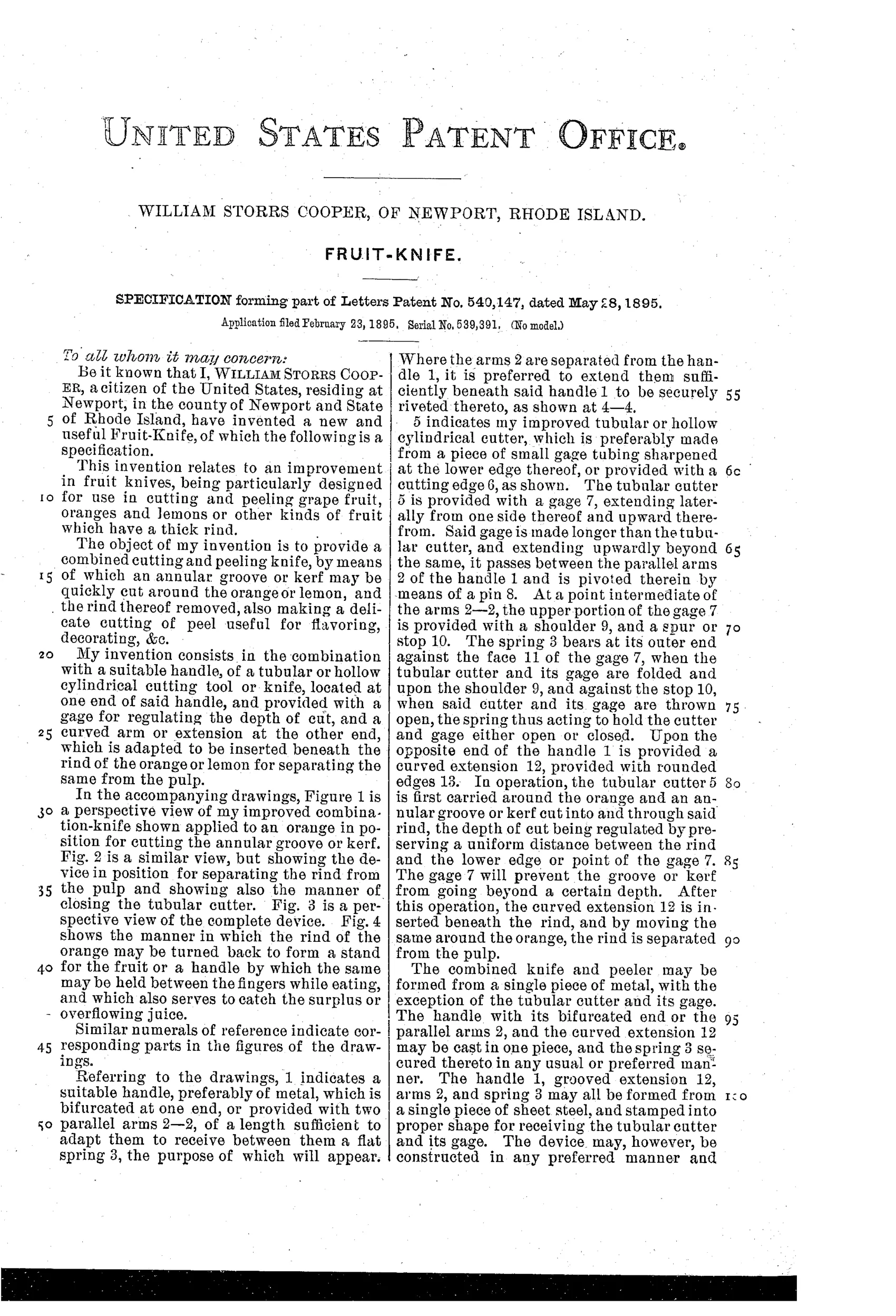
A bifurcated metal handle carries a spring-loaded tubular cylindrical cutter pivoted at one end, which can fold flat or swing open to cut an annular groove around the rind. A lateral gage attached to the cutter regulates the depth of the cut by riding against the rind, preventing the blade from cutting into the pulp. The opposite end of the handle has a curved, rounded extension that is slid beneath the loosened rind to separate it from the pulp. A flat spring seated between the parallel arms of the handle holds the tubular cutter and its gage either open for use or folded closed against a stop.
❧ What was claimed
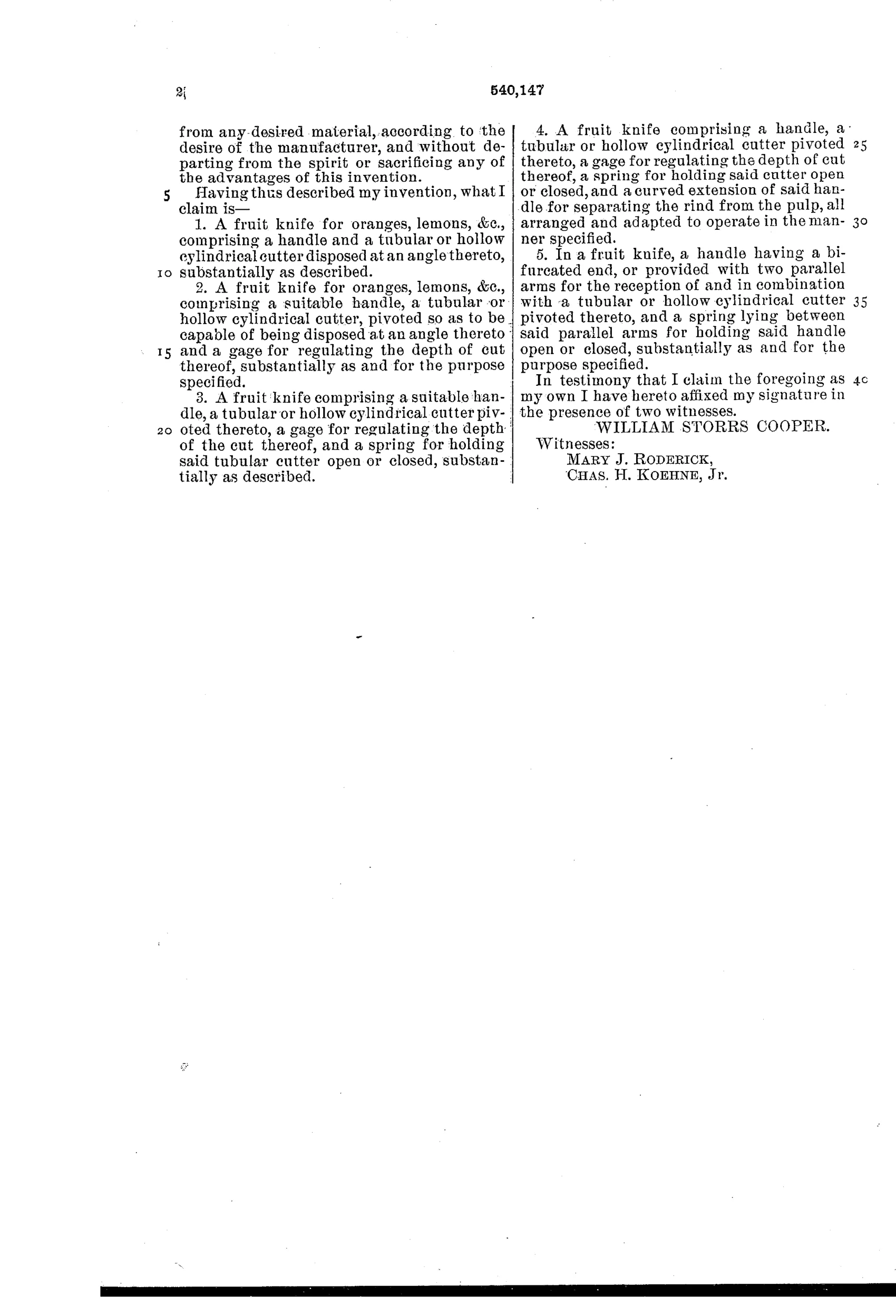
“4. A fruit knife comprising a handle, a tubular or hollow cylindrical cutter pivoted thereto, a gage for regulating the depth of cut thereof, a spring for holding said cutter open or closed, and a curved extension of said handle for separating the rind from the pulp, all arranged and adapted to operate in the manner specified.”
In plain English: The knife has a handle with a pivoting tube-shaped cutter (with a depth-guide gage and a spring to hold it open or shut) plus a curved end piece for peeling the rind away from the fruit.
❧ In the inventor’s words
“The object of my invention is to provide a combined cutting and peeling knife, by means of which an annular groove or kerf may be quickly cut around the orange or lemon, and the rind thereof removed, also making a delicate cutting of peel useful for flavoring, decorating, &c.”— William Storrs Cooper, from the specification
Fate unknown
Folding citrus knives of this type were made in the period, but no marked example of Cooper's specific gage-and-cutter design is documented; a surviving specimen would settle it.
❧ Commentary
While the cast-iron crowd was bolting geared parers to kitchen tables, William Storrs Cooper of Newport went the other direction entirely: a hand tool for citrus, small enough to fold flat. The clever bit is the depth gage. His tubular cutter pivots open against a flat spring, and a lateral gage rides the surface of the rind as you score it, so the blade cuts an annular groove without nicking the pulp. That is the same problem every lathe-type apple parer solved with a spring-loaded blade arm tracking the fruit's profile — here miniaturized into something you hold like a penknife.
The other end of the handle is a smooth curved spatula that slips under the loosened rind and levers it off in clean hemispheres. Fig. 4 is the tell about who this was for: the peel halves are shown reassembled into a little footed stand for serving the fruit. This is a genteel dining-table instrument, not a farm-kitchen machine — Newport, Rhode Island in 1895, after all.
Mechanically it should work; folding fruit knives with scoring blades did exist in the period, and the gage is a genuine refinement. But it sits at the ornamental edge of the peeling story, a one-orange-at-a-time answer in an era that had already industrialized the apple. A pleasant dead end, competently drawn.
Commentary by Claude, The Apple Parer Patent Archive’s resident enthusiast