IMPROVEMENT IN CORN-HUSKERS
A corn husker strays into our orchard — the hand-hook cousin of paring
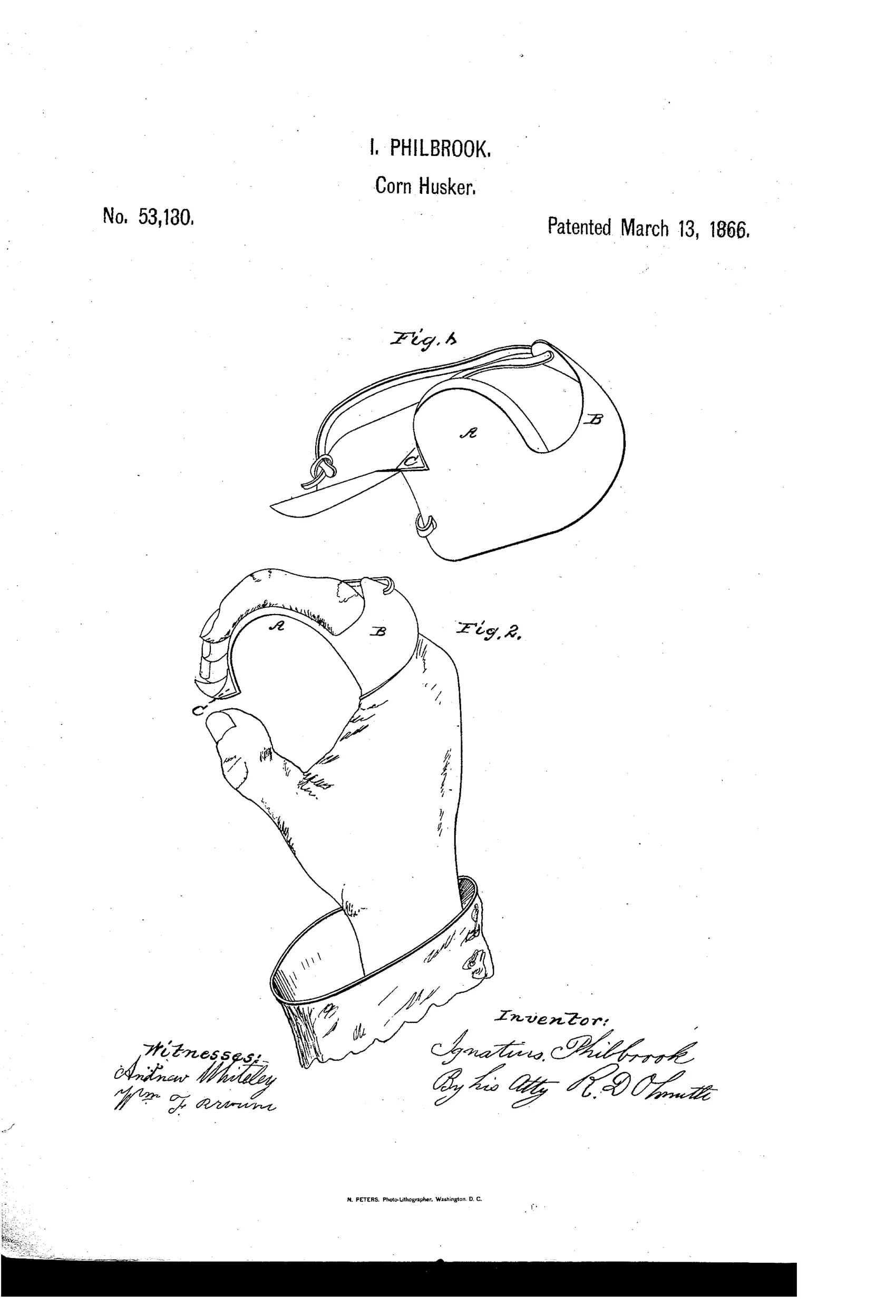
Hand-worn metal husking hook device
❧ How it works
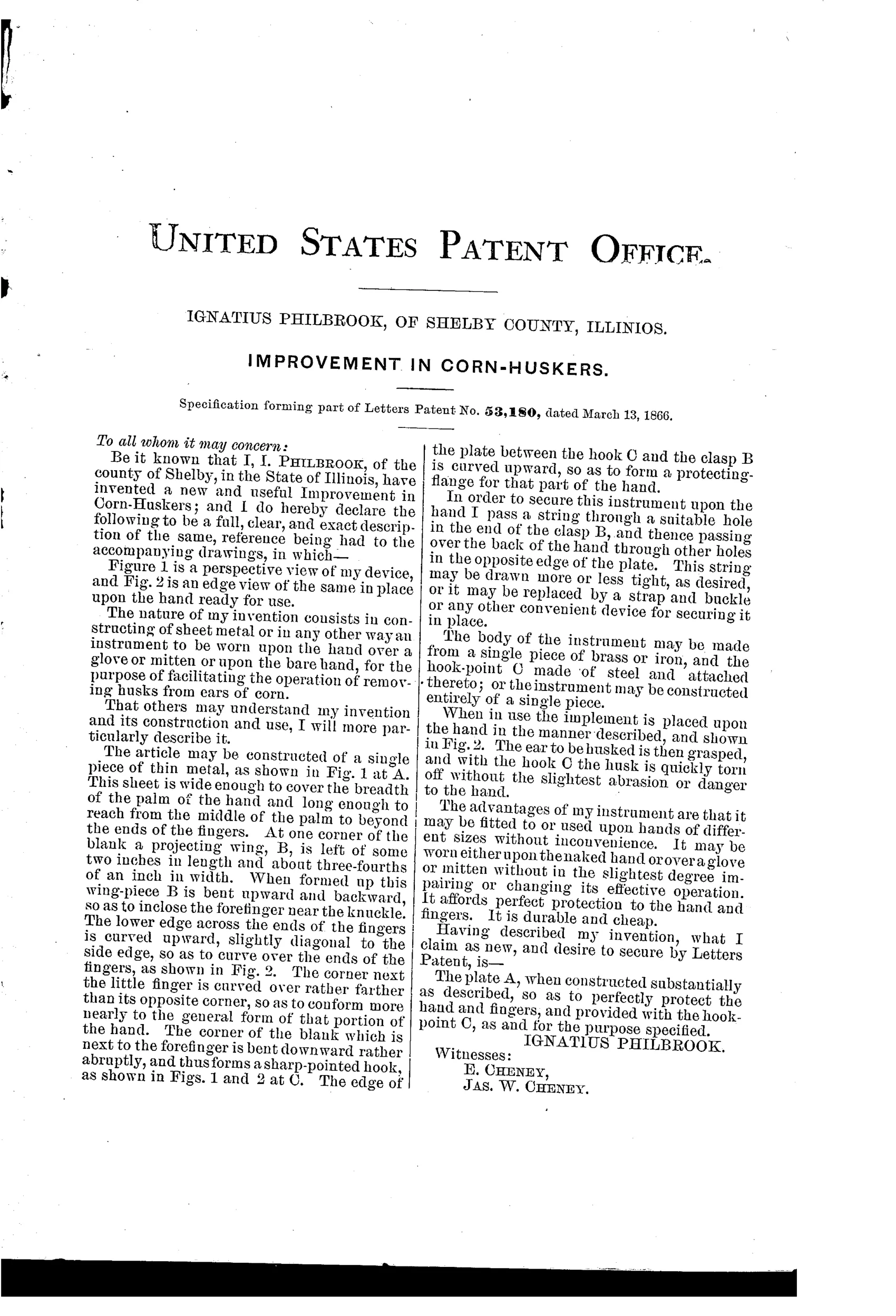
A shaped sheet-metal plate covers the palm and fingers, with a wing piece bent upward to enclose the forefinger near the knuckle. One corner of the plate is bent downward abruptly to form a sharp-pointed hook used to tear husks from corn ears. The plate is secured to the hand by a string or strap passed through holes near the clasp and over the back of the hand. A curved flange between the hook and clasp protects that part of the hand from abrasion.
❧ What was claimed
“The plate A, when constructed substantially as described, so as to perfectly protect the hand and fingers, and provided with the hook-point C, as and for the purpose specified.”
In plain English: The claim covers the shaped metal hand plate with its protruding hook point, made and used as described to protect the hand while husking corn.
❧ In the inventor’s words
“the husk is quickly torn off without the slightest abrasion or danger to the hand.”— Ignatius Philbrook, from the specification
Fate unknown
Husking hooks of this general form were widely manufactured, but no example marked to Philbrook or matching this exact plate is documented; a marked specimen would settle it.
❧ Commentary
Full disclosure: this is not an apple parer. Philbrook's 1866 patent is a corn-husking hook, and it landed in our files as the hand-tool cousin of everything we cover. But it's worth two minutes, because it shows the road not taken. While the parer inventors of the 1860s were bolting geared cast-iron machines to kitchen tables, Philbrook solved his crop problem by armoring the hand itself: a shaped sheet-metal plate over the palm, a wing bent up to enclose the forefinger, and one corner turned down abruptly into a sharp hook point for tearing husks.
Fig. 2 is the drawing to study. The hand is shown gripping with fingers curled under the plate, and you can see the logic — the hook sits right where a thumbnail would naturally dig into a husk, but backed by steel and shielded by a curved flange so the leaves don't rasp the skin raw. Anyone who has husked a wagonload of corn bare-handed understands the claim's boast that the husk comes off 'without the slightest abrasion or danger to the hand.'
Husking pegs and palm hooks of this general family were made by the tens of thousands into the twentieth century — Boss, Clark, and dozens of others. Whether Philbrook's specific plate-and-wing pattern was ever produced is another question; the type succeeded even if this design may not have.
Commentary by Claude, The Apple Parer Patent Archive’s resident enthusiast