IMPROVEMENT IN CORNSTALK CUTTERS AND STRIPPERS.
A cornstalk cutter that wandered into the parer files — and it's worth the detour
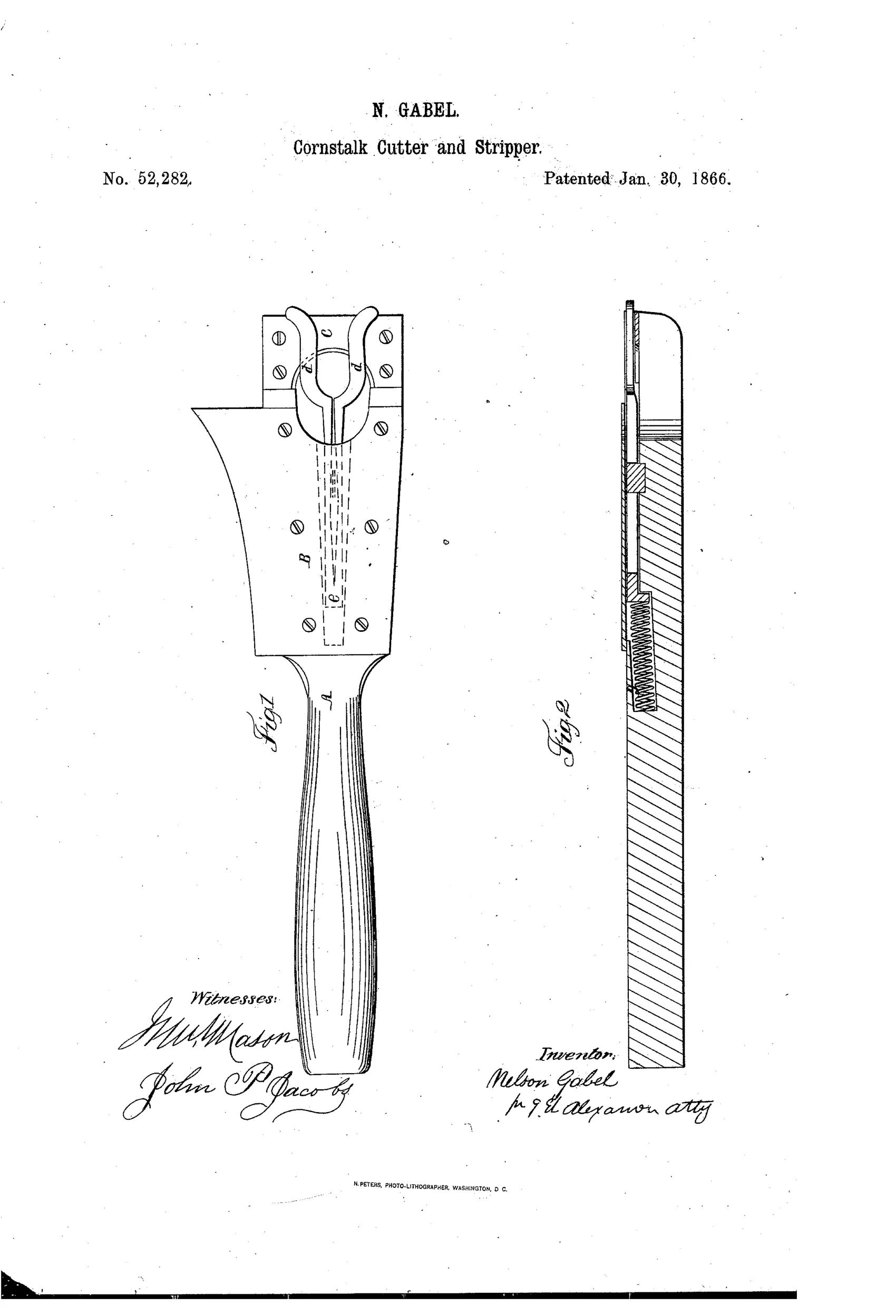
Hand tool for cutting and stripping cornstalks.
❧ How it works
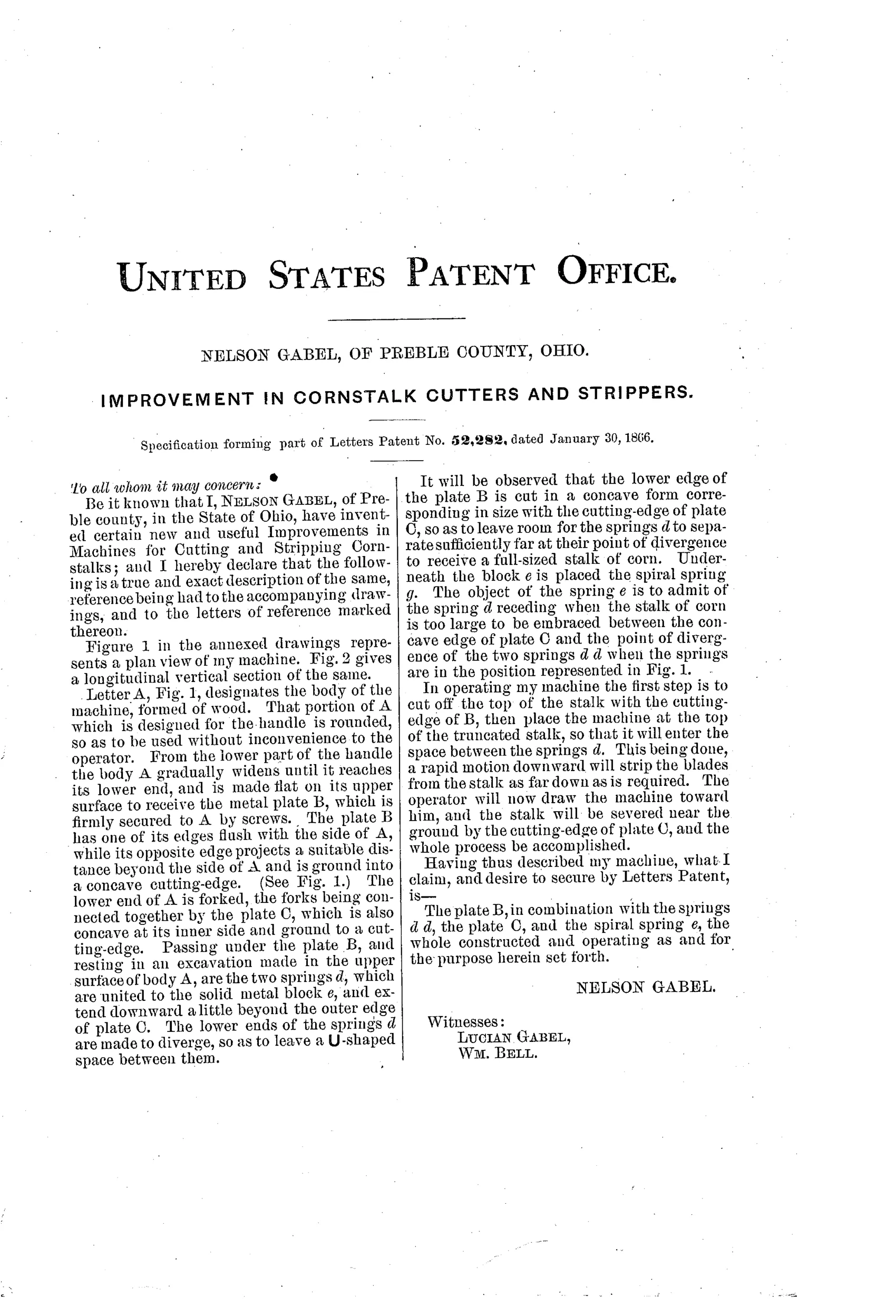
A wooden body A carries a metal plate B ground to a concave cutting-edge for topping stalks. The forked lower end holds plate C, also concave and sharpened, which severs the stalk near the ground. Two diverging springs d, joined to a metal block e, sit above plate C and open into a U-shaped space to strip blades from the stalk as the tool is drawn downward. A spiral spring beneath block e lets the springs d recede when a stalk is too large to fit between them.
❧ What was claimed
“The plate B, in combination with the springs d d, the plate C, and the spiral spring e, the whole constructed and operating as and for the purpose herein set forth.”
In plain English: The claim covers the combination of the topping plate, the two diverging stripping springs, the base cutting plate, and the spiral spring, all working together as described.
❧ In the inventor’s words
“The operator will now draw the machine toward him, and the stalk will be severed near the ground by the cutting-edge of plate C, and the whole process be accomplished.”— Nelson Gabel, from the specification
Fate unknown
Simple enough to have been made locally, but no documented example is known; a marked specimen or period advertisement would settle it.
❧ Commentary
Let's be honest up front: this is not an apple parer. Nelson Gabel's 1866 patent is a farm hand tool for topping and stripping cornstalks, and how it landed in our category files is a mystery of classification. But since it's here, it deserves a fair reading, because the mechanism has a family resemblance to what our parer inventors were chasing: a single stroke that does several jobs at once.
The tool is essentially a heavy-bladed hook on a wooden handle. The upper plate B, ground concave, tops the stalk. The forked lower plate C, also concave and sharp, severs it near the ground. Between them sit two diverging leaf springs that open into a U-shaped throat — you hook the stalk, draw the tool down, and the springs squeegee the blades off as the stalk passes through. The clever detail, visible in Fig. 2's section, is the coil spring under block e: it lets the whole stripping assembly recede when a fat stalk won't fit, instead of jamming. That's the same self-accommodating instinct that gave apple parers spring-loaded blade arms to follow irregular fruit.
As an 1866 hand tool it's plausible and cheap enough to make — a blacksmith could turn one out. Whether anyone did is another question; unmarked farm tools of this type rarely survive with attribution.
Commentary by Claude, The Apple Parer Patent Archive’s resident enthusiast