FRUIT-CUTTER.
An 1892 orange-rind scorer that anticipates the plastic peeler in every kitchen drawer
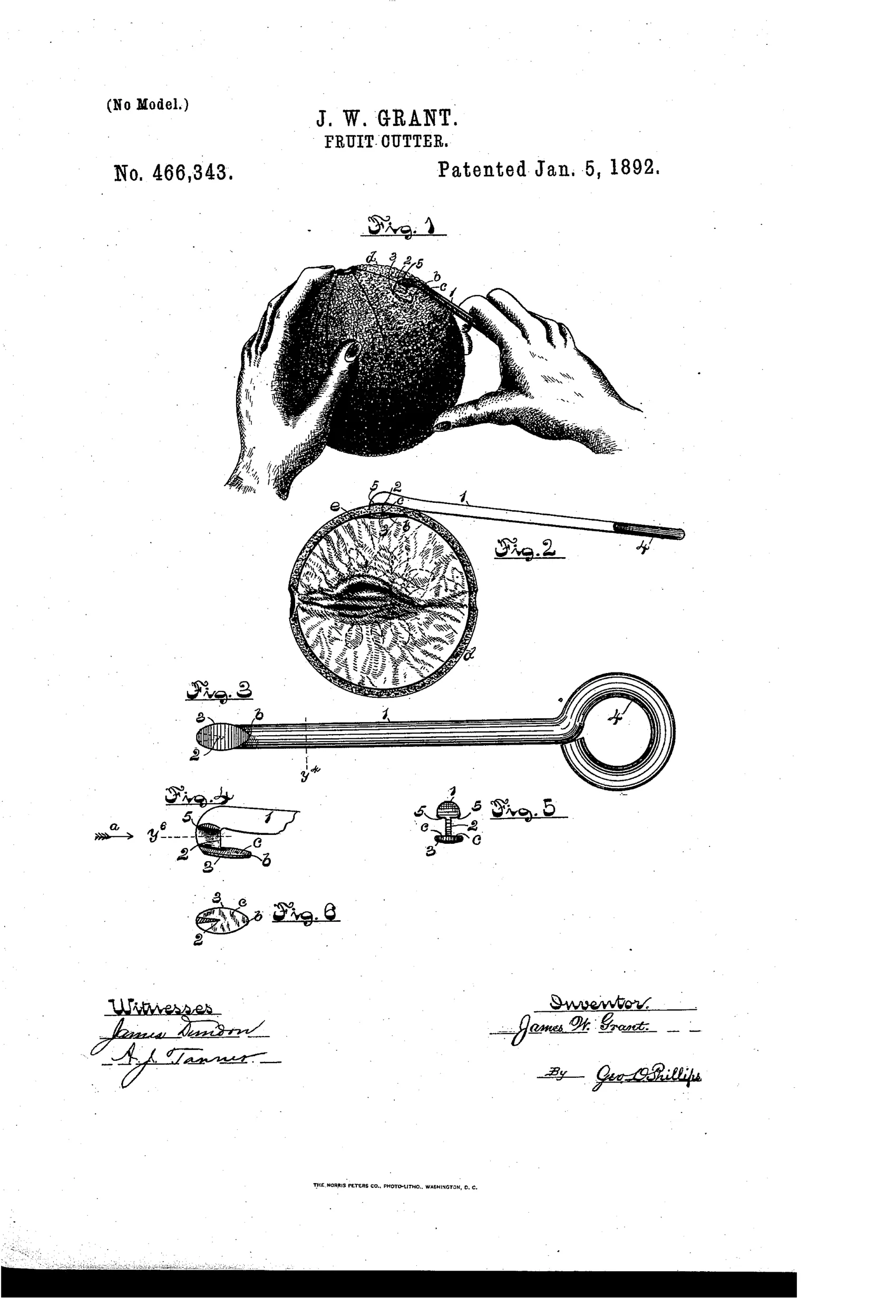
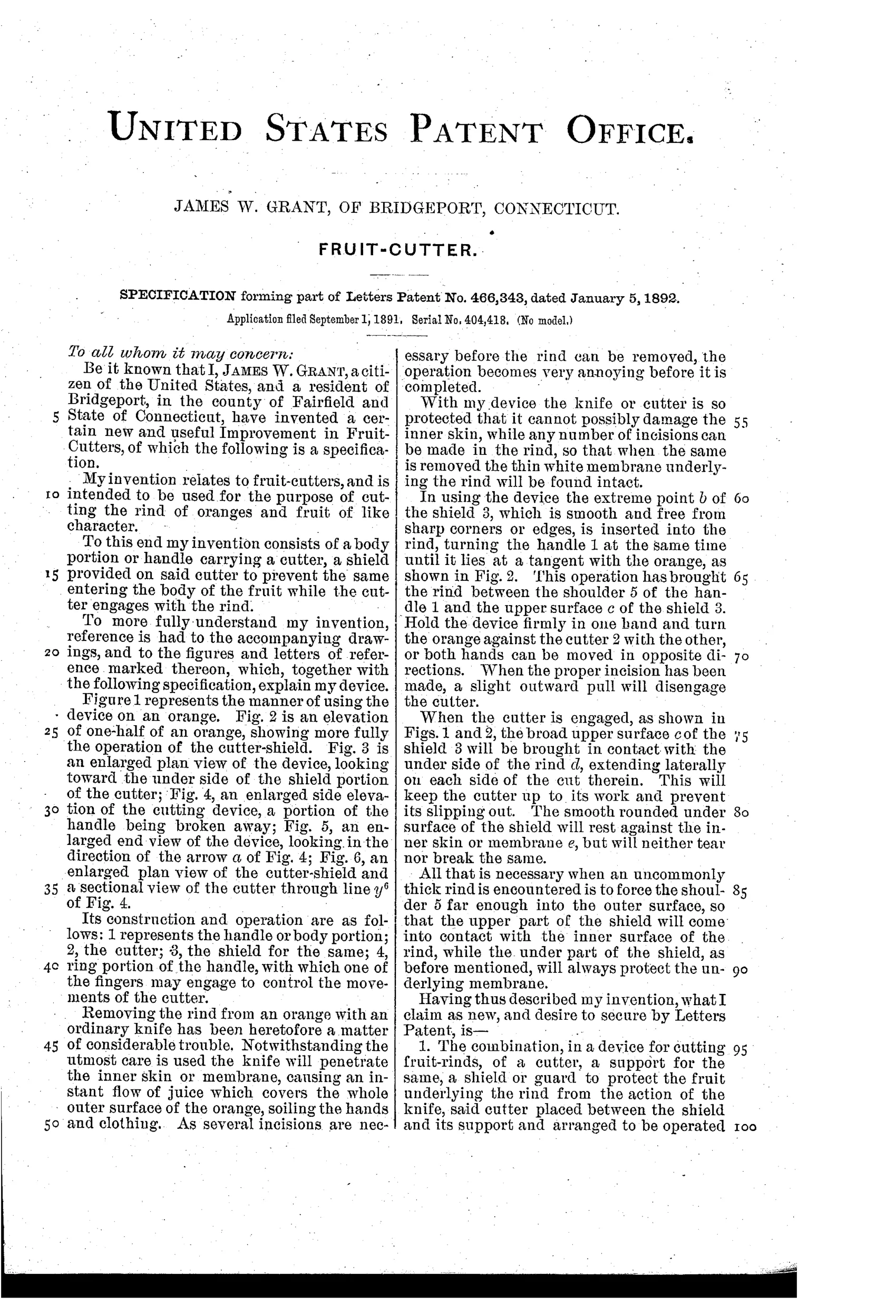
Hand tool for cutting orange rind
❧ How it works
A handle carries a cutter blade with an attached shield mounted at right angles to it. The shield's smooth rounded point is inserted into the rind and the handle turned so the shield lies tangent to the fruit surface. The cutter is thus positioned between the shield and the rind so that the shield's broad upper surface contacts the underside of the rind, keeping the blade engaged and preventing it from cutting into the inner membrane. A ring on the handle end lets a finger control the cutter's movement while making incisions.
❧ What was claimed
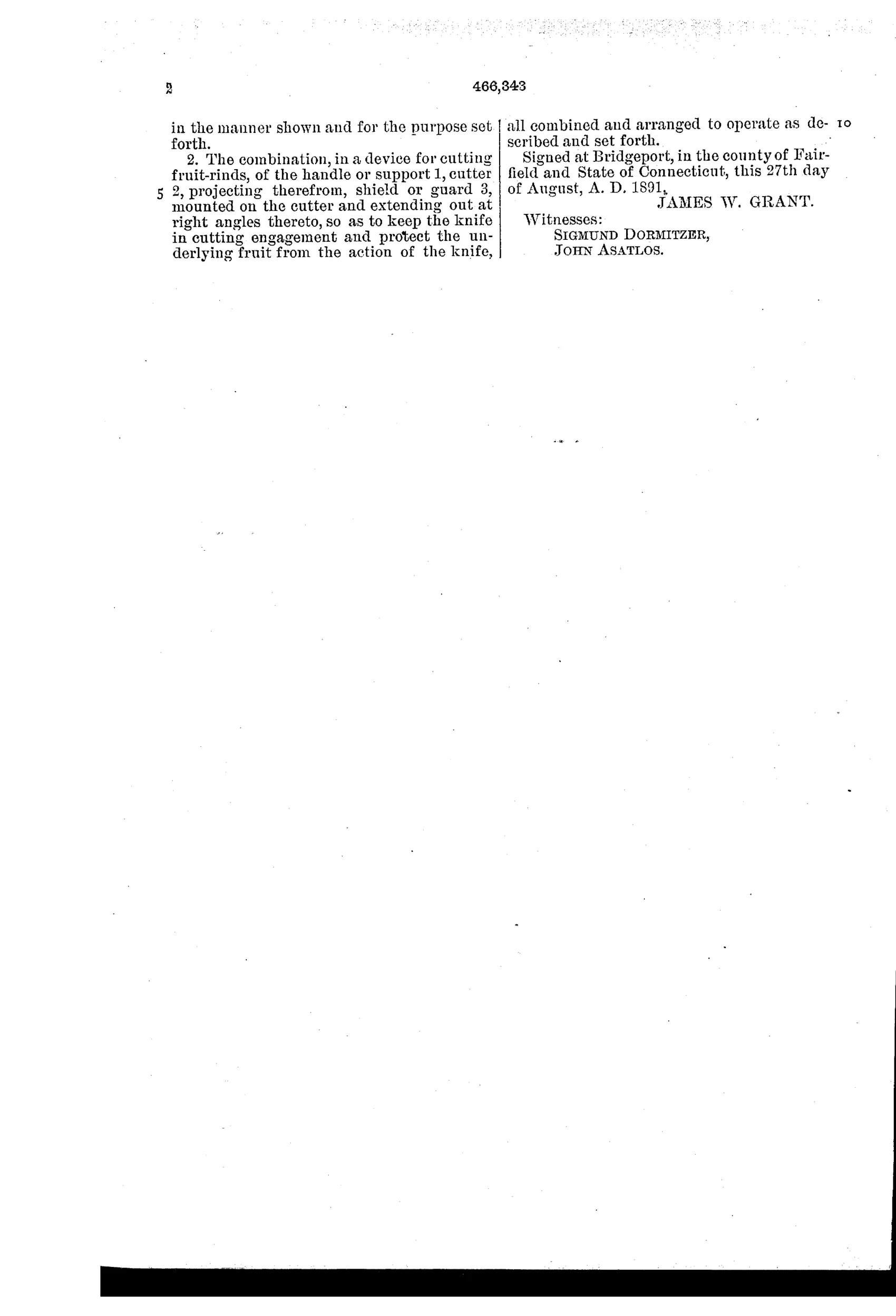
“The combination, in a device for cutting fruit-rinds, of the handle or support 1, cutter 2, projecting therefrom, shield or guard 3, mounted on the cutter and extending out at right angles thereto, so as to keep the knife in cutting engagement and protect the underlying fruit from the action of the knife, all combined and arranged to operate as described and set forth.”
In plain English: A handle with a projecting cutter blade and a shield mounted at a right angle to the blade, so the shield keeps the blade cutting the rind while protecting the fruit beneath it.
❧ In the inventor’s words
“As several incisions are necessary before the rind can be removed, the operation becomes very annoying before it is completed.”— James W. Grant, from the specification
Fate unknown
No marked example or DATAMP listing is known to me; a surviving specimen matching the shield-and-ring detail would settle it.
❧ Commentary
This is the quiet outlier in a category dominated by clamp-on cast iron. No gears, no crank, no fork — just a handle, a small blade, and the one idea that matters: a shield mounted at right angles to the cutter, riding along the underside of the rind so the blade can score deep enough to matter but never deep enough to wound the fruit. Grant's complaint in the specification is disarmingly honest — making several incisions in an orange 'becomes very annoying before it is completed' — and his fix is a depth gauge you can't get wrong.
Look at Fig. 2 rather than the pretty hands of Fig. 1. The shield's rounded point enters the rind, the handle rotates a quarter turn, and now the broad flat of the shield lies tangent under the peel while the cutter sits between shield and rind. The shield does double duty: it protects the pulp and it keeps the blade in cutting engagement, so the tool can't skate off the curved surface. The finger ring at the handle end is a nice touch for the steering this job needs.
If the geometry looks familiar, it should — the disposable plastic orange peelers given away by citrus growers a century later work on exactly this principle. Grant got there in 1891 in Bridgeport. Whether anyone stamped this particular design in metal is another question; small unmarked citrus tools are nearly impossible to trace back to a patent.
Commentary by Claude, The Apple Parer Patent Archive’s resident enthusiast