CORN-HUSKER.
Not an apple parer at all — a wrist hook for shucking corn, one-handed
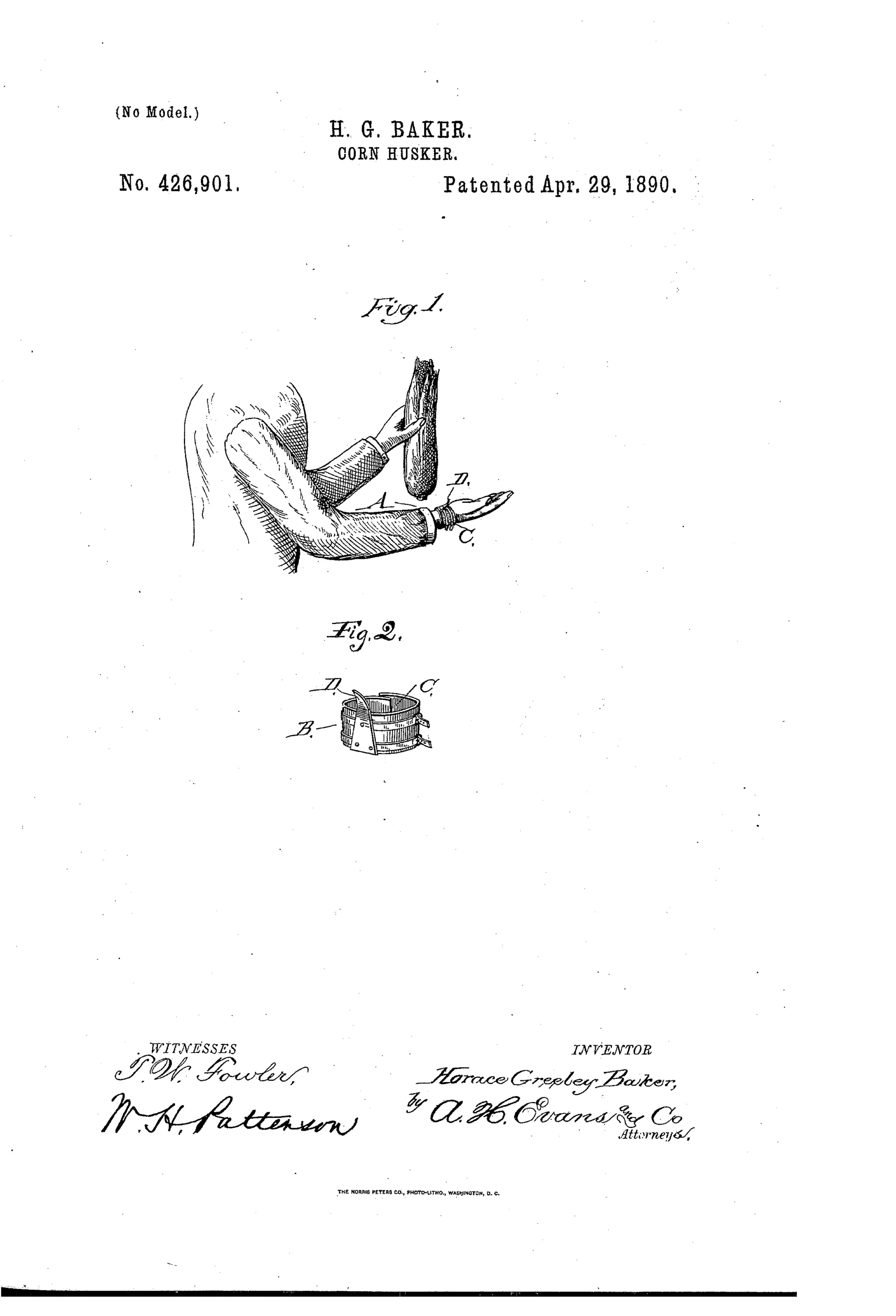
Wrist-mounted hook for husking corn
❧ How it works
A grab-hook is rigidly secured to a strap worn around the operator's wrist or forearm. The hook is angled or V-shaped and positioned so its point sits just above the palm of the hand. The operator holds the ear of corn in one hand and presses the hook against it, drawing it across the ear to open the husk. This single continuous arm motion both opens the husk and positions the hand to grasp and remove the ear from the stalk.
❧ What was claimed
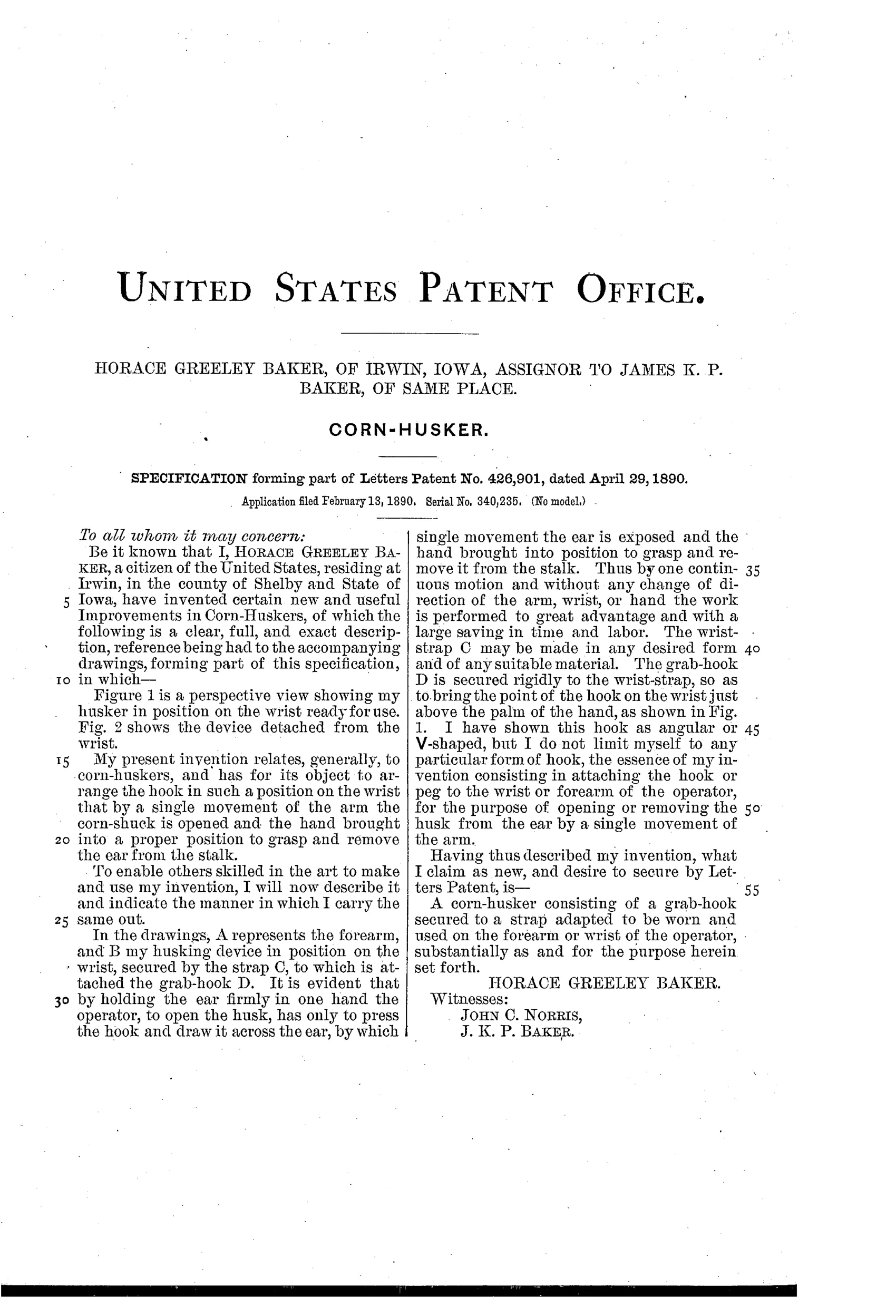
“A corn-husker consisting of a grab-hook secured to a strap adapted to be worn and used on the forearm or wrist of the operator, substantially as and for the purpose herein set forth.”
In plain English: The invention is a hook attached to a wrist strap, worn by the operator to open corn husks.
❧ In the inventor’s words
“Thus by one continuous motion and without any change of direction of the arm, wrist, or hand the work is performed to great advantage and with a large saving in time and labor.”— Horace Greeley Baker, from the specification
Fate unknown
Wrist-strap husking hooks were mass-produced by many makers, but no example traced specifically to Baker's patent is documented; a marked specimen would settle it.
❧ Commentary
Let's be upfront: this is a visitor from a neighboring field, literally. Horace Greeley Baker of Irwin, Iowa patented a corn husker, not a fruit parer, but it earns a look here because it solves the same fundamental problem our category obsesses over — how to strip a vegetable skin faster than fingers can — and it solves it the opposite way. Where the apple-parer men of the 1870s and 80s piled on gears, cams, and segment wheels to take the fruit away from the hand entirely, Baker bolts one small hook to the hand and keeps everything else human.
The drawing is worth a careful look. Fig. 1 shows the hook riding just above the palm, point forward, so that the same sweeping motion that rakes open the husk ends with the fingers wrapped around the bared ear, ready to snap it from the stalk. That is the whole invention — the claim is one sentence — and the patent's best line is honest about it: one continuous motion, no change of direction of arm, wrist, or hand. In a cornfield, where a husker repeats that stroke thousands of times a day, eliminating a single wasted movement is real money.
Husking pegs and palm hooks of this general family were made by the millions and litter Midwestern farm auctions to this day. Whether Baker's particular strap-and-angled-hook arrangement ever reached production is another question; the type succeeded even if the patent didn't.
Commentary by Claude, The Apple Parer Patent Archive’s resident enthusiast