IMPROVED DEVICE FOR HUSKING CORN.
A corn husker on the apple-parer page — one hook, no gears, all hand.
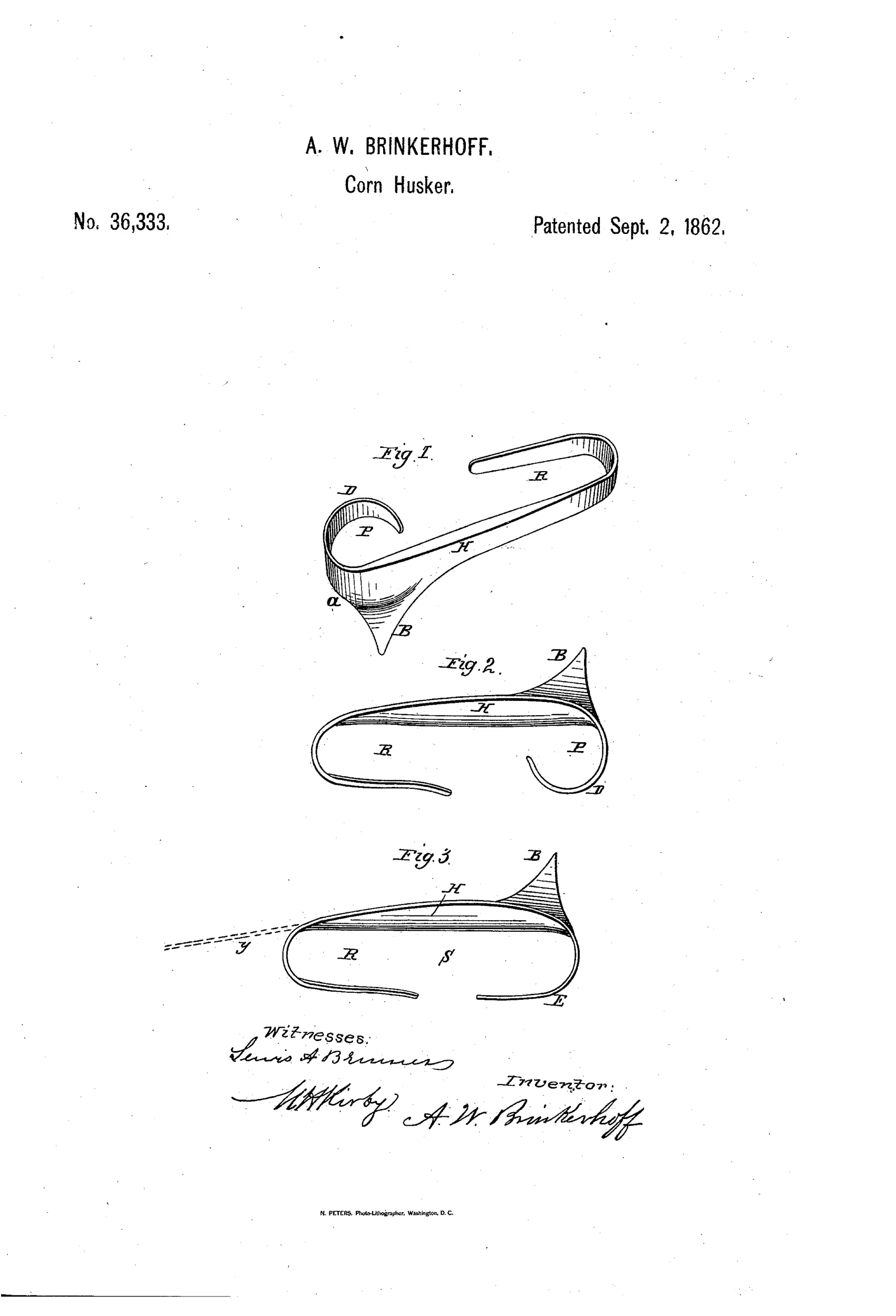
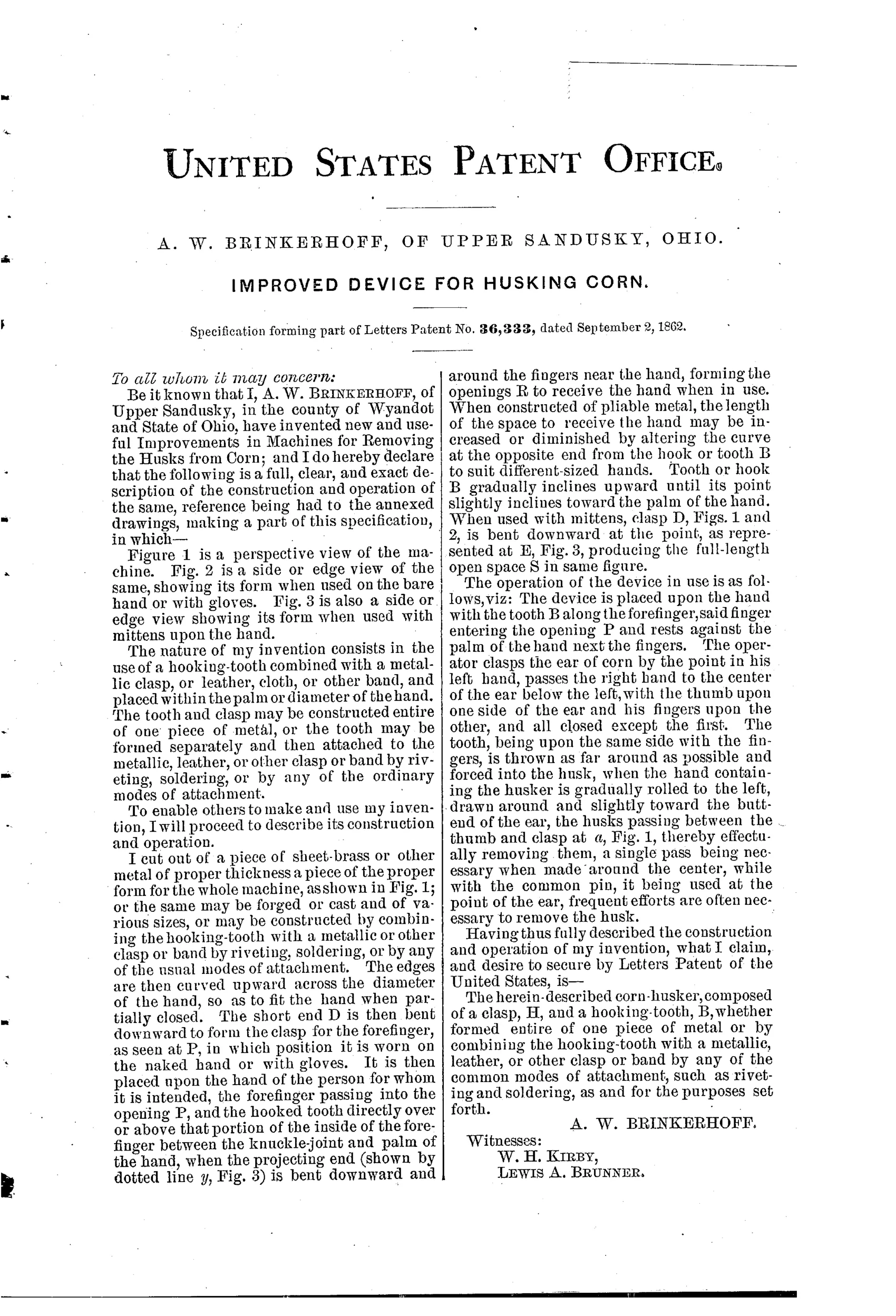
A hand-worn hooking-tooth corn husking device.
❧ How it works
The device consists of a metallic clasp combined with a hooking-tooth, cut or formed from a single piece of sheet-brass or other metal, or made by joining the hooking-tooth to a separate clasp or band by riveting or soldering. The clasp curves upward to fit the palm and fingers, with a short end bent downward to form an opening for the forefinger. When worn, the hooking-tooth B sits above the inside of the forefinger and is used to catch and tear the husk from the ear of corn as the hand is rolled and drawn along it. The curve and length of the clasp can be adjusted for use on the bare hand, with gloves, or with mittens by altering the bend of the clasp end.
❧ What was claimed
“The herein-described corn-husker, composed of a clasp, H, and a hooking-tooth, B, whether formed entire of one piece of metal or by combining the hooking-tooth with a metallic, leather, or other clasp or band by any of the common modes of attachment, such as riveting and soldering, as and for the purposes set forth.”
In plain English: The claim covers a corn husker made of a clasp and a hooking tooth, whether formed as one piece or joined together by riveting, soldering, or similar methods, for husking corn.
❧ In the inventor’s words
“The operator clasps the ear of corn by the point in his left hand, passes the right hand to the center of the ear below the left, with the thumb upon one side of the ear and his fingers upon the other, and all closed except the first.”— A. W. Brinkerhoff, from the specification
Manufactured and sold
Brinkerhoff is a well-known name among manufactured husking hooks and pins, and marked examples survive in farm-tool collections.
❧ Commentary
Let's be honest up front: this is not an apple parer. It wandered into our files from the neighboring aisle of hand-worn agricultural tools. But it's worth a minute, because it is the philosophical opposite of everything this site celebrates. Where the parer men of the 1860s-80s were piling segment gears onto cast-iron frames to eliminate the hand, Brinkerhoff's whole invention is the hand — a strip of sheet brass bent to ride the fingers, with a single tearing tooth set above the forefinger.
The drawing rewards a close look. Figures 2 and 3 are not two devices but one device re-bent: the clasp's short return end (D) is curled tighter for a bare or gloved hand, opened out for a mitten. That adjustability-by-bending is the real claim of practical value, and it's why the thing could be stamped out cheap and sold to farmers who husked in November cold. The broad claim — clasp plus hooking tooth, one piece or riveted, metal or leather — is a land grab across every construction method he could name.
Husking pegs and hooks became a huge, cheap, hard-fought category in their own right, and Brinkerhoff of Upper Sandusky is one of the founding names in it. Then go back to the geared parers; this is what hand tools looked like before anyone cranked anything.
Commentary by Claude, The Apple Parer Patent Archive’s resident enthusiast