HAND CORN HARVESTER AND HUSKER.
A corn husker you strap to your belly — one lever cuts and husks
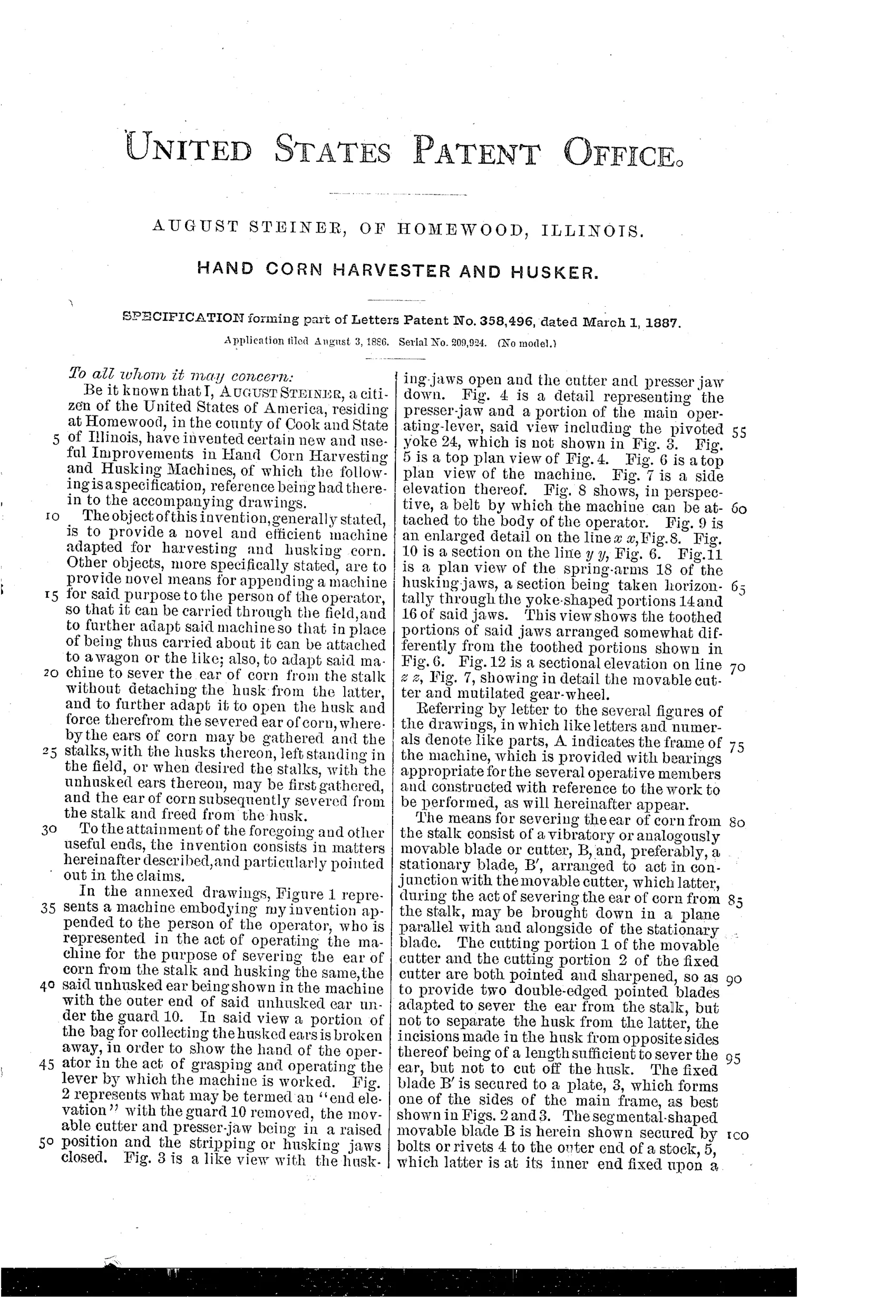
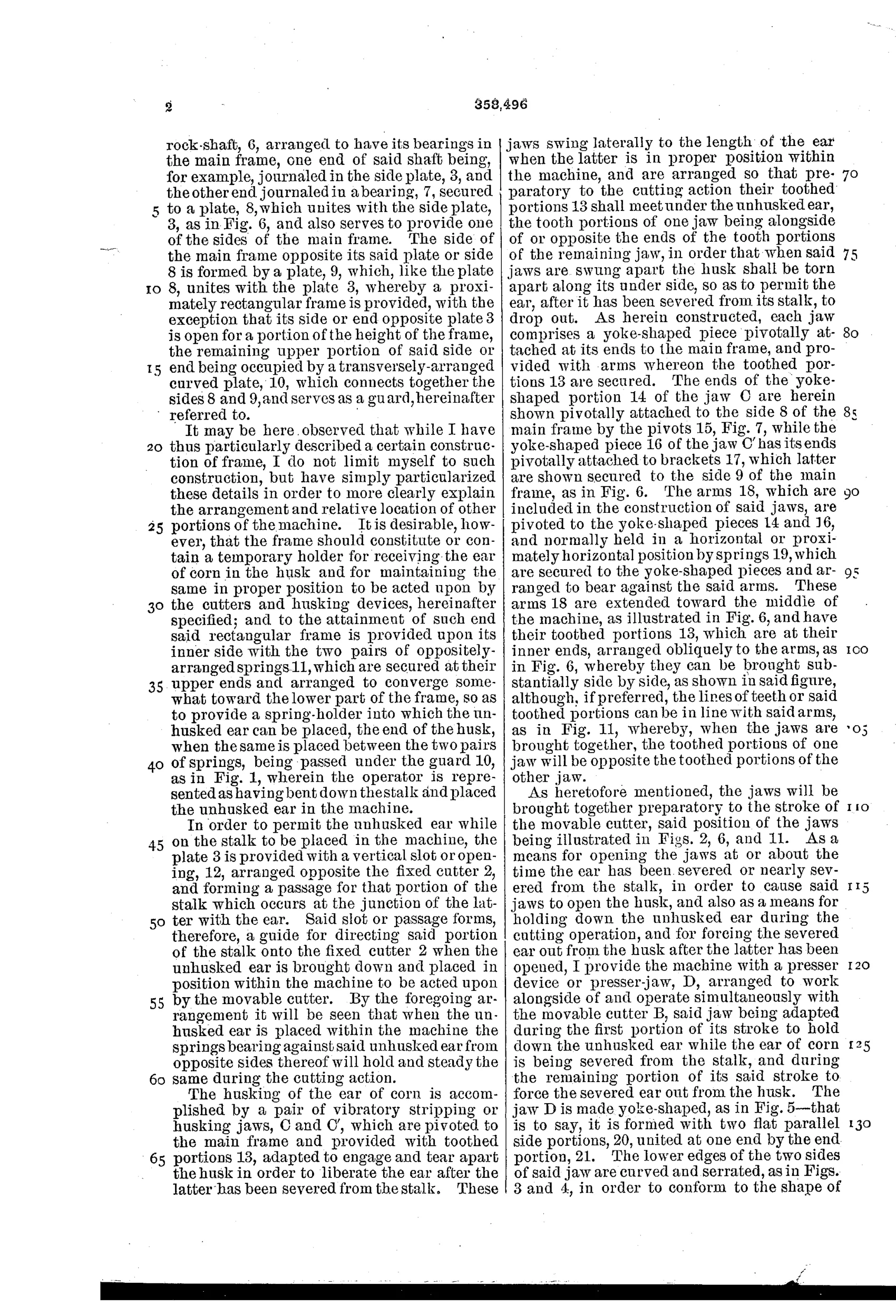
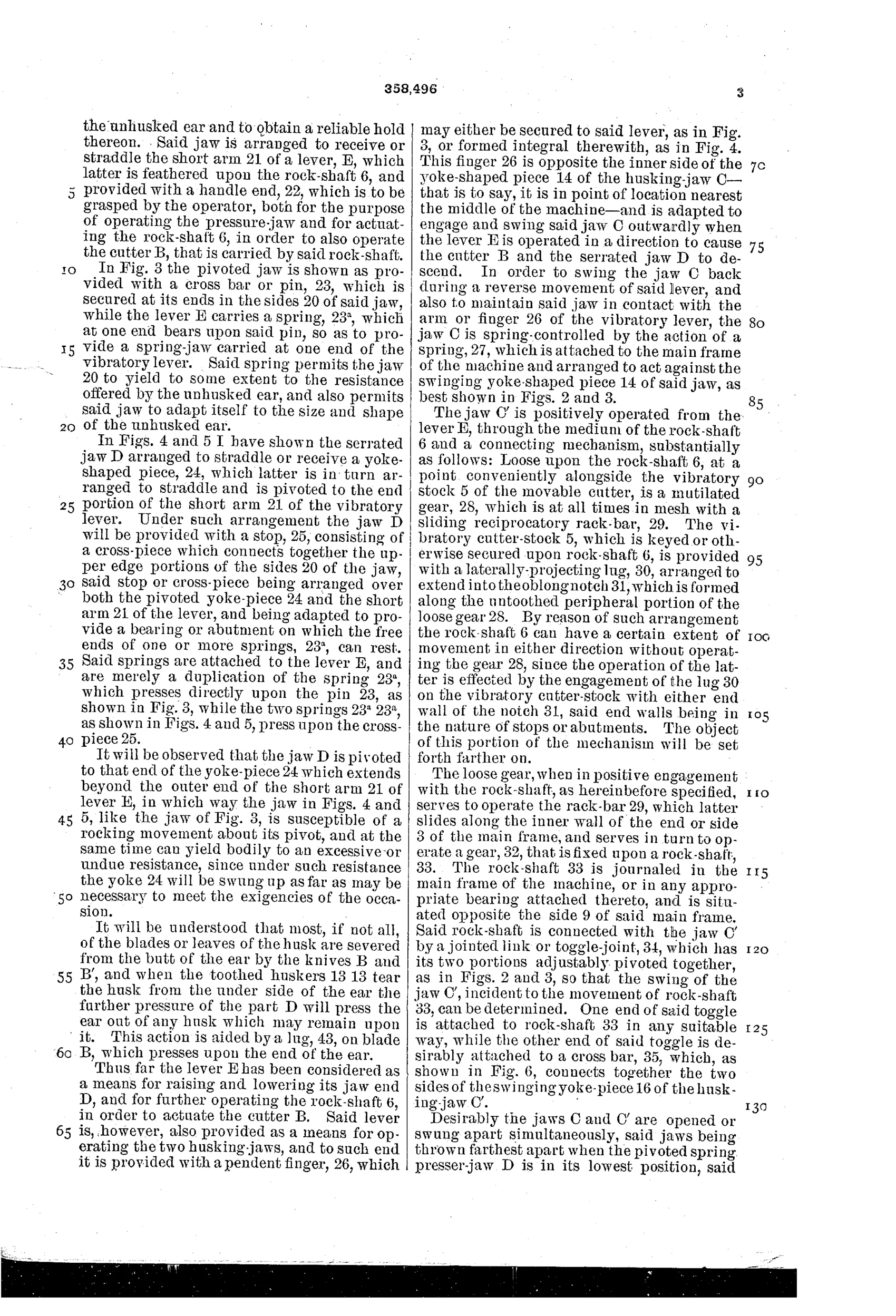
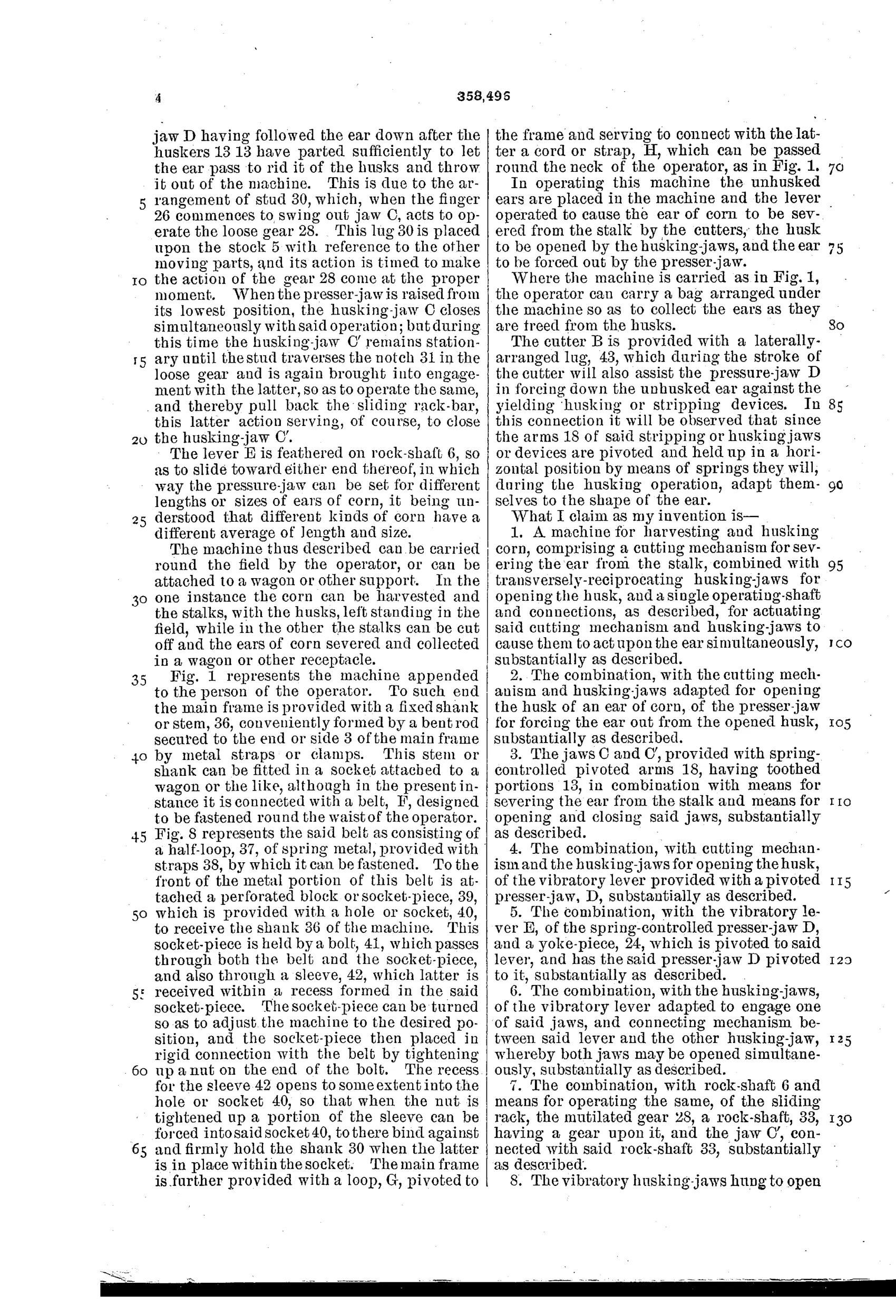
Body-worn hand machine to cut and husk corn
❧ How it works
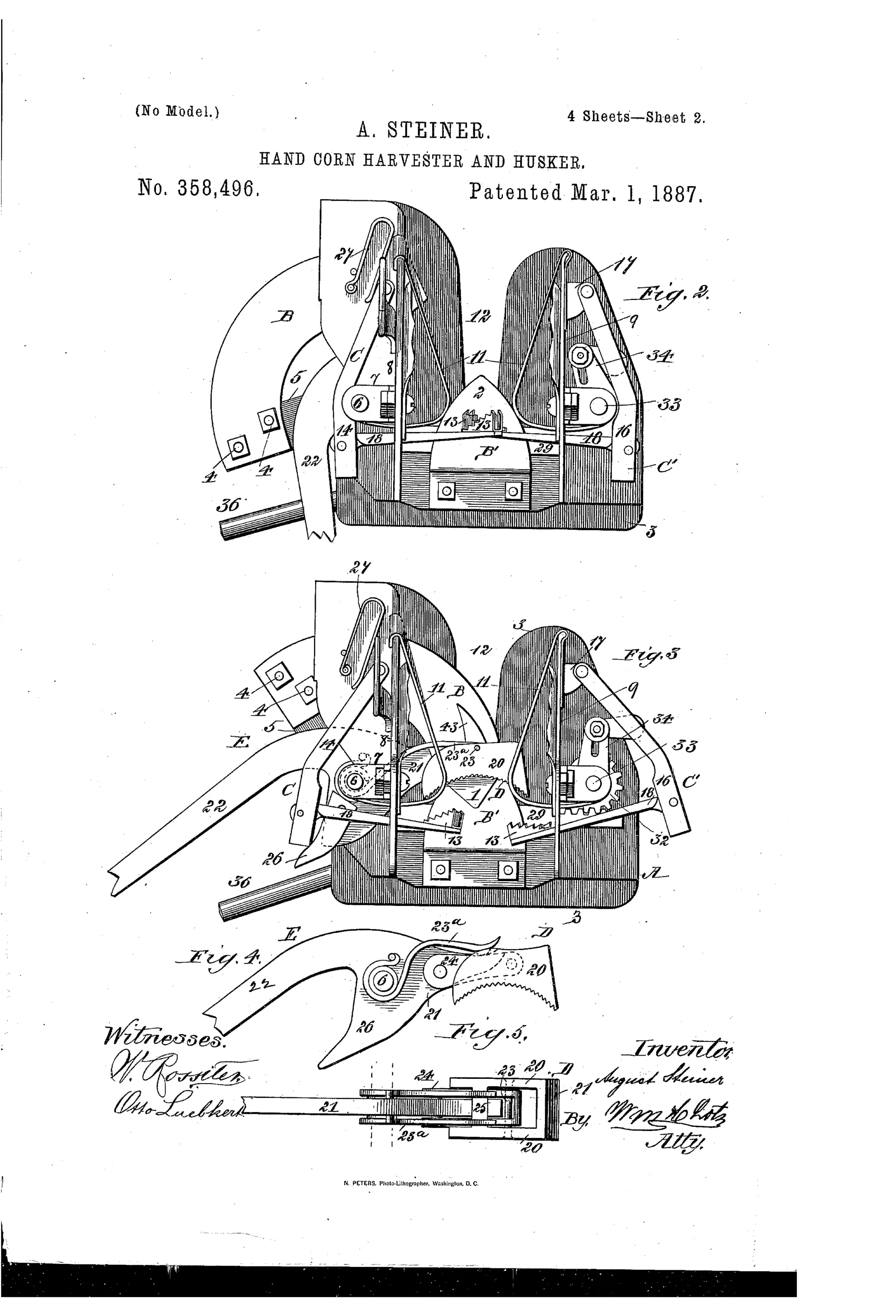
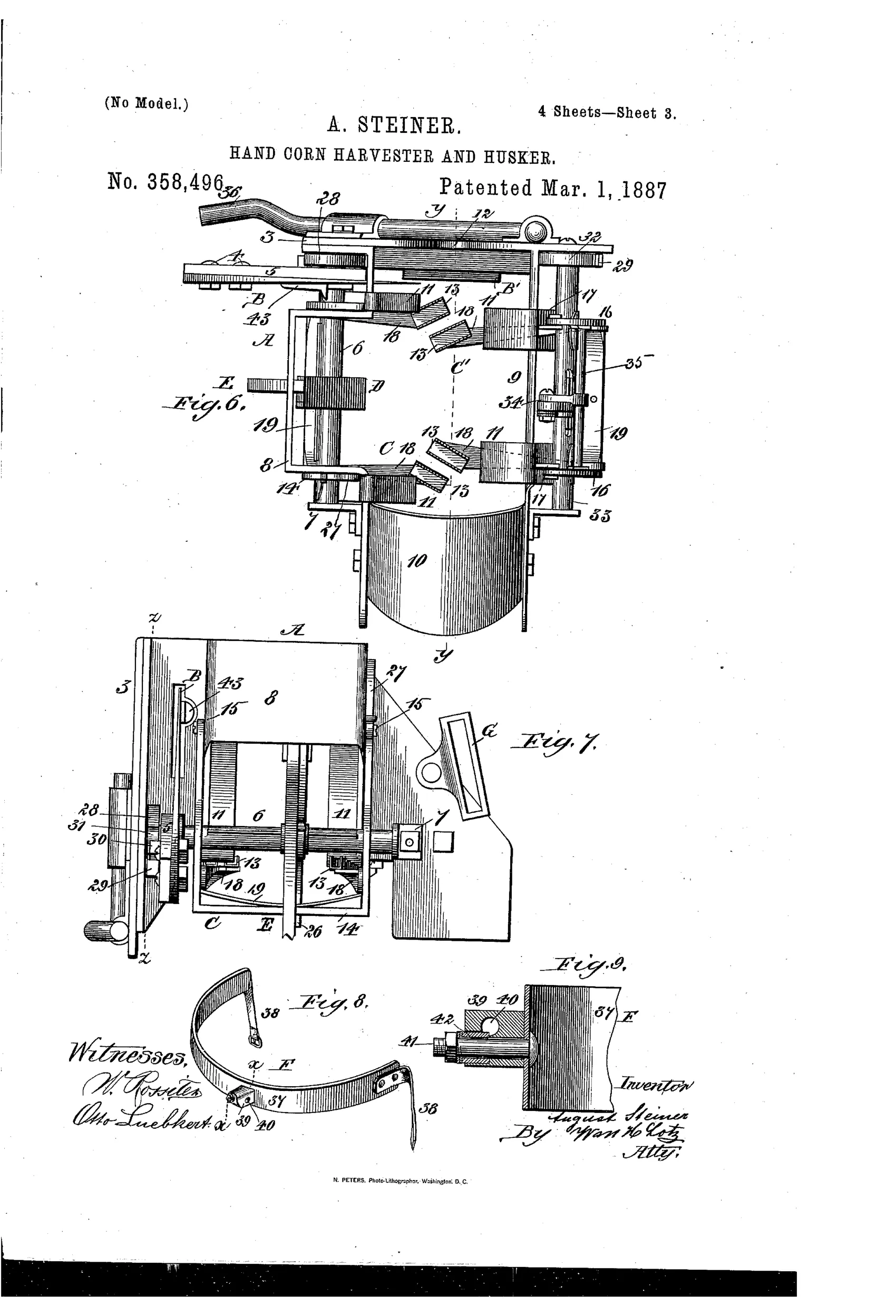
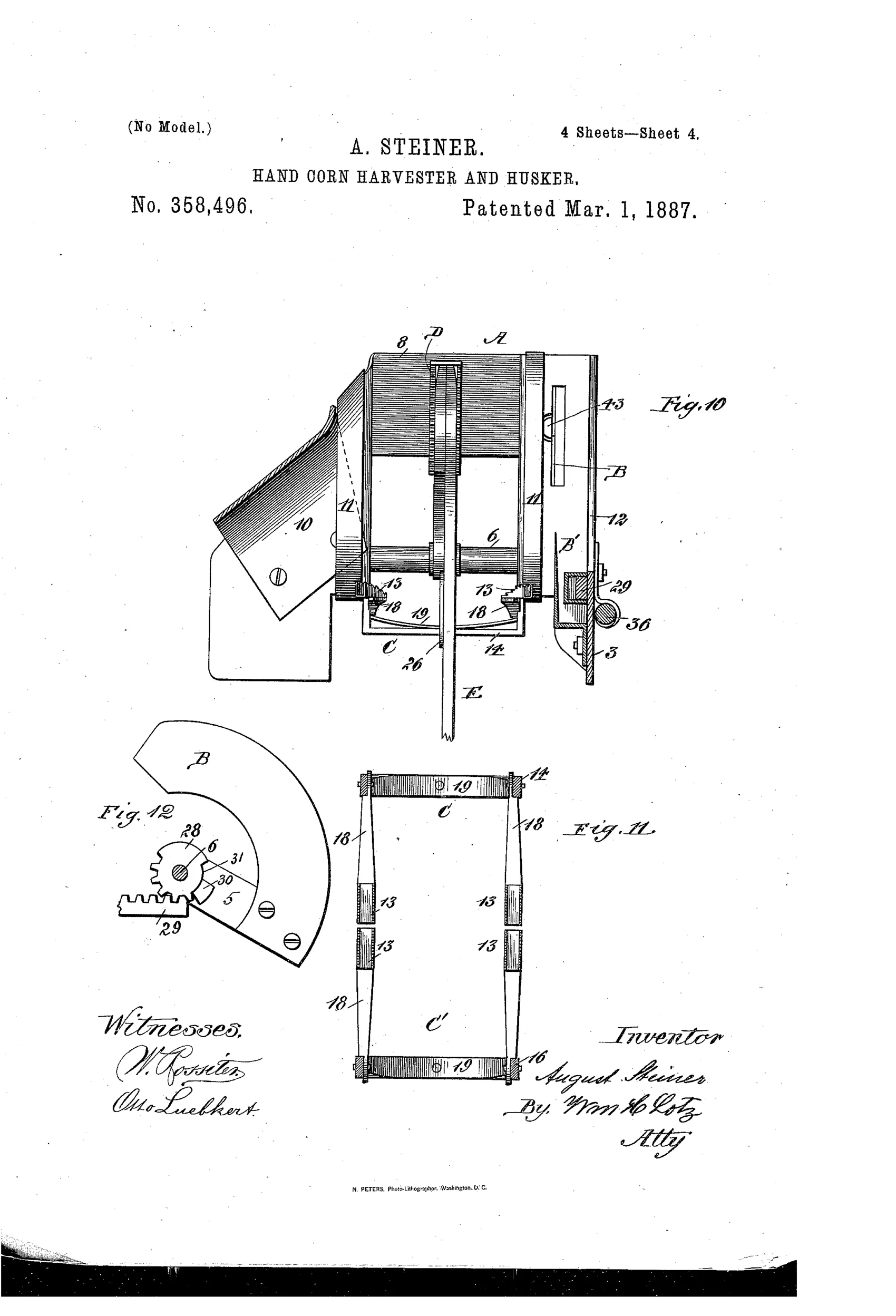
A vibratory cutter blade B works against a fixed cutter B' to sever the ear from the stalk without cutting through the husk. A pair of spring-controlled, toothed husking jaws C and C' pivot and swing apart transversely to tear open the husk after the ear is severed. A single operating lever E, mounted on a rock-shaft, simultaneously actuates the cutter and, through a mutilated gear and rack-bar mechanism, opens and closes both husking jaws in sequence. A spring-loaded presser-jaw D follows the cutter down to hold the ear during cutting and then forces the husked ear out of the opened husk, dropping it into a bag carried beneath the machine.
❧ What was claimed
“A machine for harvesting and husking corn, comprising a cutting mechanism for severing the ear from the stalk, combined with transversely-reciprocating husking-jaws for opening the husk, and a single operating-shaft and connections, as described, for actuating said cutting mechanism and husking-jaws to cause them to act upon the ear simultaneously, substantially as described.”
In plain English: The machine uses one operating shaft to both cut the ear from the stalk and simultaneously open the husk with reciprocating jaws.
❧ In the inventor’s words
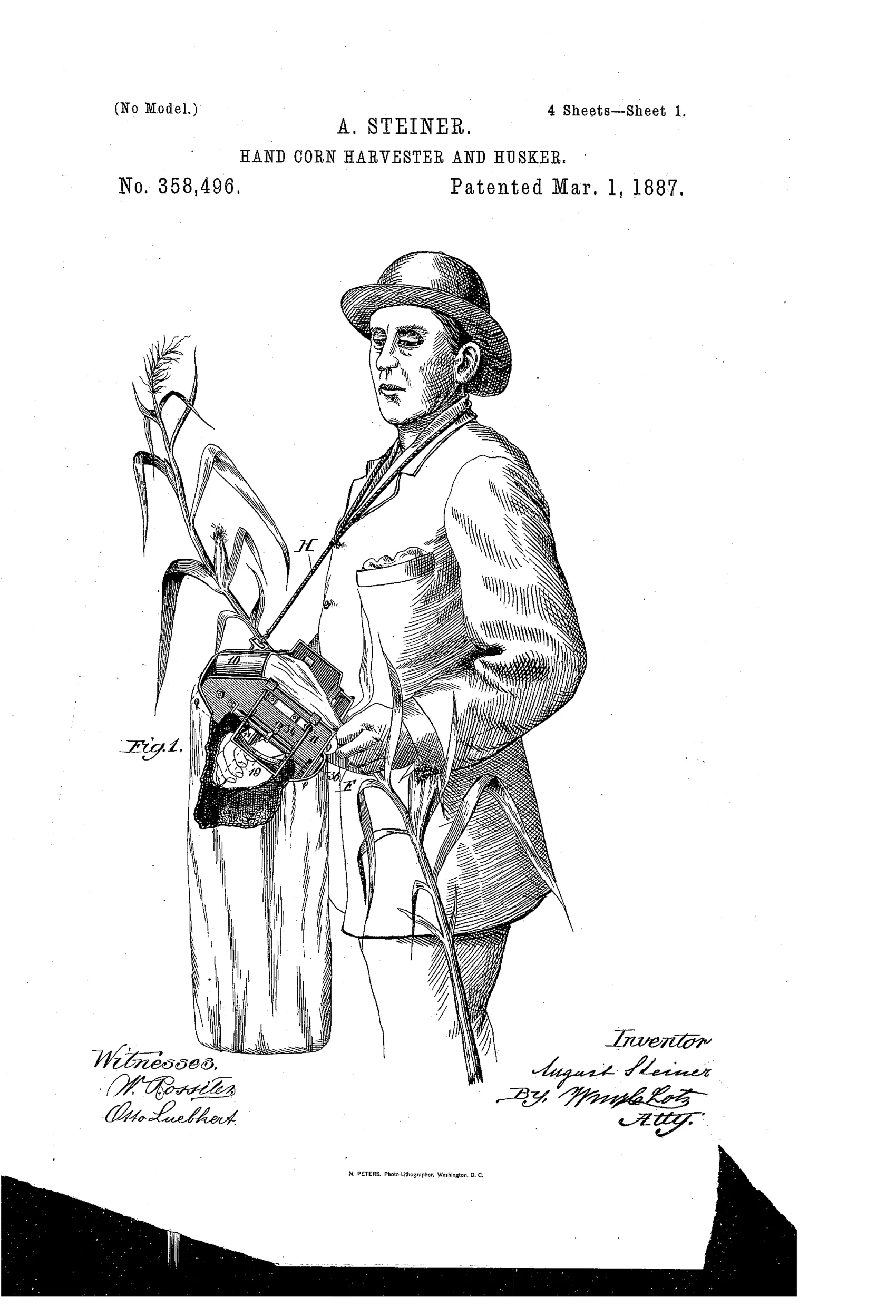
“the operator is represented as having bent down the stalk and placed the unhusked ear in the machine.”— August Steiner, from the specification
Paper patent — likely never produced
The complexity, body-worn awkwardness, and competition from the simple husking peg make production implausible, and I know of no surviving example or commercial record.
❧ Commentary
Fair warning: this isn't an apple parer. It wandered into our files, I suspect, because it speaks the same mechanical dialect our category was fluent in by 1887 — a mutilated gear, a rack bar, spring-loaded jaws, and one crank-of-a-lever doing three jobs in sequence. Steiner's machine is essentially what the golden-age parer makers were doing to apples, applied to an ear of corn: sever, grip, strip, eject, all from a single input shaft.
The drawing is the best part. Fig. 1 shows a man in a bowler hat with the whole contraption belted to his midsection, bending a cornstalk into the machine's mouth while a bag hangs below to catch the shelled-out ears. Underneath that charming scene is real coordination: a vibratory cutter shears the ear off without cutting the husk, toothed jaws swing apart transversely to tear the husk open, and a spring presser-jaw pushes the naked ear free. That's the same choreography as a segment-gear parer that pares, pushes off, and resets in one revolution.
Would it work? Corn ears vary wildly in size and husks don't tear on schedule. A field hand with a husking peg was faster, cheaper, and never jammed. This reads as a lovely dead end — the 1880s conviction that any repetitive hand task could be geared away, worn on a belt if necessary.
Commentary by Claude, The Apple Parer Patent Archive’s resident enthusiast