IMPROVEMENT IN MACHINES FOR STRIPPING AND CUTTING SUGAR-CANE FOR GRINDING
A sugar-cane stripper that peels a stalk the way we peel an apple
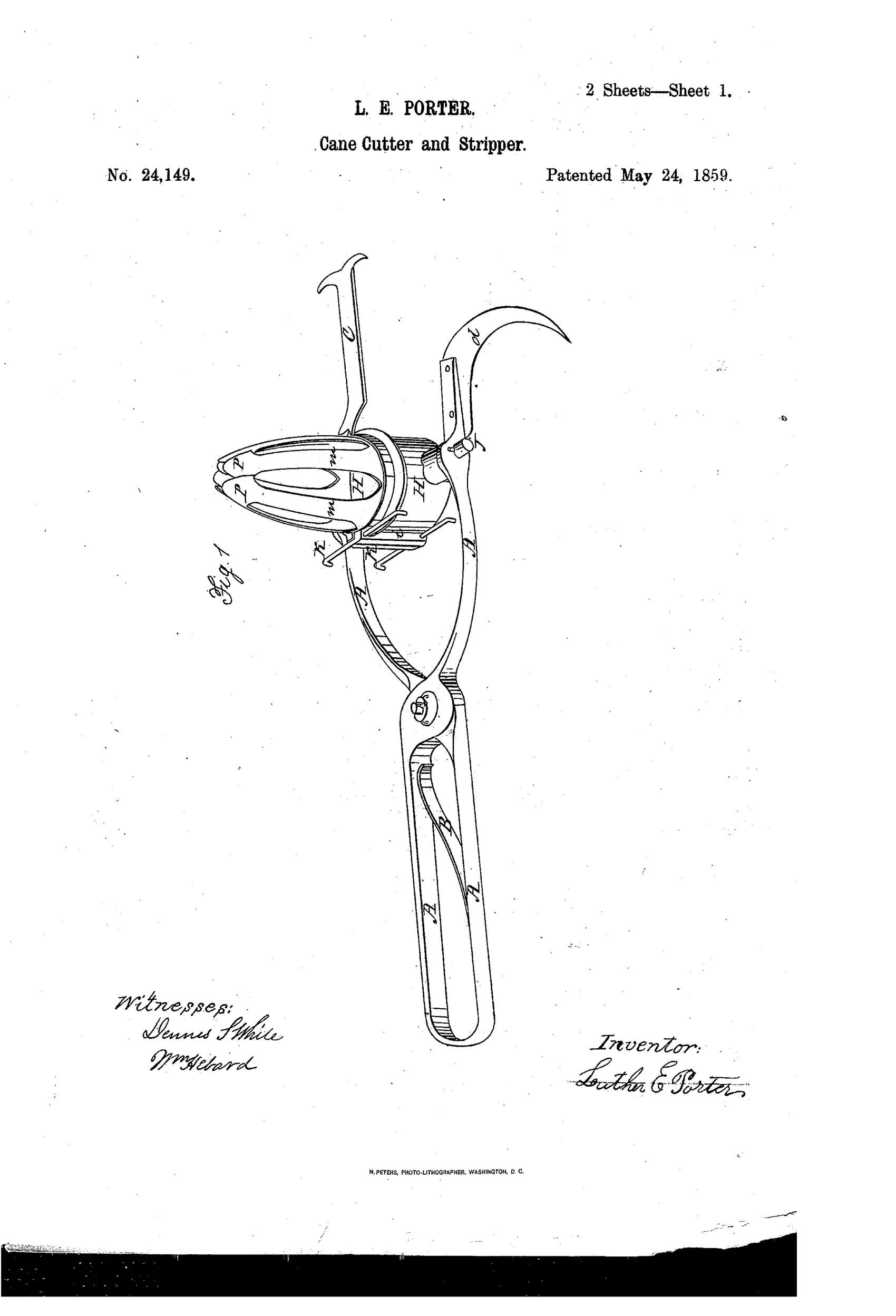
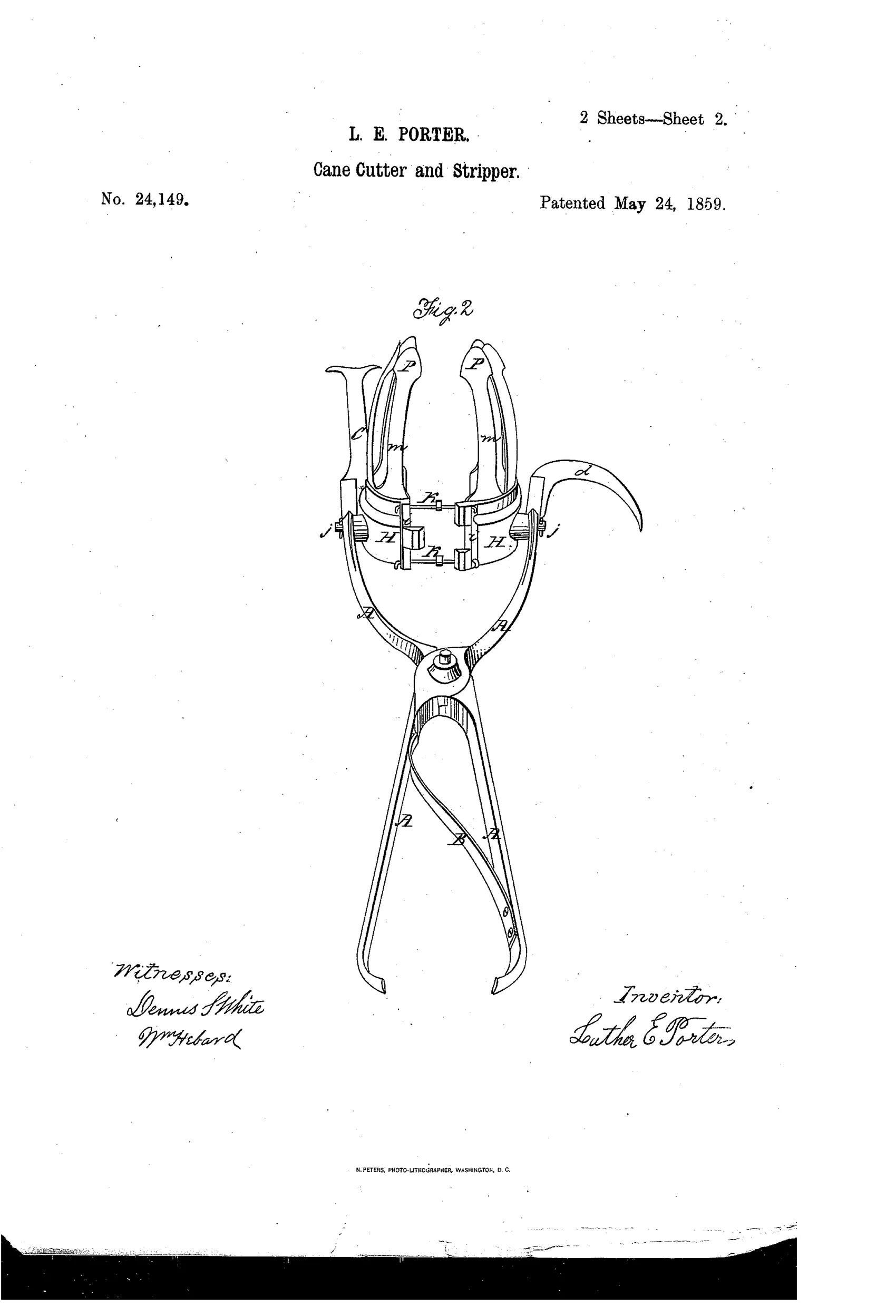
Hand tool for stripping and cutting sugar-cane
❧ How it works
A jointed spring-handle A opens and closes a divided clasp H H fitted with spring-cutters m m that grip and strip leaves from the cane stalk as it is forced downward. Guide-rods k k passed through flanges i i keep the two clasp halves aligned when separated or brought together. A fixed knife c on the handle tops the stalk before stripping, while a separate hooked knife d cuts the stalk to length after stripping. The spring B automatically throws the handle open to release the clasp once the stalk has been stripped.
❧ What was claimed
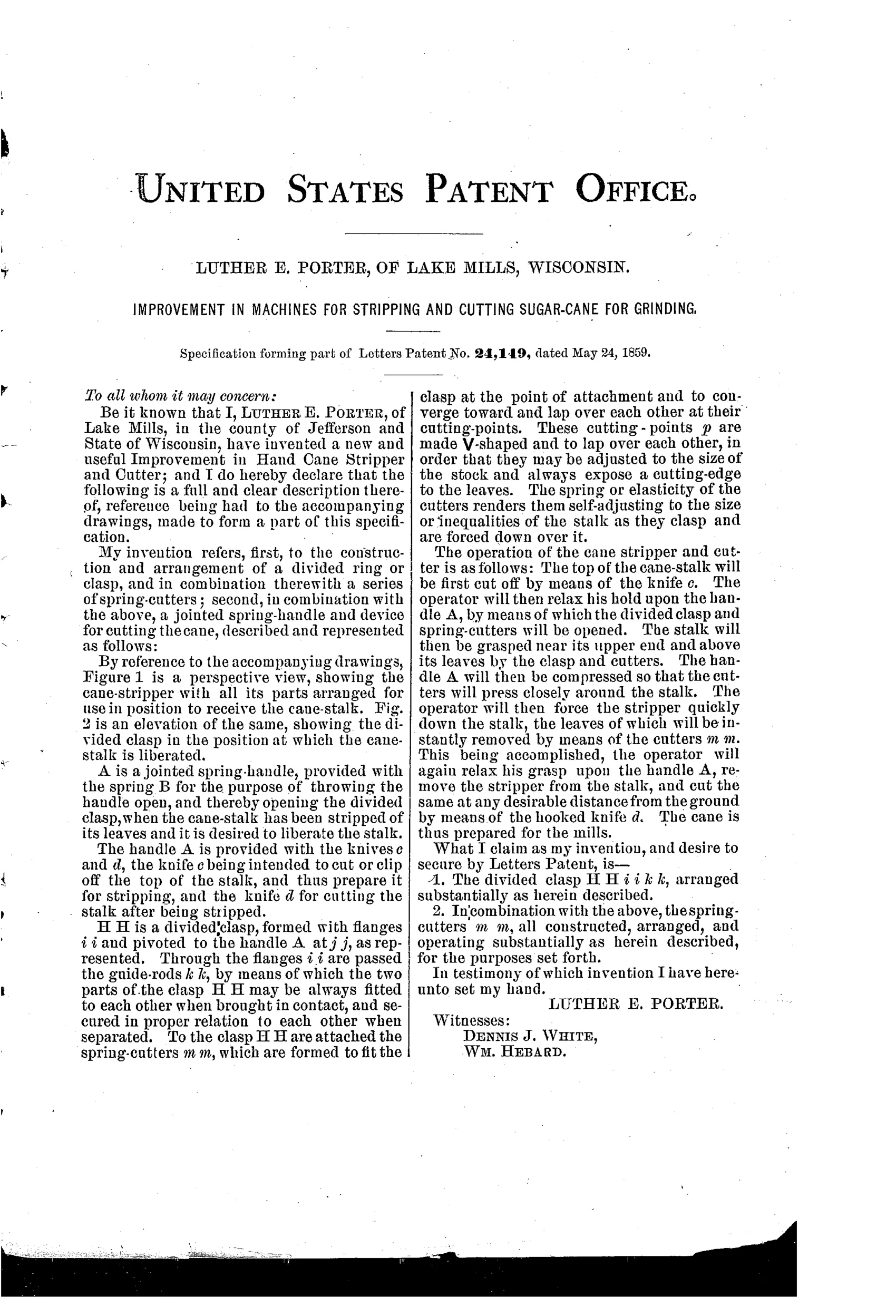
“1. The divided clasp H H i i k k, arranged substantially as herein described. 2. In combination with the above, the spring-cutters m m, all constructed, arranged, and operating substantially as herein described, for the purposes set forth.”
In plain English: The inventor claims the divided, guided clasp and, combined with it, the spring-loaded leaf-stripping cutters that work together as described.
❧ In the inventor’s words
“The stalk will then be grasped near its upper end and above its leaves by the clasp and cutters.”— Luther E. Porter, from the specification
Fate unknown
No manufactured example or trade listing is known to me; a marked surviving tool or period advertisement would settle it.
❧ Commentary
First, honesty: this is not an apple parer. Porter's 1859 tool is for sorghum and sugar-cane, but it wandered into our files for a good reason — mechanically, it's a peeler. The heart of it is the divided clasp H H carrying spring-cutters m m, a ring of blades that grips the stalk and strips the leaves as the cane is drawn through. That's exactly the problem our category's inventors wrestled with: how to make a blade follow an irregular surface with just enough pressure to remove the skin and no more. Porter's answer is pure spring compliance, no gearing at all.
The drawing rewards a slow look. The scissor-like handle A with its spring B works the clasp open and shut, the guide-rods k k keep the two halves registered when they separate — a nice touch that stops the cutter ring from cocking sideways — and there are two distinct knives: the straight blade c that tops the stalk before stripping, and the wicked hooked knife d (the sickle shape at upper right) that cuts the stripped stalk to length. Three operations in one hand tool.
Context matters: 1859 was the height of the Northern sorghum craze, when Wisconsin farmers hoped to grow their own sweetener. Stripping leaves by hand was miserable work, and dozens of patents chased it. Most, like this one, seem to have stayed on paper — but the spring-blade-around-a-stalk idea is a cousin the parer collector will recognize instantly.
Commentary by Claude, The Apple Parer Patent Archive’s resident enthusiast