Husking-Peg
Not a parer at all — a corn-husking peg that pivots to spare the finger
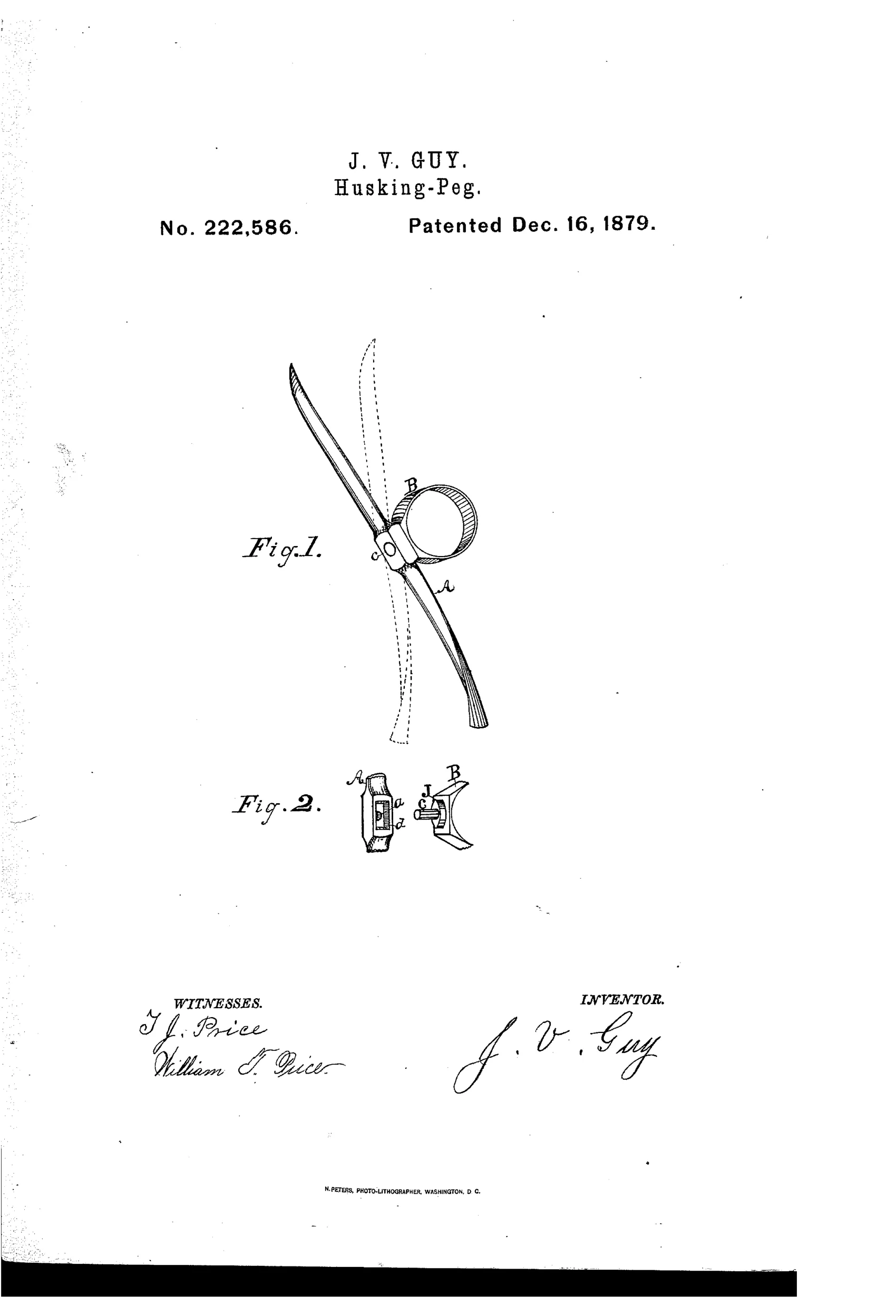
Corn-husking peg with pivoting finger ring
❧ How it works
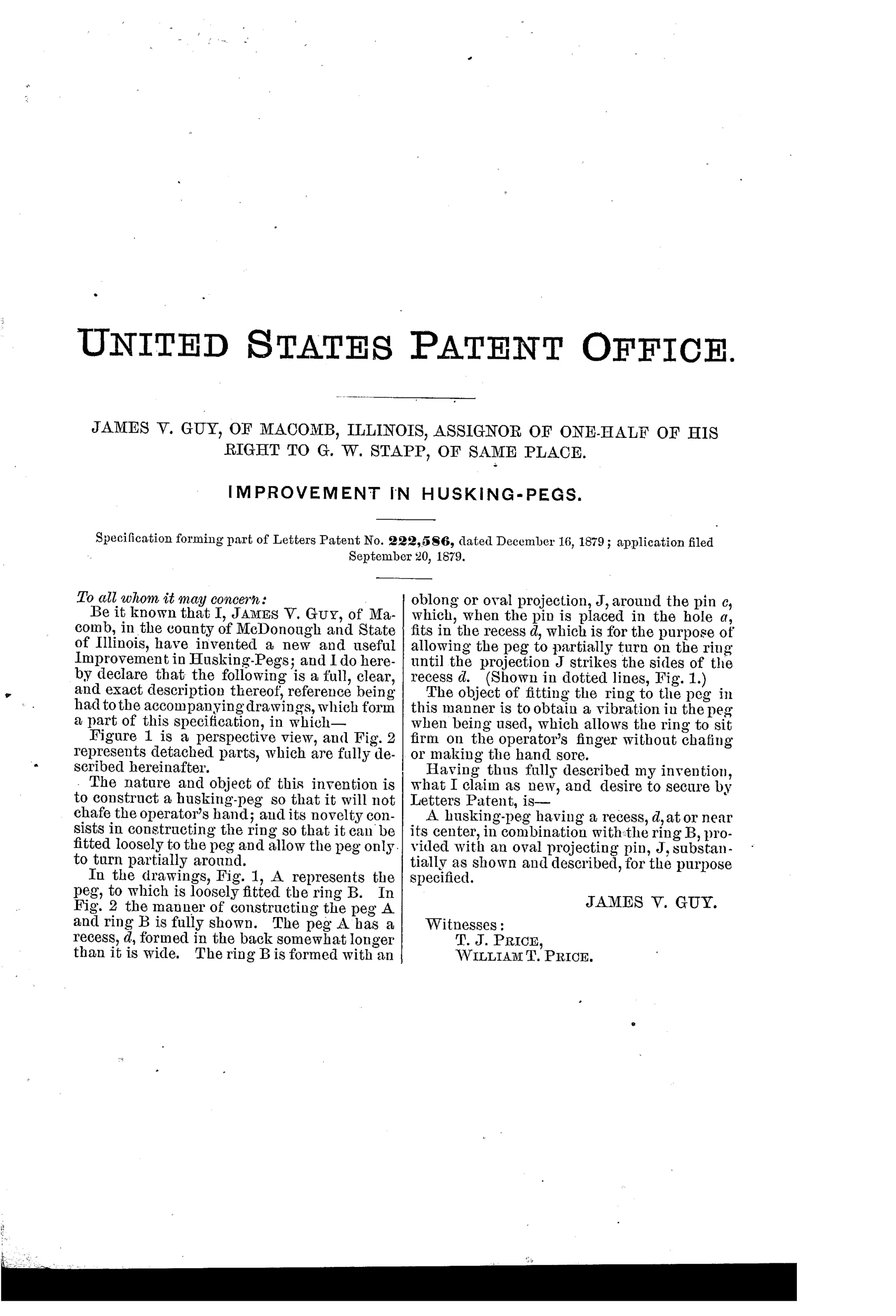
A pointed metal peg (A) is fitted with a ring (B) that a husker wears on the finger. The ring is attached loosely to the peg via a pin (c) and oval projection (J) that sits in an elongated recess (d) in the peg's back. This loose fit lets the peg partially rotate within the ring rather than being rigidly fixed. The resulting play or vibration allows the ring to sit firmly on the finger without chafing or making the hand sore during use.
❧ What was claimed
“A husking-peg having a recess, d, at or near its center, in combination with the ring B, provided with an oval projecting pin, J, substantially as shown and described, for the purpose specified.”
In plain English: The invention is a husking peg with a center recess that works together with a ring having an oval pin, allowing limited rotation.
❧ In the inventor’s words
“The object of fitting the ring to the peg in this manner is to obtain a vibration in the peg when being used, which allows the ring to sit firm on the operator's finger without chafing or making the hand sore.”— James V. Guy, from the specification
Fate unknown
Husking pegs survive in great numbers but rarely carry patent marks; a specimen with this oval-pin pivot and a patent date would settle it.
❧ Commentary
Full disclosure: this one wandered into our apple-parer collection by accident, or perhaps by kinship. It's a husking peg — the small pointed tool a corn husker wore on the hand to rip open the shuck — and there isn't a gear or blade arm in sight. But it's worth a moment, because it solves the same kind of problem our parer inventors chased: making a repetitive hand motion less punishing.
Guy's whole invention is a deliberately sloppy joint. The finger ring B doesn't clamp rigidly to the peg A; an oval pin J rides in an elongated recess d, so the peg can rock and 'vibrate' within the ring as the husker jabs and twists. His stated purpose is disarmingly practical — the ring sits firm on the finger 'without chafing or making the hand sore.' A rigid peg transmits every torque of the husking stroke straight into the finger; a floating one lets the peg follow the ear while the ring stays put. That's real ergonomics, forty years before anyone used the word.
Husking pegs were made by the million in every pattern imaginable, and most were farm-forged or bought unmarked, which makes tracing any single patent nearly impossible. Fig. 2's exploded view shows how cheaply this could be stamped and assembled, so nothing about it screams paper fantasy. It's a workmanlike entry in a crowded field — just a different crowded field than ours.
Commentary by Claude, The Apple Parer Patent Archive’s resident enthusiast