METHOD OF SEGREGATING INTEGUMENT-FREE FRUIT SEGMENTS
Florida canners drive a blunt auger through a grapefruit's core to free whole segments
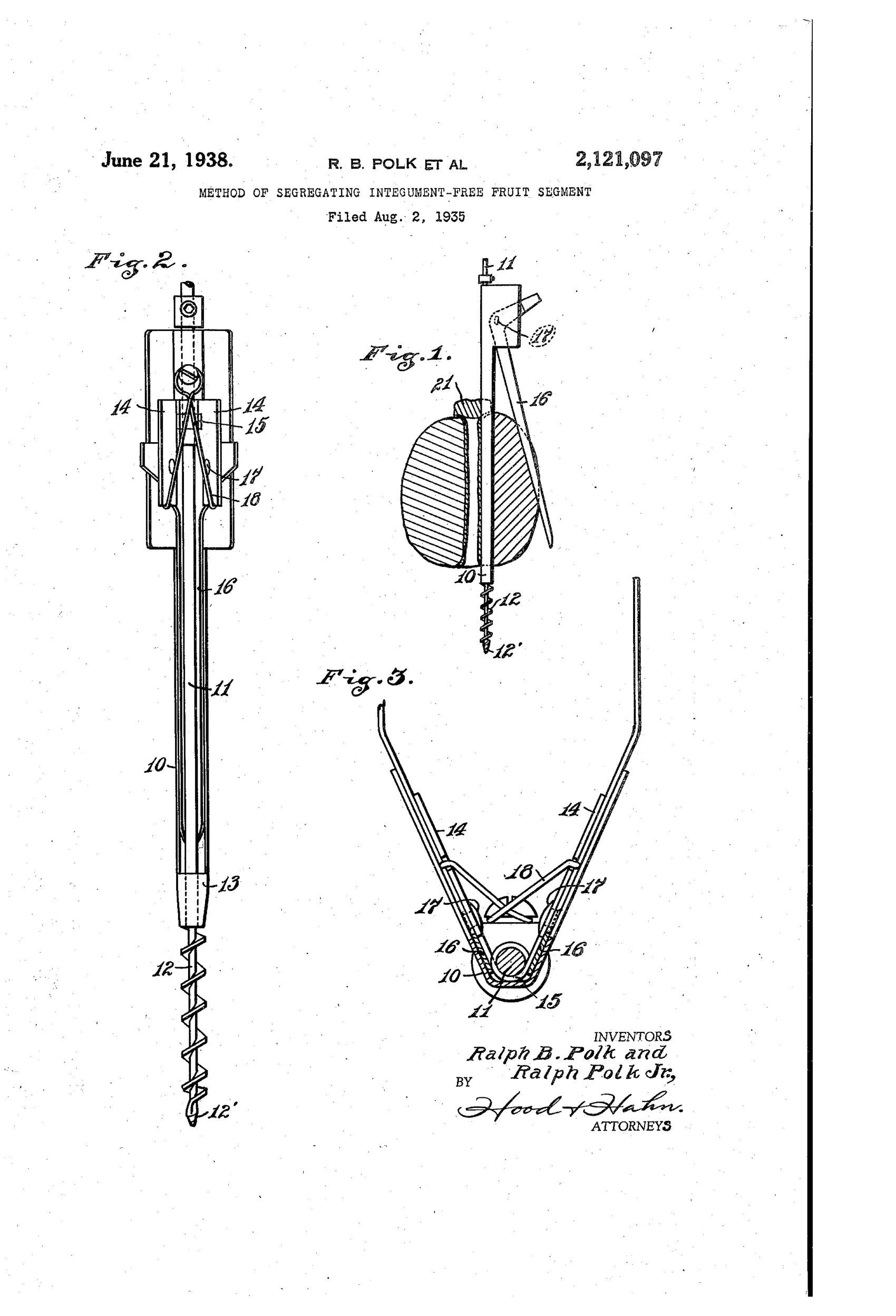
Tool and method for peeling citrus segments
❧ How it works
A V-shaped finger carries a rotating shaft with a tapered auger at its tip that is driven polarwise into a peeled fruit to disintegrate and extract the seeds. Hinged carrier plates bearing pivoted stripper blades are spread outward by a light spring as the finger and blades pass through the fruit along the radial integument walls. The blunt-tipped auger centers itself between segments without rupturing the integument, while the blades separate the meat from the tough integument. As the blades emerge at the far pole they exert radial force that ejects the freed, unbroken meat segments outward.
❧ What was claimed
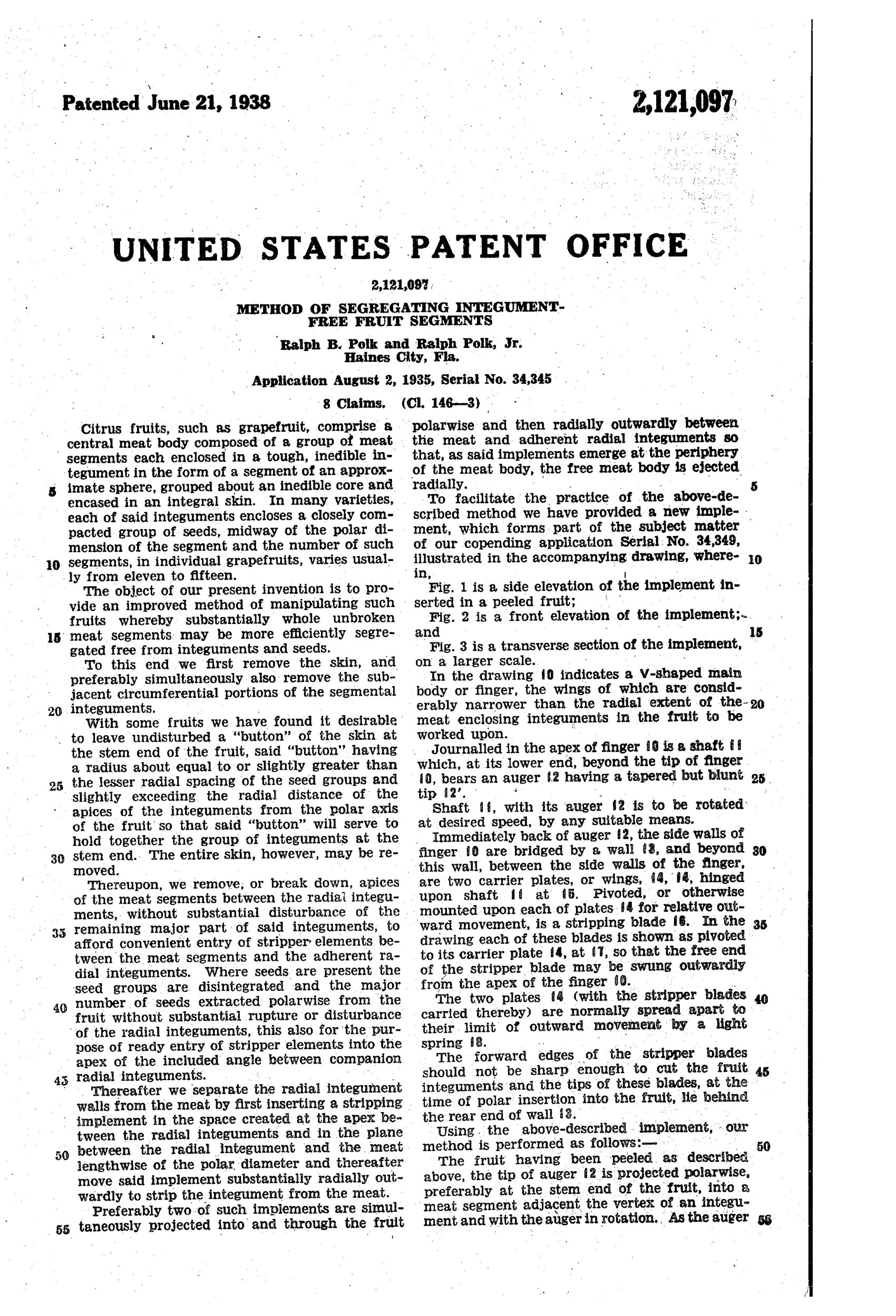
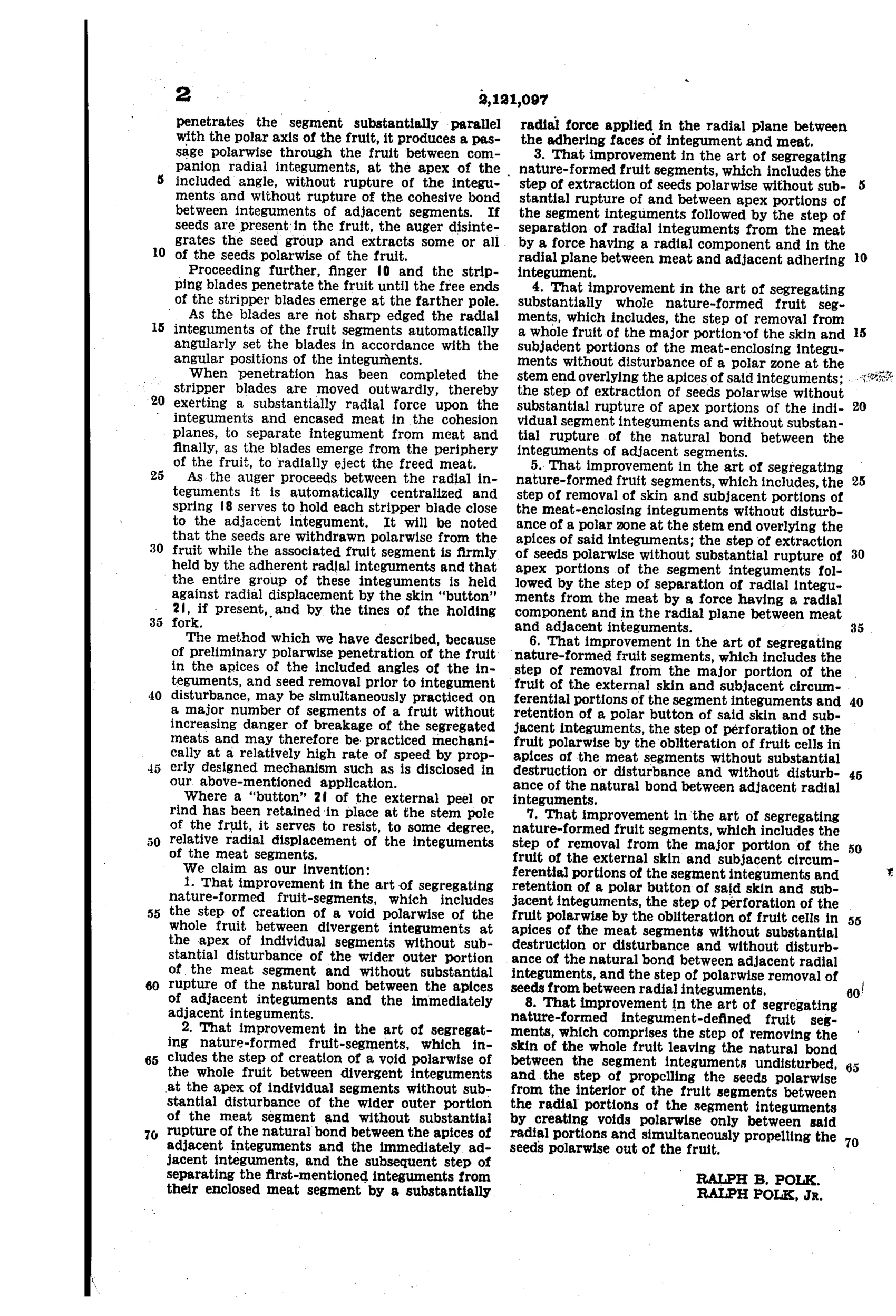
“1. That improvement in the art of segregating nature-formed fruit-segments, which includes the step of creation of a void polarwise of the whole fruit between divergent integuments at the apex of individual segments without substantial disturbance of the wider outer portion of the meat segment and without substantial rupture of the natural bond between the apices of adjacent integuments and the immediately adjacent integuments.”
In plain English: The method creates a channel through the center of the fruit between the segment walls without tearing the thin membranes that hold the segments together or damaging the outer meat.
❧ In the inventor’s words
“With some fruits we have found it desirable to leave undisturbed a "button" of the skin at the stem end of the fruit, said "button" having a radius about equal to or slightly greater than the lesser radial spacing of the seed groups...so that said "button" will serve to hold together the group of integuments at the stem end.”— Ralph B. Polk and Ralph Polk, Jr., from the specification
Fate unknown
The Polks were genuine Florida citrus processors and the method reads industrial, but no marked tool or documented commercial use of this specific implement is known to me; packing-house records or a surviving example would settle it.
❧ Commentary
This one is a late outlier in our category — not an apple parer at all, but it plays the same game with a much fussier fruit. The Polks of Haines City, deep in Florida citrus country, wanted grapefruit segments out clean, unbroken, and free of the bitter membrane. Their answer is a slender V-shaped tool: a rotating auger runs down the fruit's axis, pole to pole, while spring-loaded hinged blades ride the radial membrane walls and shave the meat away from them.
The clever part is what the auger does NOT do. Its tip is deliberately blunt, so it self-centers in the soft core between segments rather than chewing into them — it excavates seeds and pith and creates a void without rupturing the membranes that keep the segments organized. Then, as the blades emerge at the far pole, their outward spread pushes the freed segments radially off the tool. Fig. 3 shows the whole geometry in section: the auger dead center, blades pivoted on carrier plates like little wings.
The best detail is buried in the text: leave a 'button' of skin at the stem end so the membranes stay ganged together while you work, like clamping a workpiece. That is a canning-line insight, not a kitchen one. This is a method claim filed by people who processed fruit by the ton, and the claims read like they were protecting a factory process, not selling a gadget.
Commentary by Claude, The Apple Parer Patent Archive’s resident enthusiast