IMPROVEMENT IN BENCH-TOOLS.
A two-bladed spokeshave that outsmarts reversing grain — and isn't a parer at all
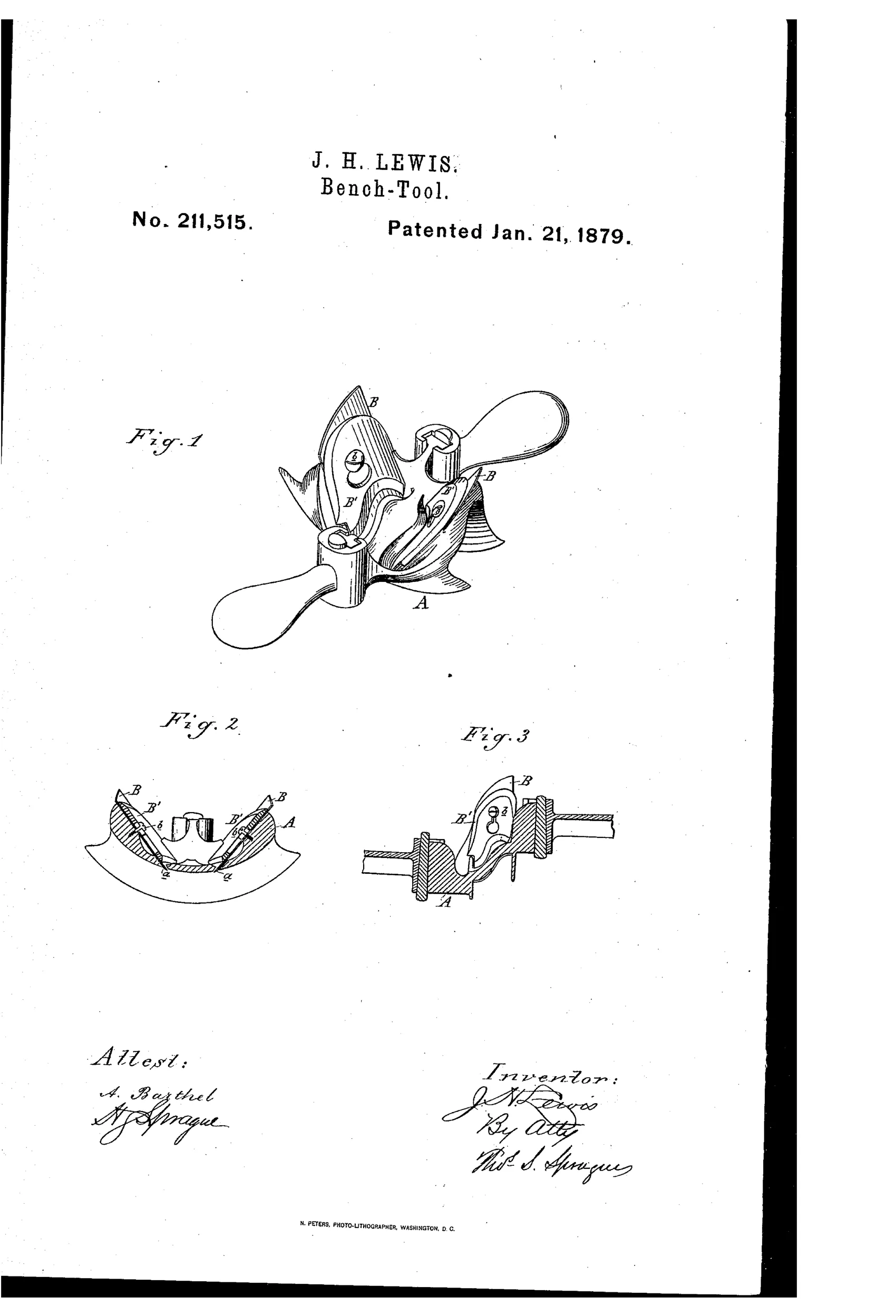
A dual-bladed spokeshave for curved moldings
❧ How it works
A segmental metal head, curved to the profile of the molding to be cut, carries two inclined throats angled toward each other. Each throat holds a cutter-bit secured by an adjustable clamp-plate and thumbscrew. Because the two bits are set to cut in opposite directions, the operator can always work with the grain even as the curve of the molding reverses. Detachable wooden handles are fitted to either end of the stock for pushing the tool along the work.
❧ What was claimed
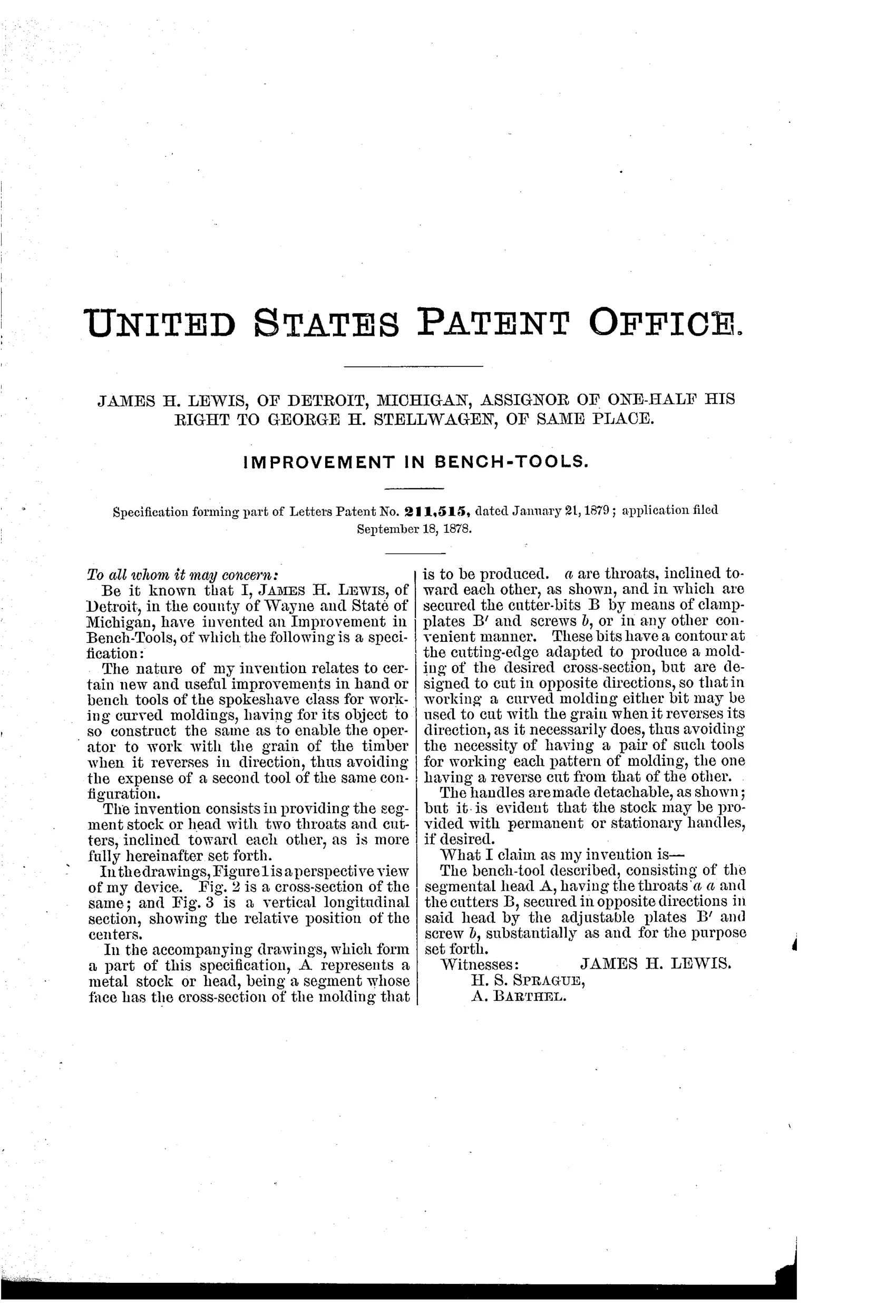
“The bench-tool described, consisting of the segmental head A, having the throats a a and the cutters B, secured in opposite directions in said head by the adjustable plates B' and screw b, substantially as and for the purpose set forth.”
In plain English: A curved spokeshave-like tool with a segmented head holding two cutting blades angled in opposite directions, each clamped in place by an adjustable plate and screw, so the user can always cut with the wood grain.
❧ In the inventor’s words
“The invention consists in providing the segment stock or head with two throats and cutters, inclined toward each other, as is more fully hereinafter set forth.”— James H. Lewis, from the specification
Fate unknown
This falls outside the parer literature and DATAMP's scope; no documented production example is known to me, and a marked specimen would settle it.
❧ Commentary
Housekeeping first: despite landing in our files, this is not an apple parer. James H. Lewis's "bench-tool" is a woodworker's spokeshave for curved moldings — no fork, no crank, no fruit. But since it's here, it deserves a fair reading, because the problem it attacks is a genuinely nasty one.
Anyone who has shaved a curved piece of wood knows the trouble: as the curve sweeps around, the grain direction effectively reverses under the blade, and a cutter that was slicing cleanly suddenly starts tearing. Lewis's answer is elegant in concept — a segmental head shaped to the molding profile, with two throats inclined toward each other, each carrying its own bit clamped by an adjustable plate and thumbscrew. The bits cut in opposite directions, so wherever the grain turns, one of the two cutters is always working with it. You just reverse your stroke instead of repositioning or flipping the tool.
The catch is visible in Fig. 2: the head is curved to a specific molding profile, which makes this less a general-purpose spokeshave and more a dedicated profile tool — one casting per molding shape. That's the economics of a shop-made or small-batch tool, not a hardware-catalog staple. The opposed-cutter idea itself is sound, and versions of it recur in later shave designs, but I know of no marked Lewis-Stellwagen tool. A clever, honest solution to a real problem, filed in the wrong drawer here.
Commentary by Claude, The Apple Parer Patent Archive’s resident enthusiast