IMPROVED CORN-HUSKER.
A corn husker strapped to your chest, worn like armor into the field
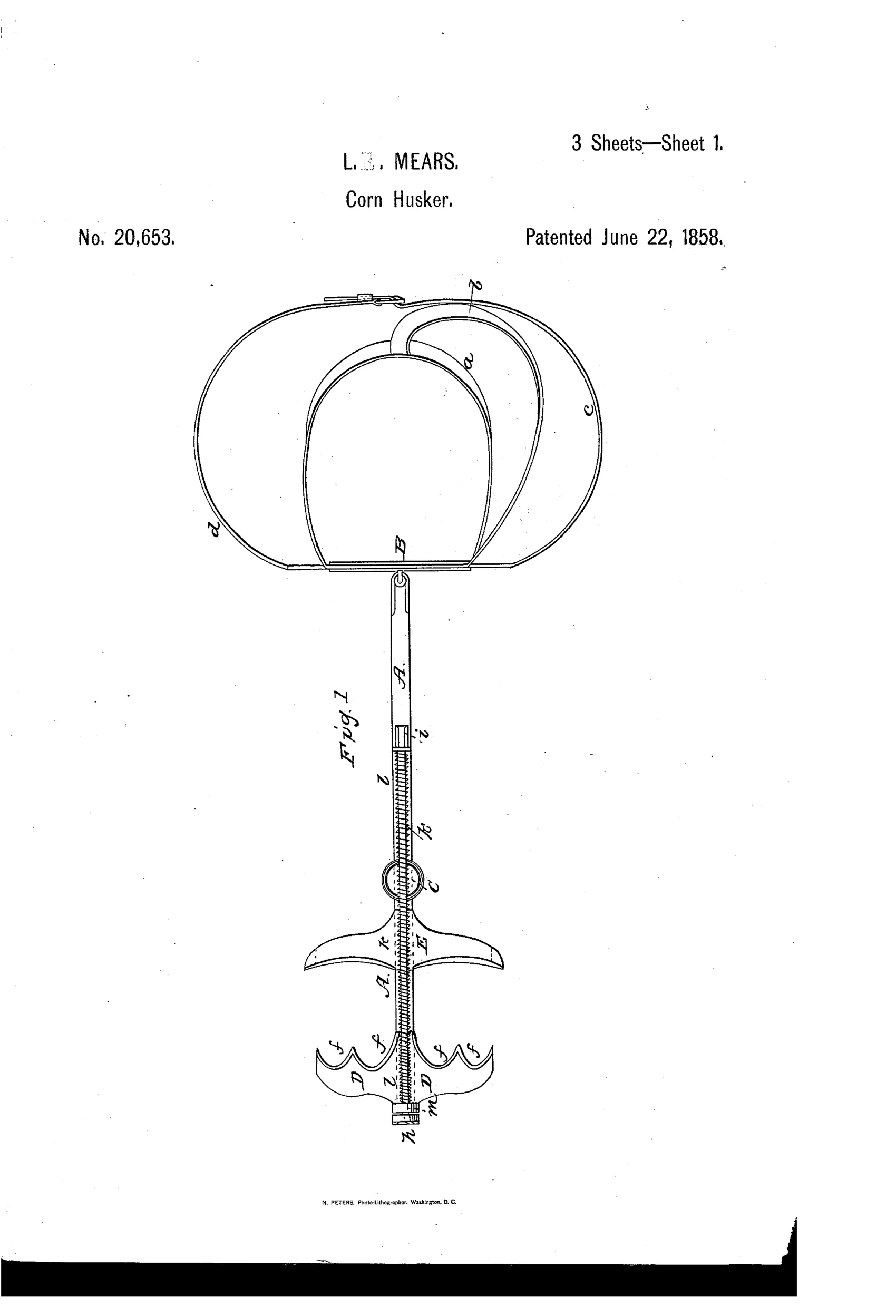
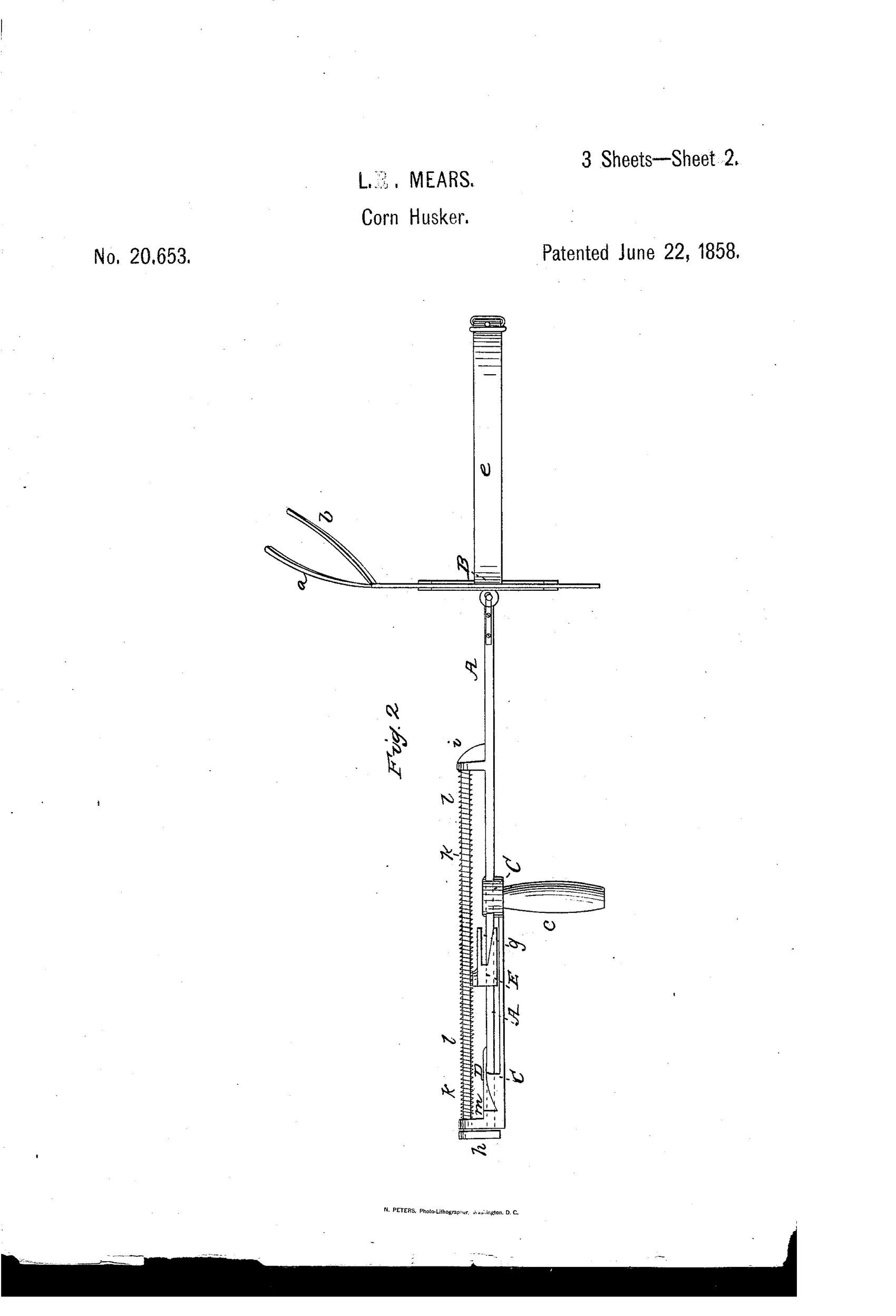
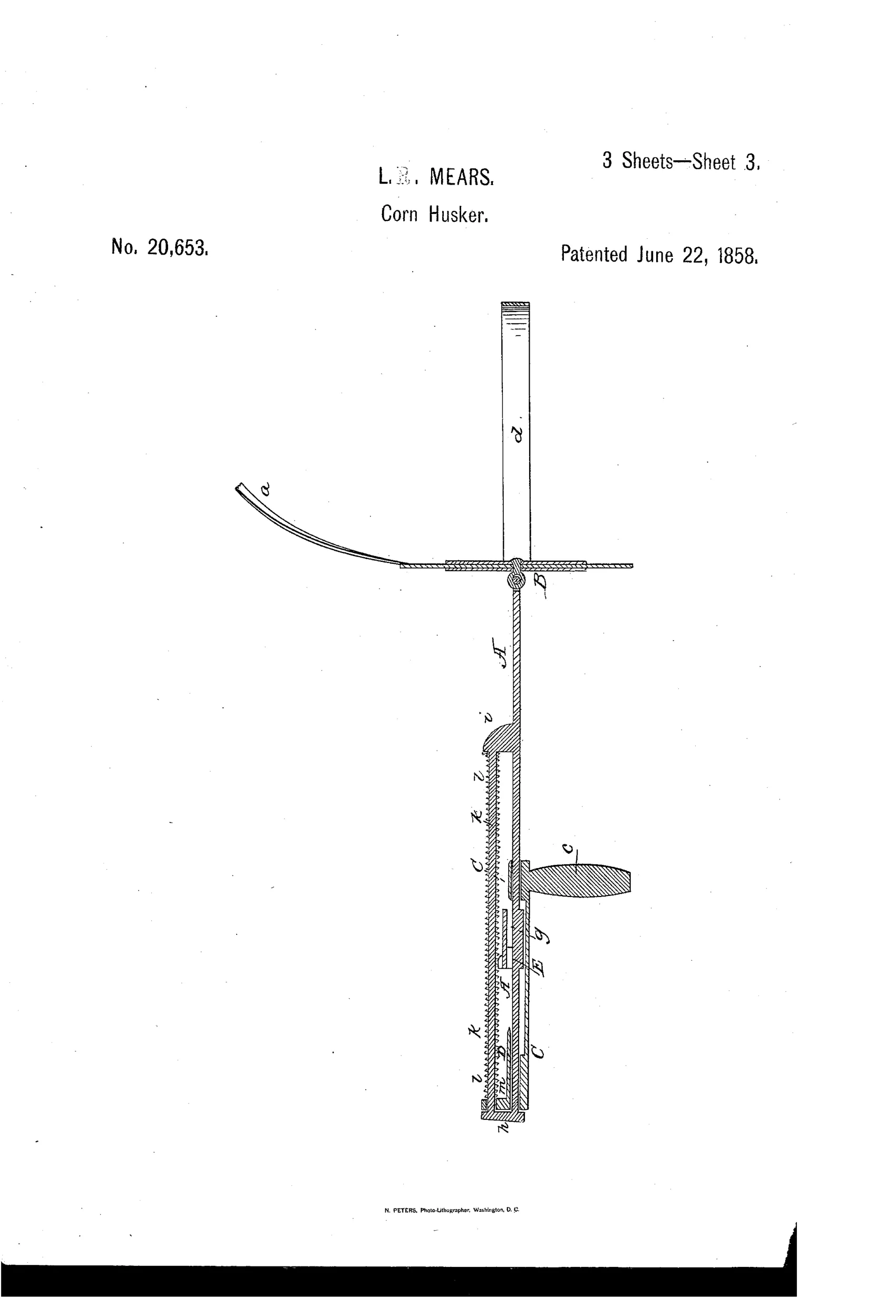
Body-worn hand tool for husking corn ears
❧ How it works
A long straight supporting-bar A is jointed at its lower end to a breast-shield B, which is strapped to the operator's body by shoulder and waist straps. A slider C, with a downward-projecting handle c, rides freely along the bar and carries a serpentine-edged cutter D projecting from opposite sides of the slider and bar. The cutter works against a stalk-supporter bearer E, fixed to the bar and formed with a cavity g to receive the cutting edge when drawn downward. A rod k with a helical spring l returns the cutter upward after each downward stroke on the handle.
❧ What was claimed
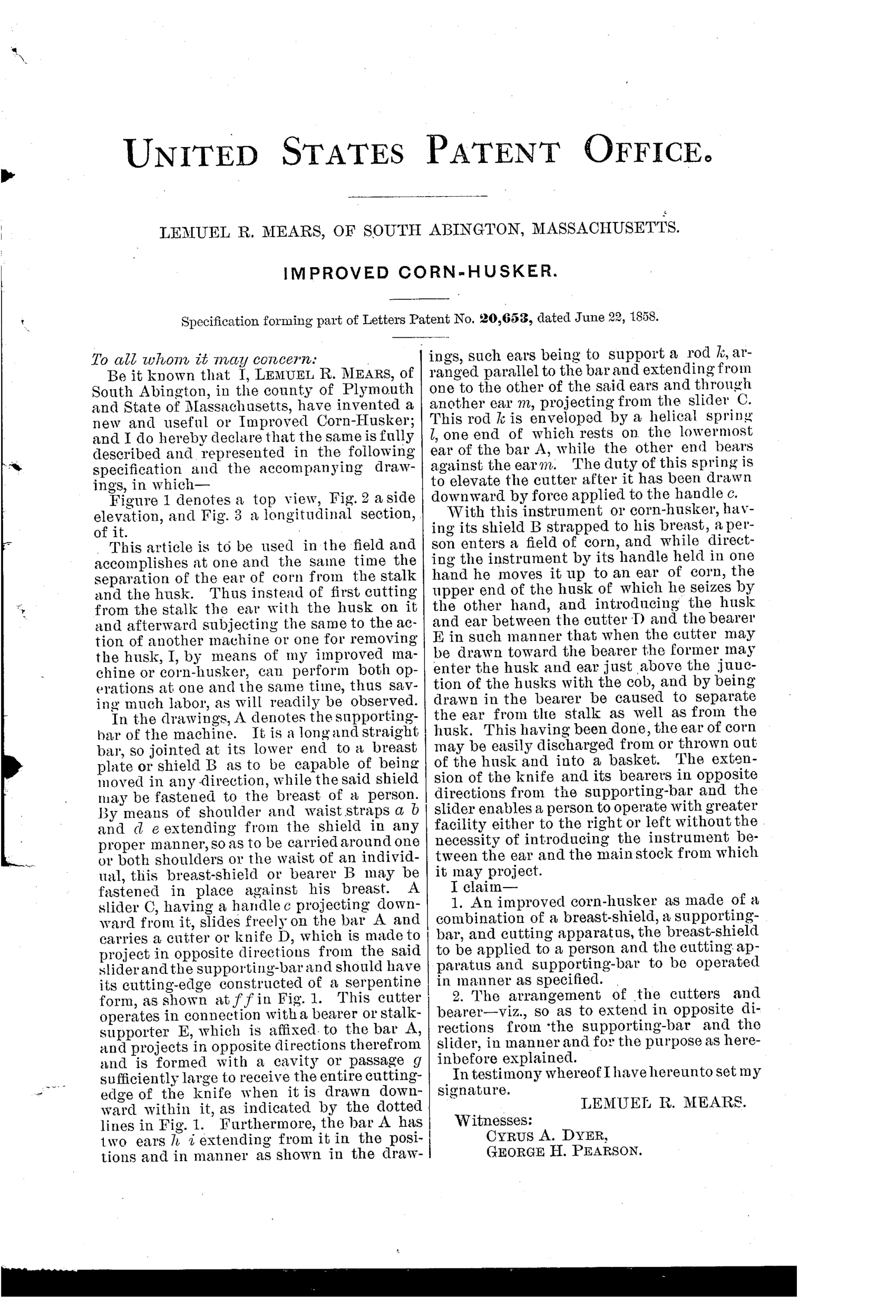
“An improved corn-husker as made of a combination of a breast-shield, a supporting-bar, and cutting apparatus, the breast-shield to be applied to a person and the cutting apparatus and supporting-bar to be operated in manner as specified.”
In plain English: The invention claims a corn-husking tool made of a breast-shield worn by the user connected to a bar and cutting mechanism operated as described.
❧ In the inventor’s words
“This article is to be used in the field and accomplishes at one and the same time the separation of the ear of corn from the stalk and the husk.”— Lemuel R. Mears, from the specification
Fate unknown
No production example or trade record is known to us; a marked surviving tool or period advertisement would settle it.
❧ Commentary
Full disclosure: this is a corn husker, not an apple parer, but it lands on our shelf as a cousin — same 1850s conviction that any repetitive kitchen-or-field motion could be mechanized with a blade, a spring, and a clever mount. Where our parer men bolted their machines to the kitchen table, Lemuel Mears bolted his to the operator. The breast-shield B straps to your torso with shoulder and waist straps, turning your own body into the workbench so the tool travels with you down the row.
The mechanics are honest single-stroke stuff. A slider rides the long bar and carries a serpentine-edged cutter; you jam the ear against the stalk-supporter E (note the cavity g that receives the blade, the same blade-meets-anvil logic you see in parer push-off mechanisms), pull the handle down, and the cut severs ear from stalk and opens the husk in one motion. The helical spring on rod k resets the cutter — the exact reflex the parer world would later perfect with segment gears, here done with plain steel wire.
Would it work? Probably, slowly, and the operator's sternum takes the reaction force of every stroke. That's the design's real weakness: a table doesn't bruise. It reads as a thoughtful dead end from the decade before mechanized husking moved onto horse-drawn and stationary machinery, where it belonged.
Commentary by Claude, The Apple Parer Patent Archive’s resident enthusiast