IMPROVEMENT IN CORN-HUSKING GLOVES
A Dakota Territory glove sanded like sandpaper, from far outside our kitchen shelf
Reinforced corn-husking work glove
❧ How it works
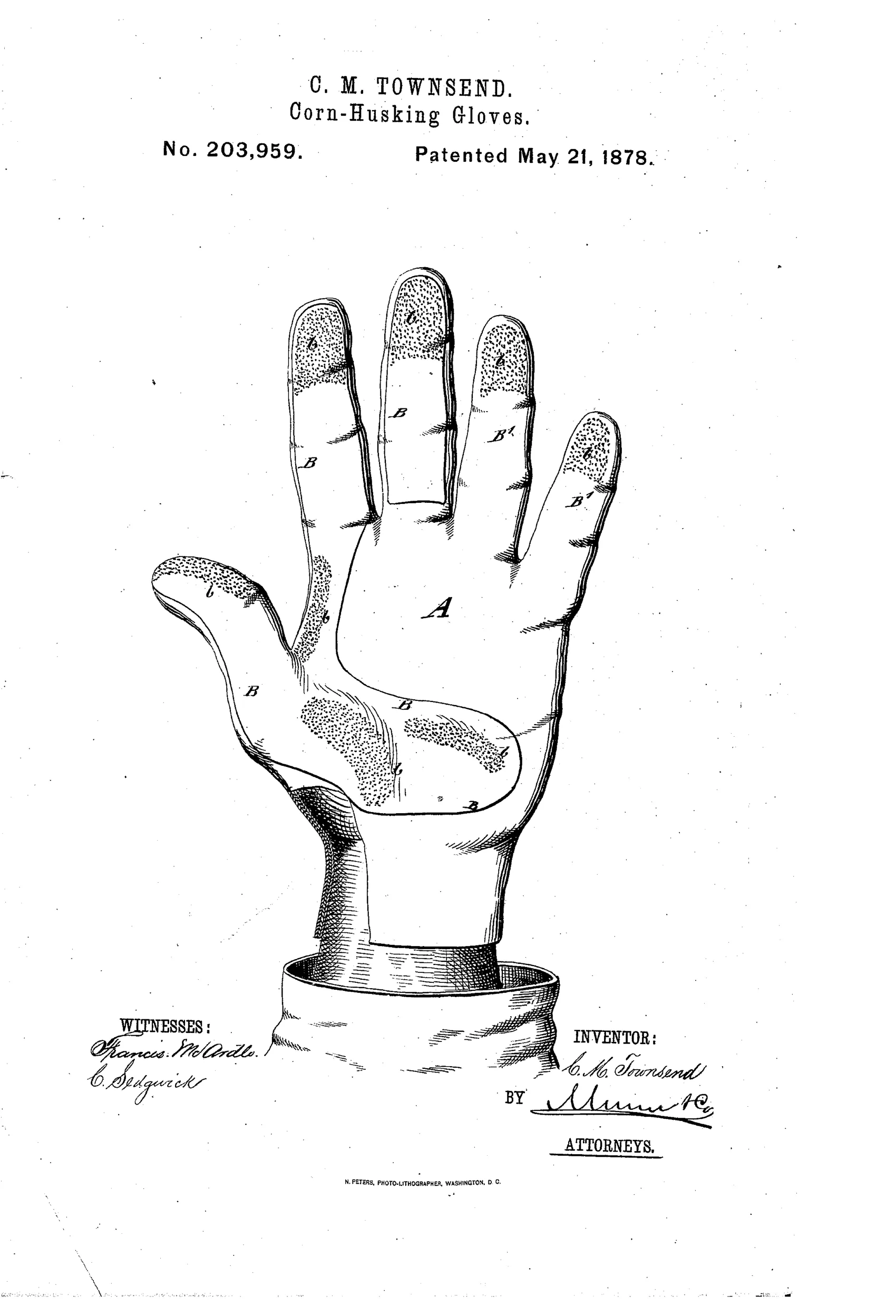
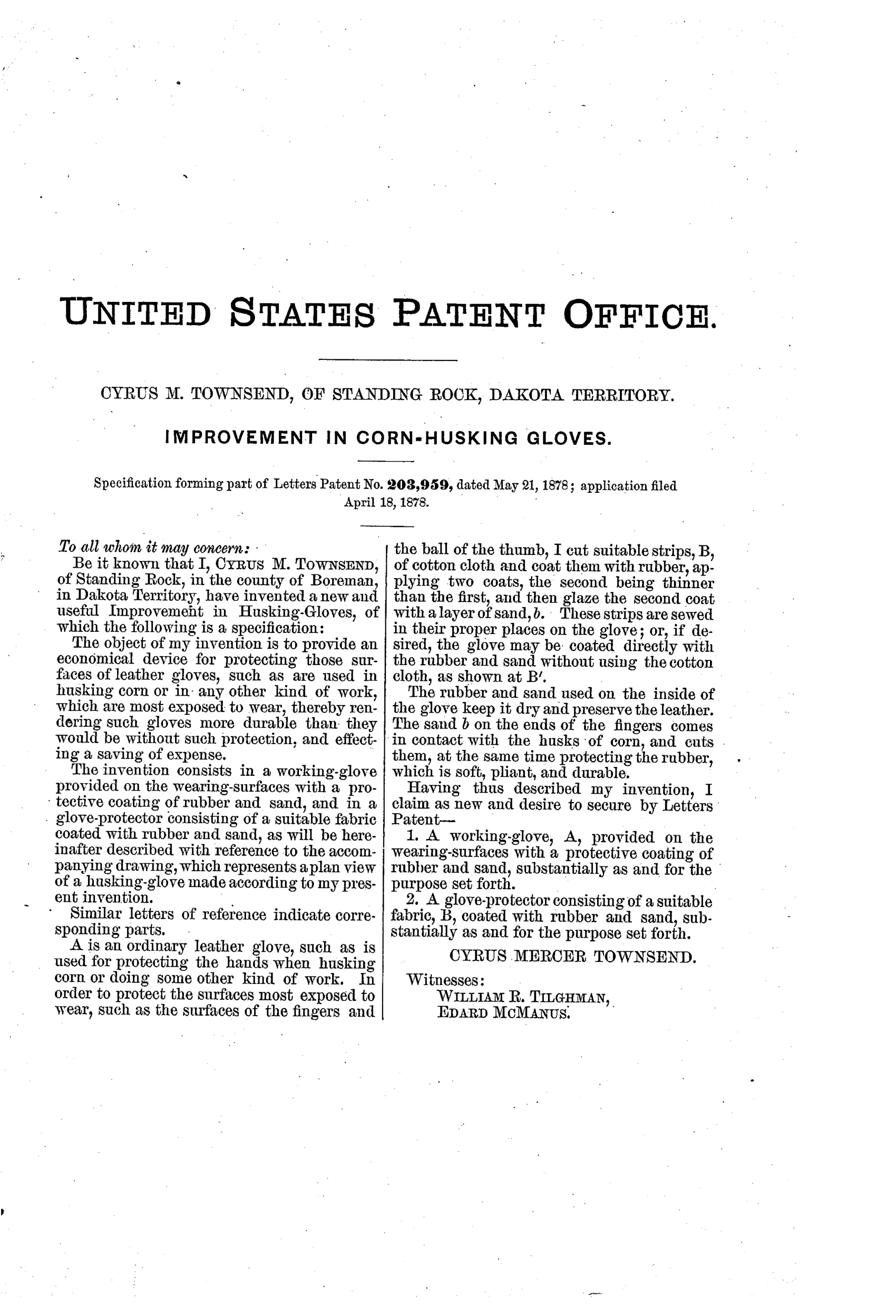
An ordinary leather glove is coated on the wearing surfaces with a protective layer of rubber and sand. On the fingers and thumb ball, strips of cotton cloth are coated with two coats of rubber, the second thinner than the first, then glazed with a layer of sand. These strips are sewed onto the glove at points of greatest wear, or the rubber and sand may be applied directly to the glove without cloth. The rubber keeps the glove dry and preserves the leather, while the sand on the fingertips contacts and cuts the husks, protecting the soft rubber beneath.
❧ What was claimed
“1. A working-glove, A, provided on the wearing-surfaces with a protective coating of rubber and sand, substantially as and for the purpose set forth.”
In plain English: A work glove whose wearing surfaces are coated with rubber and sand for protection.
❧ In the inventor’s words
“The sand b on the ends of the fingers comes in contact with the husks of corn, and cuts them, at the same time protecting the rubber, which is soft, pliant, and durable.”— Cyrus Mercer Townsend, from the specification
Fate unknown
Husking gloves were a real commercial category, but no marked example of Townsend's rubber-and-sand design is documented; a surviving specimen or trade listing would settle it.
❧ Commentary
Let's be upfront: this is not an apple parer. No gears, no clamp, no blade arm — it's a corn-husking glove from Standing Rock, Dakota Territory, and it wandered into our collection the way stray patents sometimes do. But it's worth a minute, because it solves a hand-tool problem with materials rather than mechanism, which is the exact opposite instinct from the cast-iron crowd we usually cover.
Husking corn by hand shreds gloves and fingertips alike; the standard fix was a husking peg or hook strapped to the palm. Townsend instead turns the glove itself into an abrasive tool: cotton strips get two coats of rubber (the second thinner), then a glaze of sand pressed into the surface, sewed onto the fingertips, knuckles, and thumb ball. His own line says it best — the sand contacts and cuts the husks while protecting the soft rubber beneath. The rubber, in turn, waterproofs the leather. It's essentially homemade sandpaper laminated onto the wear points, and the drawing's stippled patches show exactly where a husker's hand actually takes the abuse.
Would it work? For a while. Sand glued to rubber sheds under exactly the friction it's meant to exploit, which is why later husking gloves went to metal studs and pegs. A clever, cheap idea with a built-in wear life — honest frontier engineering, if short-lived by design.
Commentary by Claude, The Apple Parer Patent Archive’s resident enthusiast