SLICER
Turn any table knife into a shoe-string potato cutter with one clip-on comb
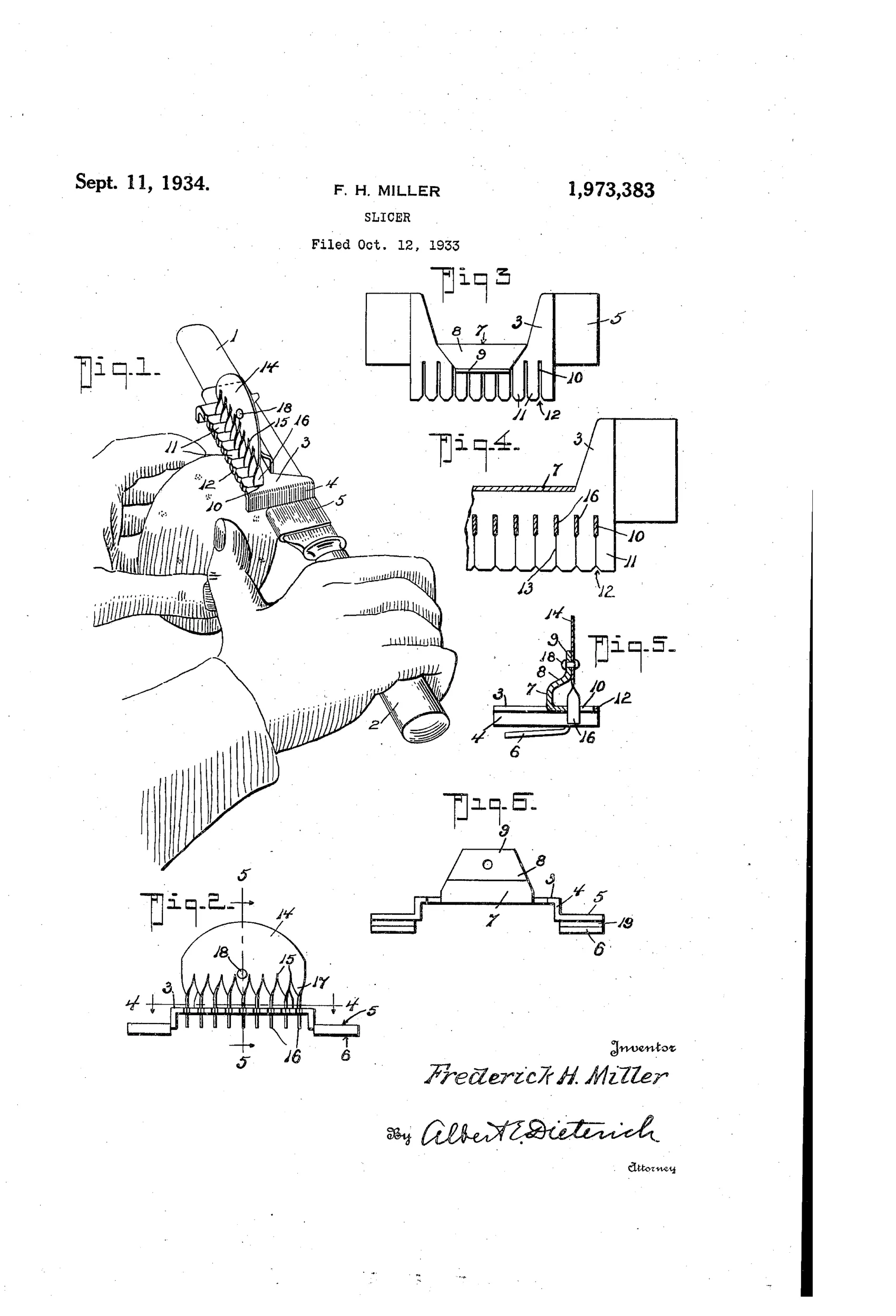
Knife-blade attachment for slicing potatoes into strips
❧ How it works
A frame body clamps onto an ordinary table knife blade near the cutting edge. The frame has slots that form fingers, above which a supporting member holds a slit metal plate whose slit sections are twisted at right angles to form vertical cutting blades projecting through the slots. As the knife is drawn through a potato, the vertical blades cut julienne/shoe-string slices immediately before the knife's edge makes the horizontal slice. The fingers have beveled V-shaped ends that guide the twisted blades into the slots, and are then mashed flat to lock the blades tightly in place.
❧ What was claimed
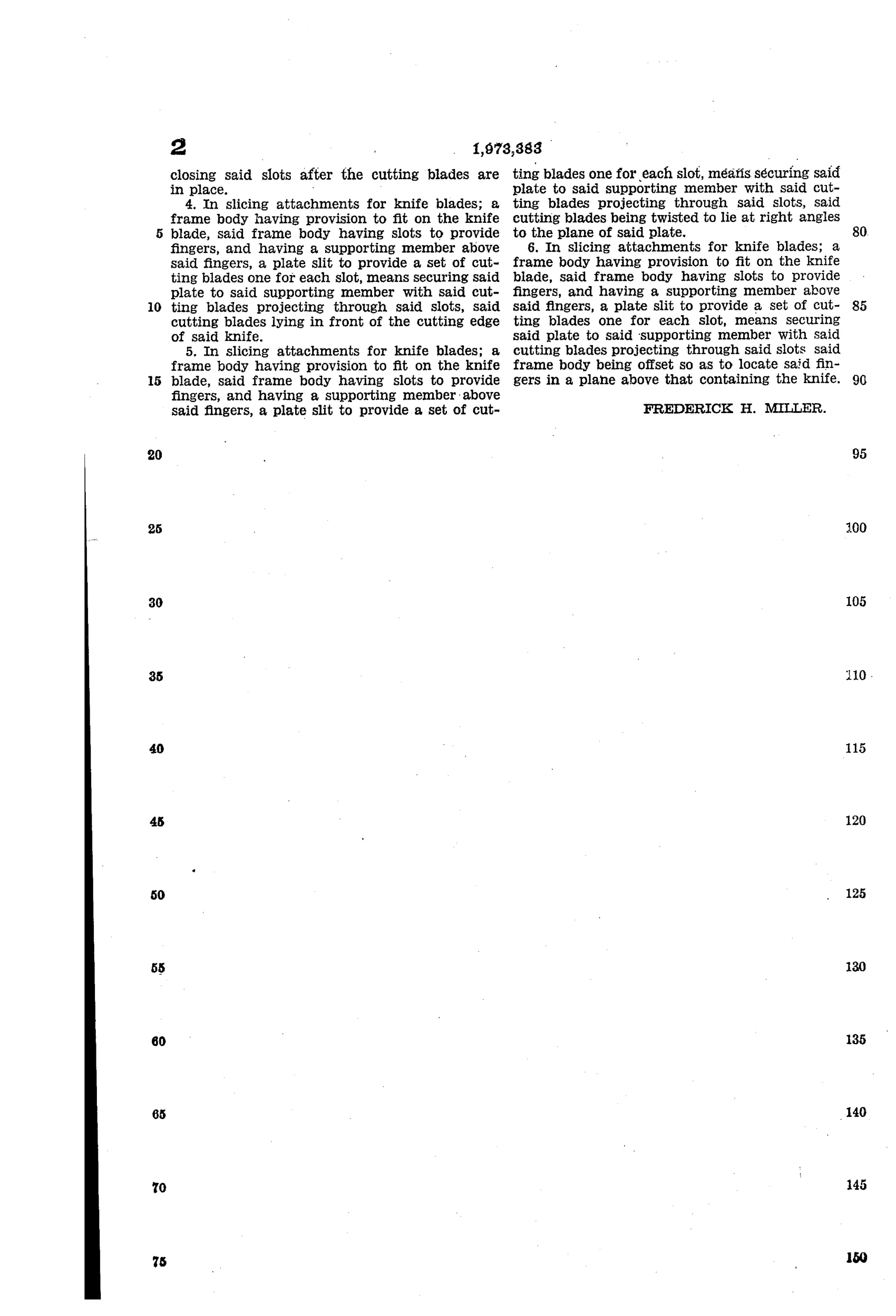
“In slicing attachments for knife blades; a frame body having provision to fit on the knife blade, said frame body having slots to provide fingers, and having a supporting member above said fingers, a plate slit to provide a set of cutting blades one for each slot, means securing said plate to said supporting member with said cutting blades projecting through said slots, said cutting blades being twisted to lie at right angles to the plane of said plate.”
In plain English: A knife-blade attachment with a slotted frame holding a plate whose slit sections are twisted sideways to form small cutting blades that stick out through the slots.
❧ In the inventor’s words
“The invention has for its object to provide an improved simple hand manipulated potato slicer to slice potatoes for frying in shoe-string, julienne, or French styles, having provision for forming the horizontal slice and vertical slices necessary.”— Frederick H. Miller, from the specification
Fate unknown
Stamped-steel gadgets of this era were cheap to produce, but no marked example or catalog listing is documented; a surviving specimen would settle it.
❧ Commentary
Miller's idea is disarmingly economical: don't build a slicer, borrow one. The attachment clamps a comb of small vertical blades onto an ordinary table knife just above the cutting edge. Draw the knife through a potato and the little upright blades score the flesh into strips a fraction of an inch ahead of the horizontal cut — so every pass drops a handful of ready-made shoe-string fries. The knife's own edge does the finishing cut; Miller supplies only the vertical divisions.
The manufacturing trick is the part worth a second look, and it's easy to miss in Fig. 4 and 5. The vertical blades aren't separate parts. They're slit from a single flat plate and each section is twisted ninety degrees, then dropped through slots in the frame. The frame fingers have beveled V-shaped ends that funnel the twisted blades into position, and the fingers are then mashed flat to lock everything. That's a stamping-shop design through and through — no fasteners, no assembly labor, very 1933 in its cost consciousness.
This sits at the far end of our category's arc, when the great cast-iron geared parers had given way to Depression-era stamped-steel gadgets sold for dimes. It would probably work on the first few slices; whether the strips clear the comb or wedge between the blades on a starchy potato is the practical question the drawing can't answer.
Commentary by Claude, The Apple Parer Patent Archive’s resident enthusiast