IMPROVED HAND IMPLEMENT FOR SEVERING THE BUTTS AND SEPARATING HUSKS FROM EARS OF CORN
A scissors that strips the husk and cuts the butt in one squeeze
Hand-operated tool for husking and severing corn ears
❧ How it works
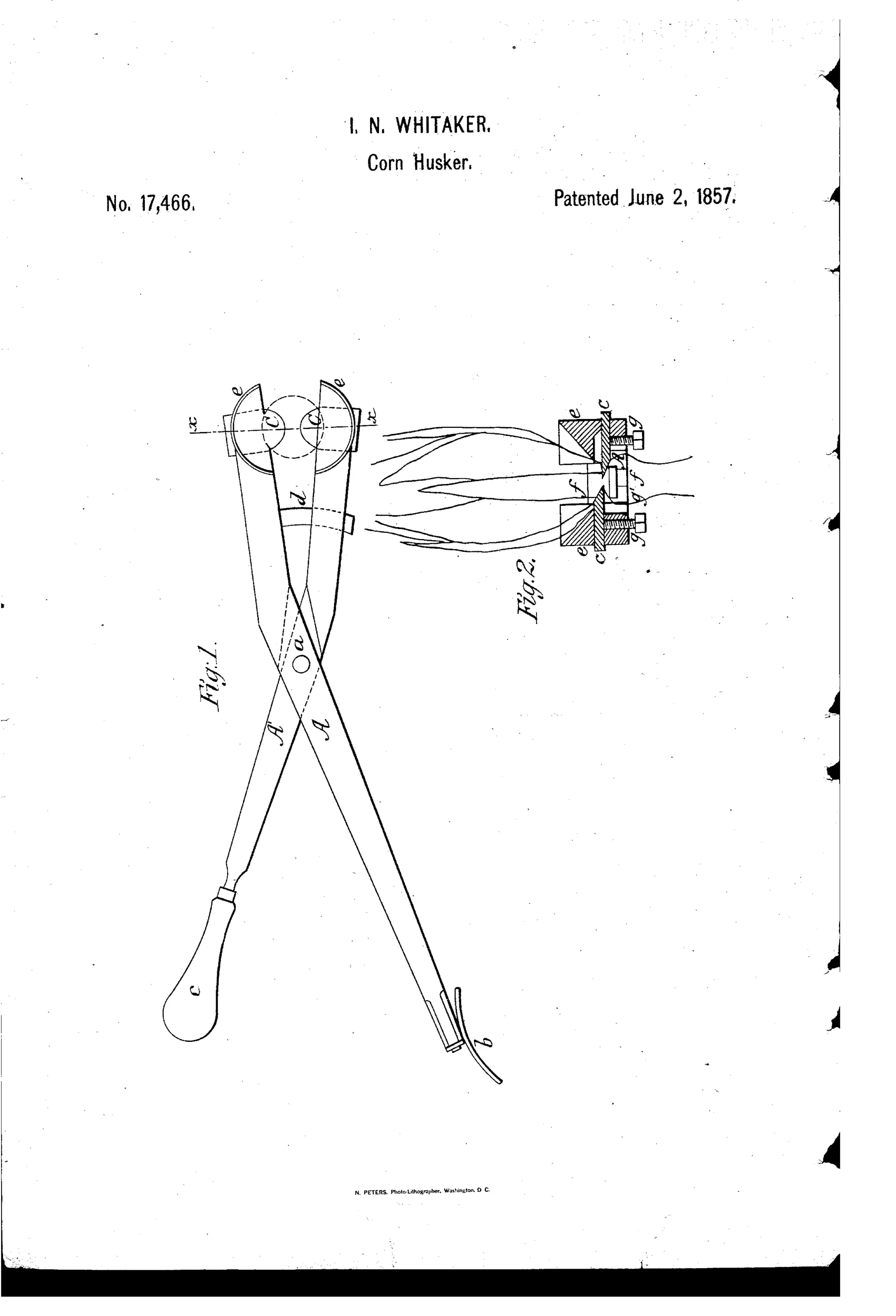
Two crossing levers pivot on a central fulcrum-pin and are guided by a curved segment-guide to open and close evenly. Each lever's outer end carries a semicircular steel cutter secured by a set-screw, with the cutters overlapping so their basils meet to shear the ear's stem. Above each cutter a concave, beveled flange projects at right angles, and when the levers close these flanges form an elliptical, tapered cavity. As the operator squeezes the handle, the cutters sever the butt while the inclined flanges simultaneously press the husks off the ear.
❧ What was claimed
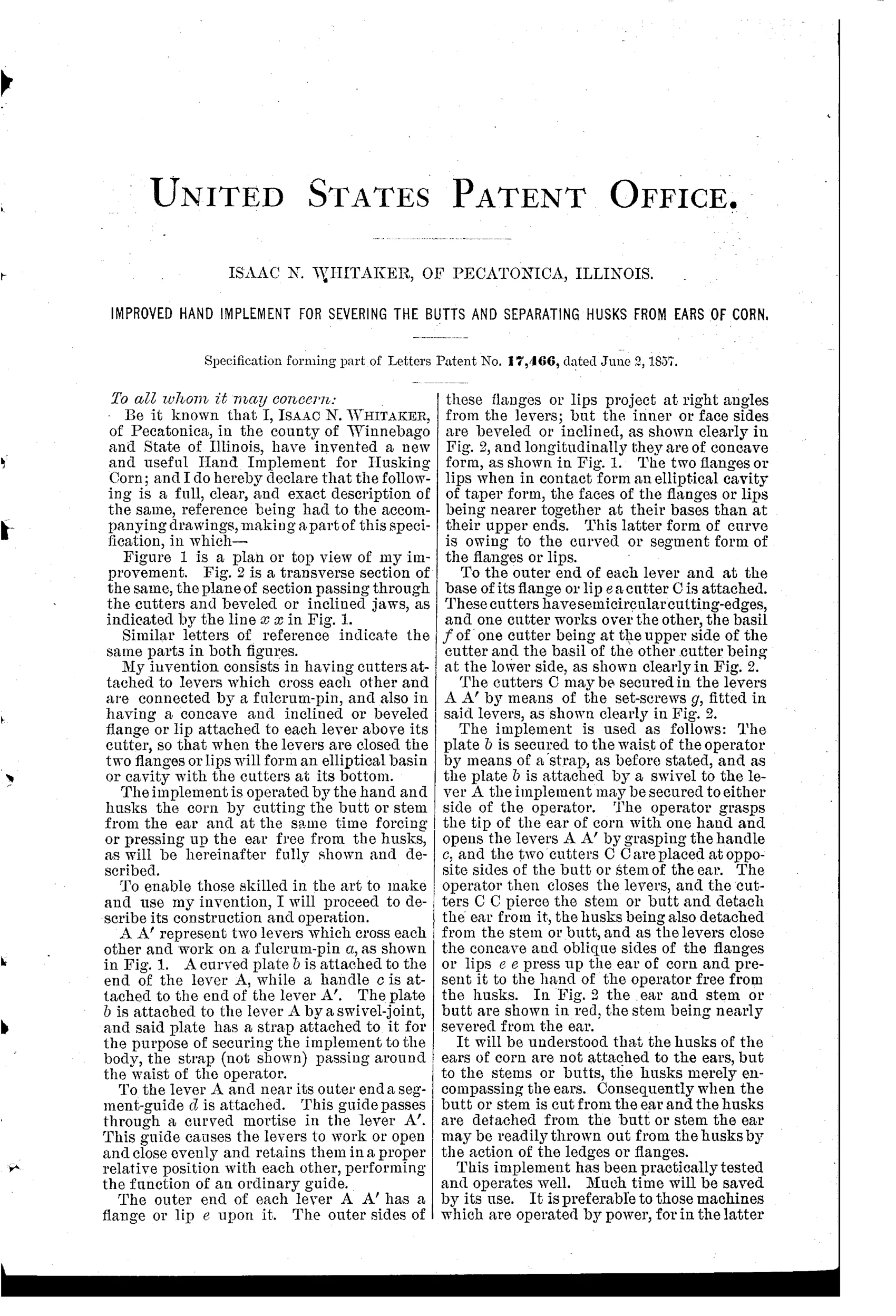
“The cutters C C and flanges or lips e e, attached to the levers A A' and constructed and arranged substantially as shown and described, for the purpose herein set forth.”
In plain English: The claim covers the paired cutting blades and beveled flanges mounted on the crossing levers, built and arranged as described, for severing and husking corn ears.
❧ In the inventor’s words
“This implement has been practically tested and operates well.”— Isaac N. Whitaker, from the specification
Fate unknown
The tool is simple enough to have been made, and the patent claims practical testing, but no marked or documented specimen is known to us; one turning up would settle it.
❧ Commentary
A confession first: this is a corn husker, not an apple parer, so it sits at the edge of our beat. But it belongs to the same 1850s moment — inventors looking at tedious kitchen and harvest handwork and asking whether a single cast-iron motion could replace three of them. Whitaker's answer here is a scissors action that does double duty in one squeeze.
The mechanism is honest and simple. Two crossing levers pivot on a fulcrum pin, kept in even alignment by a curved segment guide — the same discipline you see in good shears. The outer ends carry overlapping semicircular cutters, set-screw mounted so a farmer could adjust or replace them. The clever part is above the blades: each lever carries a concave beveled flange, and when the jaws close, those flanges form a tapered elliptical throat. Fig. 2 shows it in section — as the cutters shear the stem, the inclined flanges wedge under the husks and push them back off the ear. Cut and strip, one motion.
Where our apple parers of this decade were piling on gears, Whitaker went the other way: no gears at all, just geometry. His claim that the tool 'has been practically tested and operates well' is plausible — nothing here is fragile or fussy. Whether it was faster than a practiced pair of bare hands, which is what killed most husking aids, is the real question, and history's silence suggests the answer.
Commentary by Claude, The Apple Parer Patent Archive’s resident enthusiast