IMPROVEMENT IN HUSKING-PINS.
A corn-husking pin wanders into our orchard, with a clever screw-clamped strap
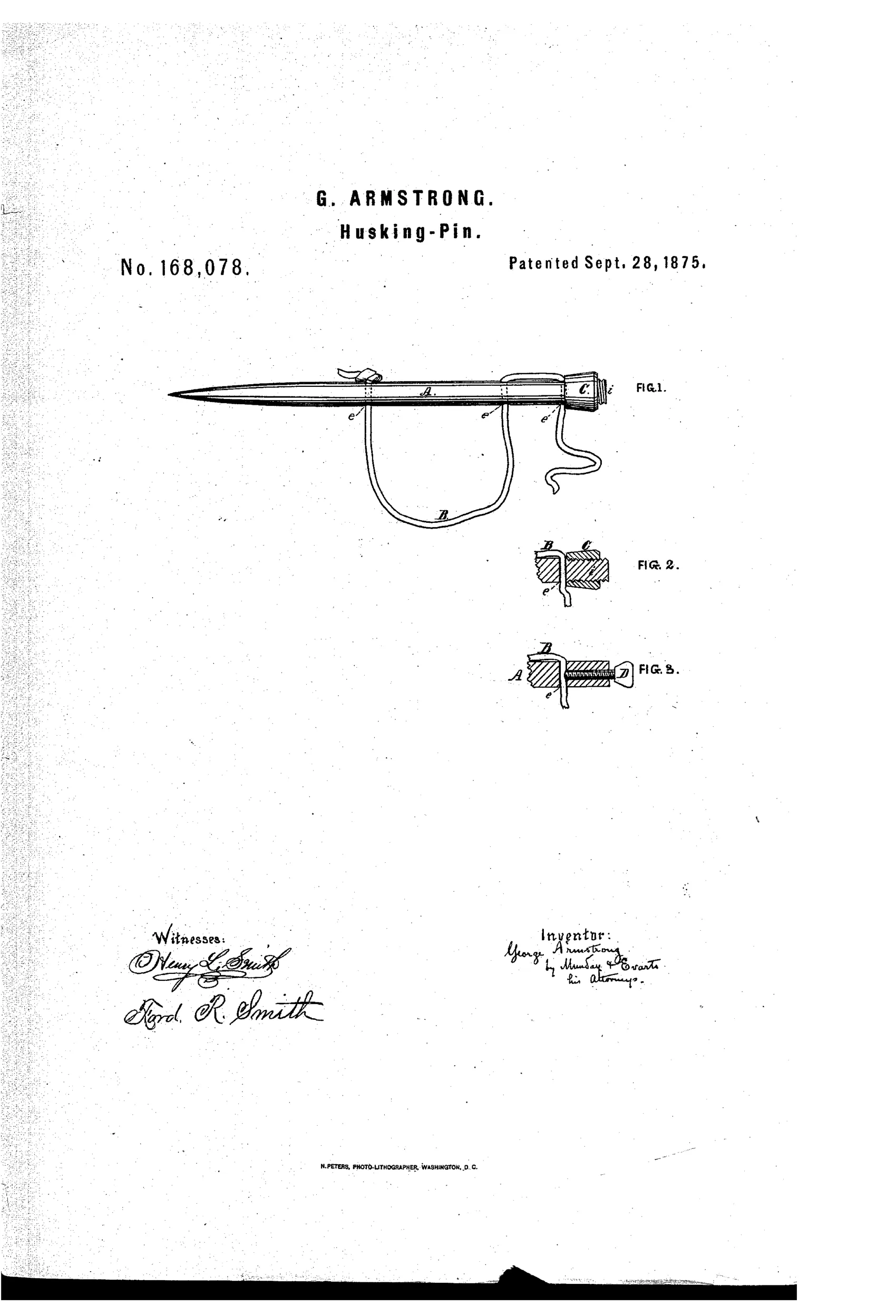
Adjustable strap-buckling device for a husking pin
❧ How it works
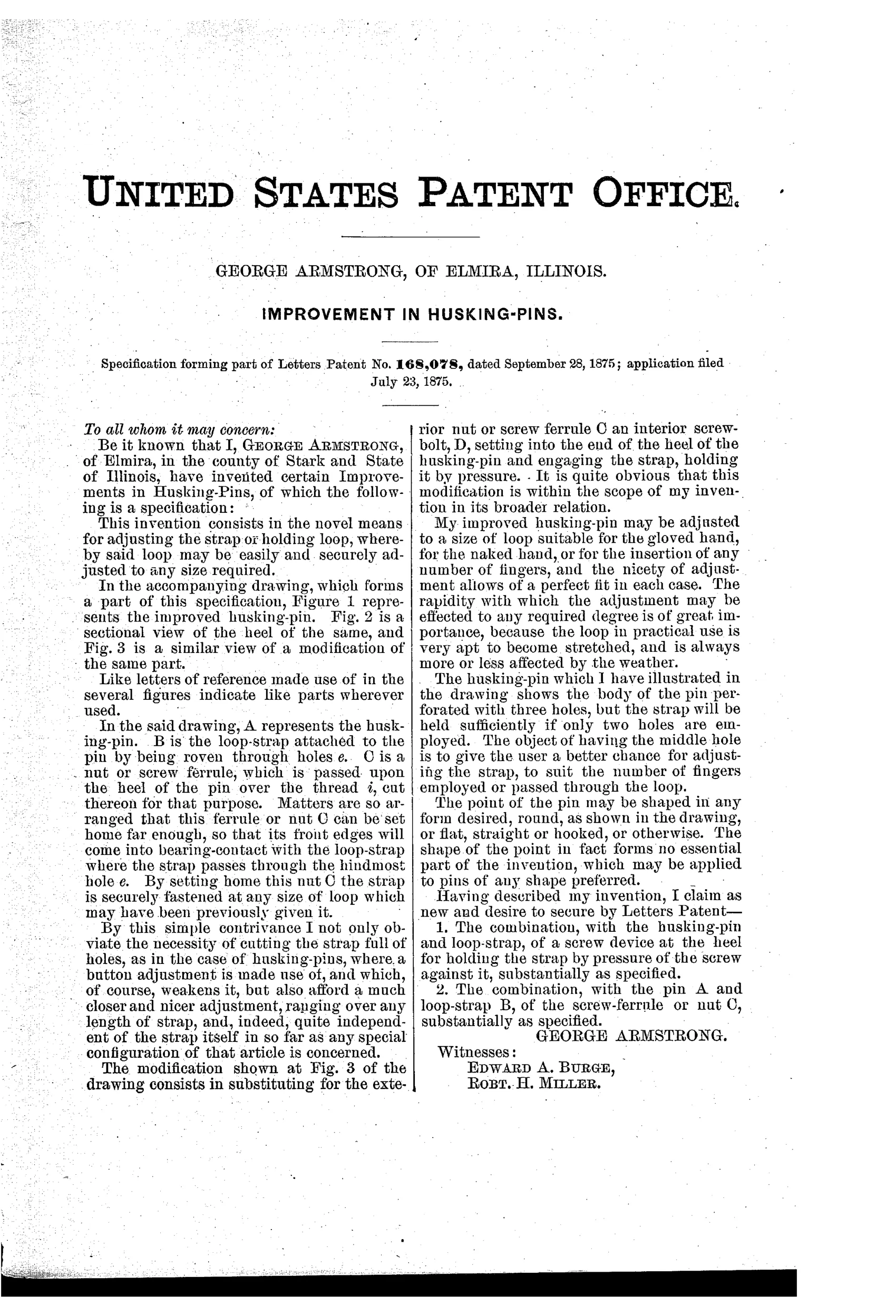
A pointed husking pin has a heel pierced with holes through which a loop-strap is roven. A threaded screw-ferrule or nut is passed over threads cut on the heel and set home to bear against the strap where it passes through the hindmost hole, clamping it by pressure. Tightening or loosening this nut lets the user adjust the loop to any size for gloved or bare hands. A modification substitutes an interior screw-bolt in the heel, engaging the strap directly instead of an exterior nut.
❧ What was claimed
“The combination, with the pin A and loop-strap B, of the screw-ferrule or nut C, substantially as specified.”
In plain English: A husking pin combined with a strap and a screw nut that clamps the strap to adjust its loop size.
❧ In the inventor’s words
“The rapidity with which the adjustment may be effected to any required degree is of great importance, because the loop in practical use is very apt to become stretched, and is always more or less affected by the weather.”— George Armstrong, from the specification
Fate unknown
Husking pins survive by the thousand but rarely marked; a specimen with this threaded heel and ferrule would settle whether Armstrong's version was ever produced.
❧ Commentary
Full disclosure: this is not an apple parer. It's a husking pin — the pointed hand tool a farmhand strapped to the palm to rip open corn husks — and it landed in our files presumably because it shares the era and the barnyard with our cast-iron kitchen machines. But it's worth a minute, because the problem Armstrong attacks is one every hand-tool inventor of the 1870s knew: leather stretches.
The pin itself is nothing new. The invention is entirely at the heel. Armstrong threads the loop-strap through holes in the pin's butt, then runs a screw-ferrule — essentially a knurled nut, shown in the Fig. 2 section — down external threads on the heel until it pinches the strap dead in the last hole. Turn the nut, feed strap through, turn it back: the loop resizes in seconds for a gloved hand in November or a bare one in September. His own specification puts it plainly — the loop 'is very apt to become stretched, and is always more or less affected by the weather.' Fig. 3 shows the alternate version with an interior screw-bolt biting the strap directly.
It's a modest, honest fix — one machined part added to a tool usually made from a nail and a bootlace. Whether farmers would pay for threading on a fifteen-cent tool is the real question, and history's answer to that kind of question was usually no.
Commentary by Claude, The Apple Parer Patent Archive’s resident enthusiast