Corn-Huskers
A husking peg, not a parer — but the same 1870s hand-tool instinct
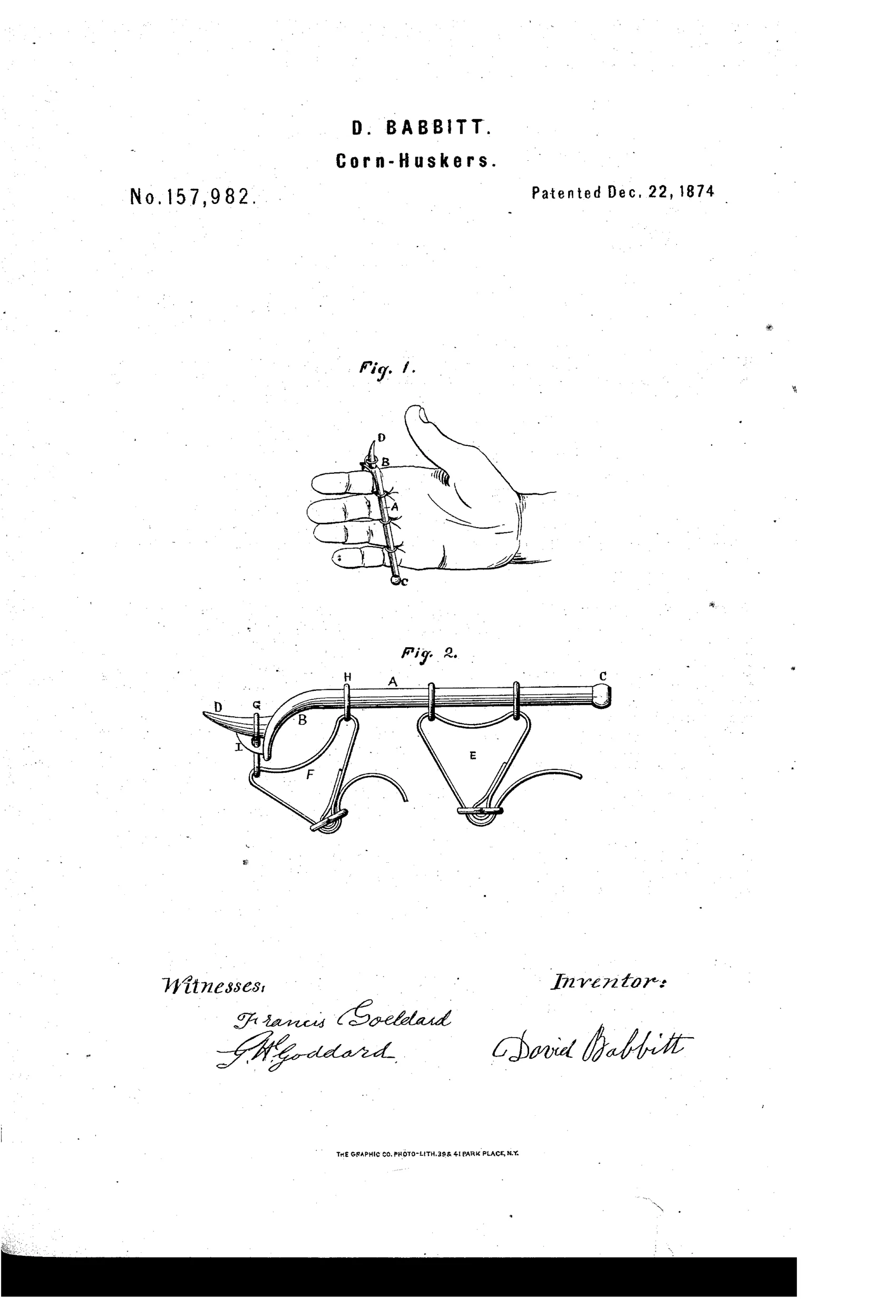
Hand-worn metal corn-husking peg device
❧ How it works
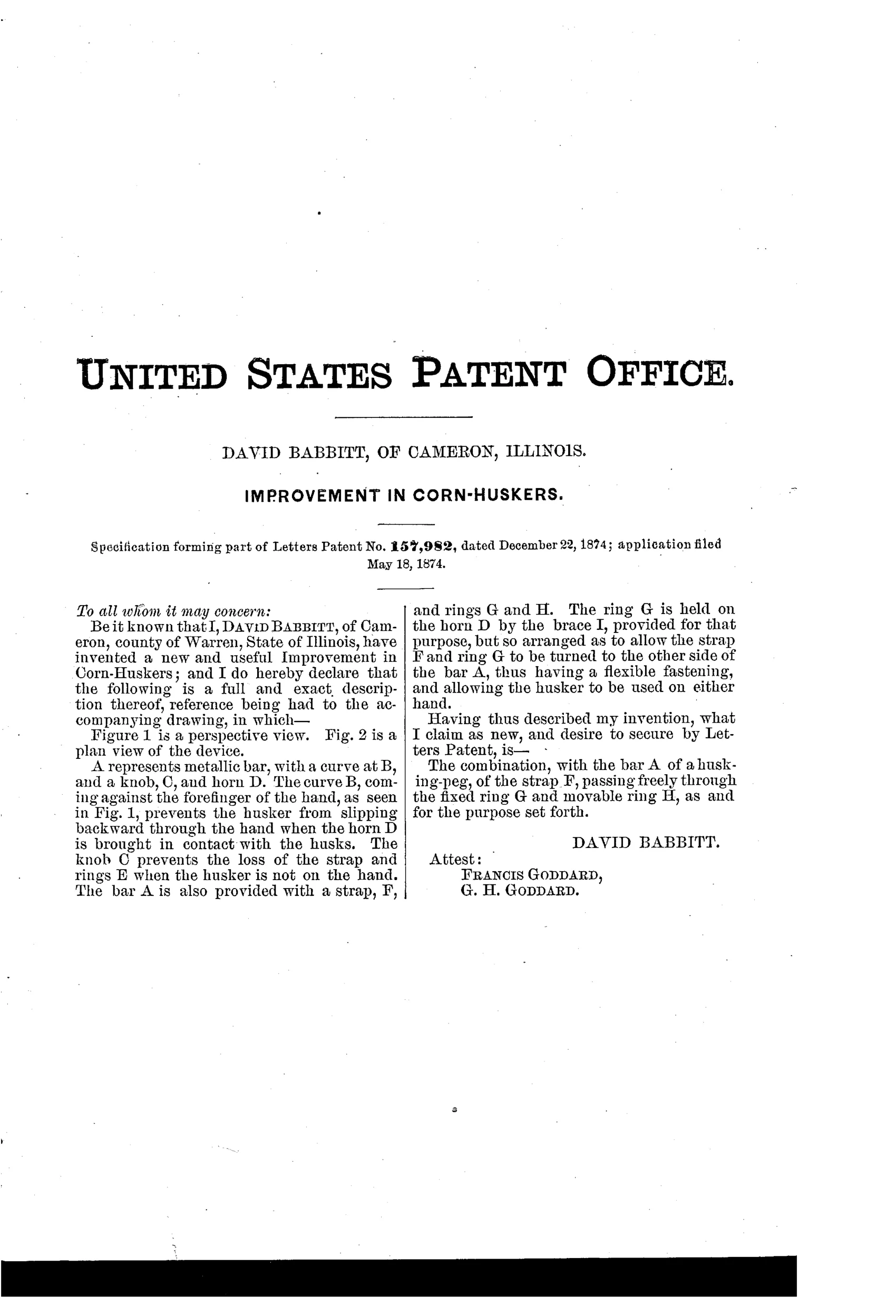
A curved metallic bar with a horn at one end and a knob at the other is worn across the fingers via straps and rings. The curve of the bar presses against the forefinger to keep the husker from slipping backward when the horn is pressed into the husks. A knob on the opposite end prevents the strap and rings from being lost when the device is not being worn. The strap passes freely through a fixed ring and a movable ring, allowing the fastening to flex and letting the husker be worn on either hand.
❧ What was claimed
“The combination, with the bar A of a husking-peg, of the strap F, passing freely through the fixed ring G and movable ring H, as and for the purpose set forth.”
In plain English: The invention claims the combination of the husking-peg's bar with a strap that passes freely through one fixed ring and one movable ring, allowing flexible attachment to the hand.
❧ In the inventor’s words
“The ring G is held on the horn D by the brace I, provided for that purpose, but so arranged as to allow the strap F and ring G to be turned to the other side of the bar A, thus having a flexible fastening, and allowing the husker to be used on either hand.”— David Babbitt, from the specification
Fate unknown
Patented husking pegs were commonly manufactured, but no marked Babbitt example is documented to my knowledge; a surviving specimen with this ring-and-strap fastening would settle it.
❧ Commentary
Let's be upfront: this is a corn husker, not an apple parer, so it sits outside our usual beat of geared cast-iron kitchen machines. But it wandered into the files, and it's worth a minute, because it shows what the other end of the 1870s invention spectrum looked like. While the Reading and Goodell crowd were packing segment gears into frames, Babbitt of Cameron, Illinois was refining something almost medieval — a peg strapped across the fingers to rip husks off ears by hand.
The drawing repays a close look. Fig. 1 shows the bar lying across the middle joints of the fingers, horn pointing past the thumb. The mechanical idea is in the curve: when you drive the horn into a husk, the reaction force wants to shove the whole peg backward out of your grip, and the bend in the bar hooks against the forefinger to resist that. The claim, though, is narrower still — a strap threaded freely through one fixed ring and one movable ring, so the fastening flexes and the peg works on either hand. That ambidexterity mattered; huskers worked long days and switched hands.
Husking pegs were made by the tens of thousands, in wood, bone, and metal, and dozens of patented variants exist. Whether Babbitt's particular ring-and-strap arrangement ever left the drawing is another question. It's a workmanlike tweak in a genuinely crowded field — the crowd here chasing grip security and hand fatigue, not gearing.
Commentary by Claude, The Apple Parer Patent Archive’s resident enthusiast