IMPROVED HAND CORN-HUSKER
A double-shear corn husker wanders in from our parer beat's noisy neighbor
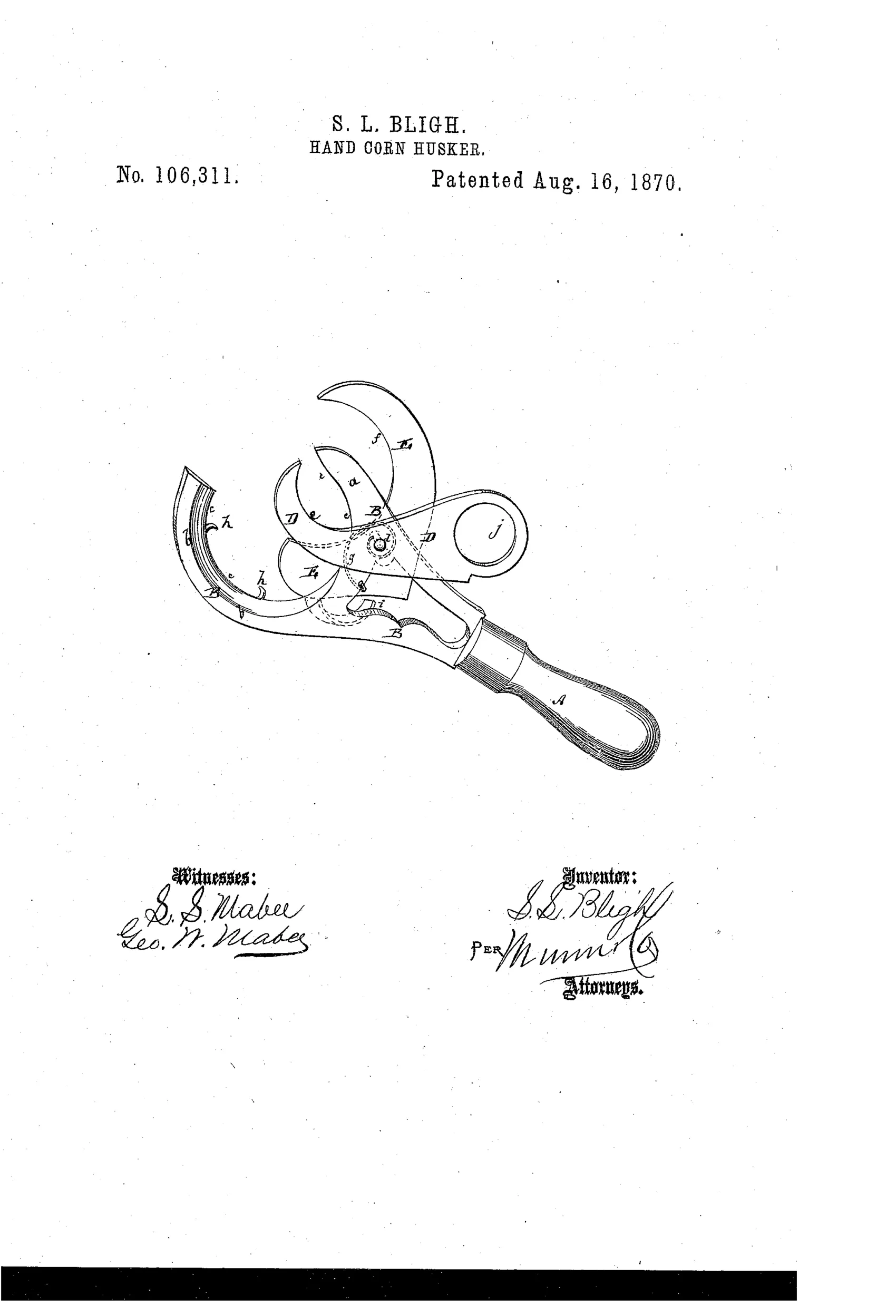
Handheld tool for husking and severing corn ears.
❧ How it works
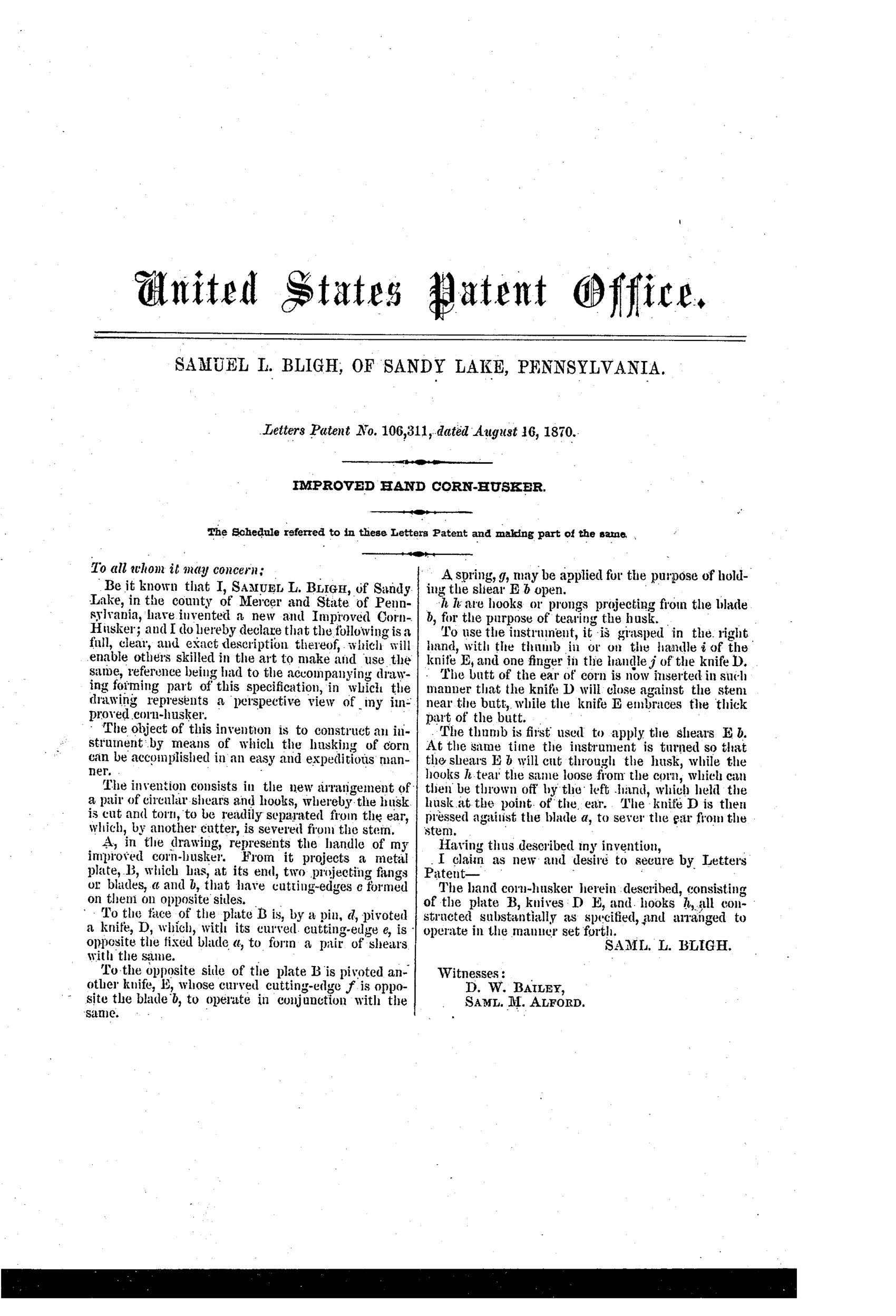
A handle A carries a metal plate B with two projecting fanged blades a and b having cutting edges c. A pivoted knife D closes against fixed blade a to form one pair of shears, while a second pivoted knife E closes against blade b to form another. Hooks h projecting from blade b tear the husk loose once the shears cut through it, and a spring g may hold the E-b shears open for easy use. The user grips the tool with thumb on handle i and a finger on handle j, applies the shears to cut and tear the husk, then presses knife D against blade a to sever the ear from the stem.
❧ What was claimed
“The hand corn-husker herein described, consisting of the plate B, knives D E, and hooks h, all constructed substantially as specified, and arranged to operate in the manner set forth.”
In plain English: The claim covers the specific combination of the plate, two pivoting knives, and hooks working together as described to husk corn by hand.
❧ In the inventor’s words
“The object of this invention is to construct an instrument by means of which the husking of corn can be accomplished in an easy and expeditious manner.”— Samuel L. Bligh, from the specification
Fate unknown
Simple hand tools like this were sometimes made in small local runs, but no marked example of Bligh's design is documented; a surviving specimen would settle it.
❧ Commentary
Full disclosure: this is a corn husker, not an apple parer, but it belongs to the same 1870s ferment of patent-office ingenuity aimed at the kitchen and barn chores everyone did by hand. Where our parer inventors chased the geared crank, Bligh went the other way — no gears at all, just a hand tool that packs two separate pairs of shears onto one plate.
The drawing rewards a slow look. That tangle of crescents is actually organized: plate B carries two fixed fanged blades, and each gets its own pivoting knife — E closes against one to slit the husk, D closes against the other to sever the ear from the stalk. The small hooks (h) along the lower blade are the clever bit: once the shears cut through, the hooks catch the husk and tear it back as you pull. A spring holds one pair of shears open so your grip does the work in sequence — slit, tear, cut free.
Whether it beat a practiced husker with a plain husking peg is doubtful. Peg-style huskers strapped to the palm dominated this niche for decades precisely because they were cheap, simple, and never jammed with green husk. Bligh's tool asks the hand to manage two pivots, a spring, and hooks in one motion. It's an honest attempt to mechanize a knack — and the knack usually wins.
Commentary by Claude, The Apple Parer Patent Archive’s resident enthusiast