IMPROVEMENT IN CORN-HUSKERS
A corn husker on an apple parer site — the hand-worn cousin worth knowing
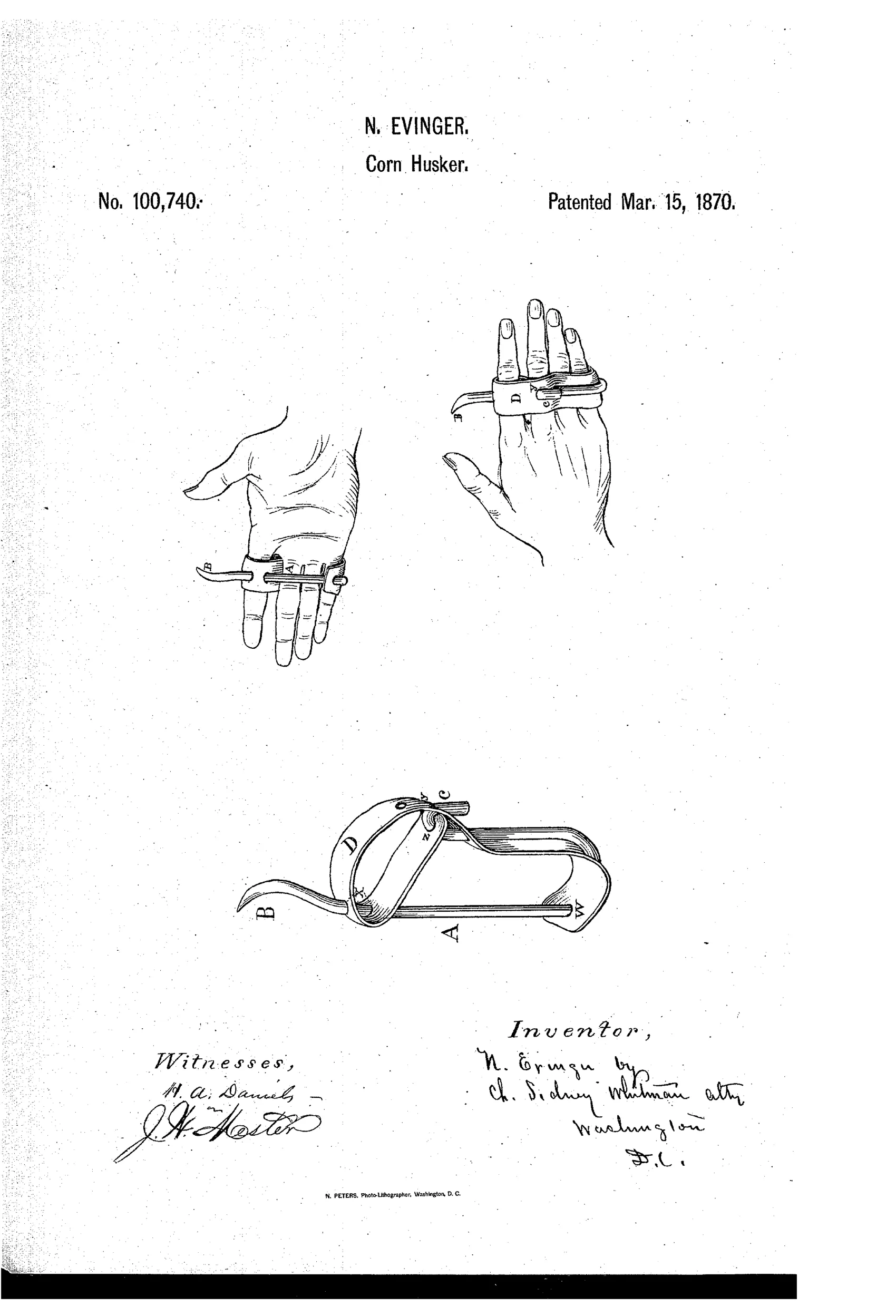
Hand-worn wire and strap corn husking device
❧ How it works
A curvilinear metallic wire with a pointed open hook tears and gathers the husk from the ear of corn. A second hook holds the end and bight of a leather strap or girder that secures the wire to the hand. The leather strap has holes cut in it to fit the wire and is secured at four points, passing between the fingers to support the wire and protect the hand. The device is worn over the fingers, positioned so the second hook rests about opposite the middle finger during use.
❧ What was claimed
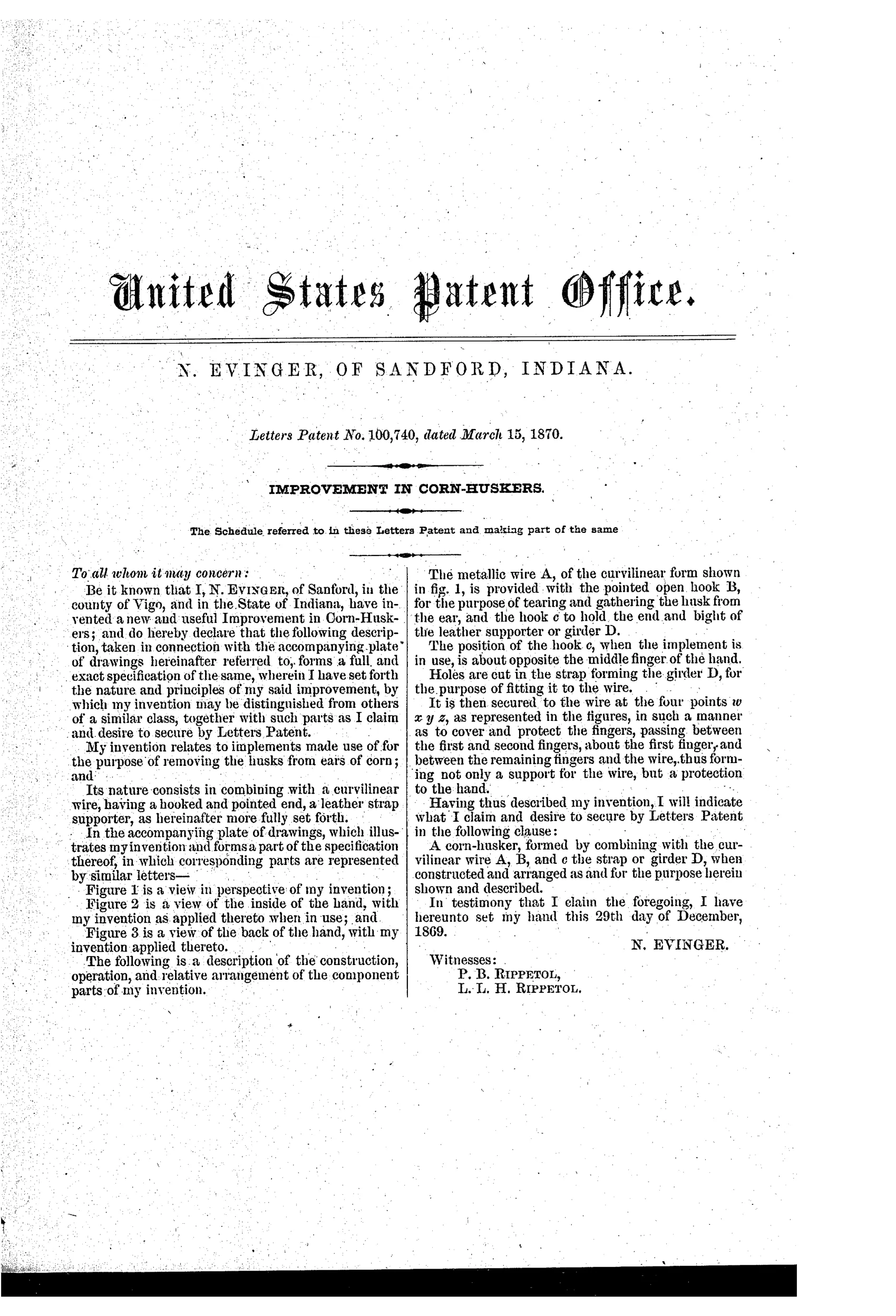
“A corn-husker, formed by combining with the curvilinear wire A, B, and c the strap or girder D, when constructed and arranged as and for the purpose herein shown and described.”
In plain English: The invention claims a corn husker made by combining a curved wire with hooks and a leather strap that holds it to the hand, as described.
❧ In the inventor’s words
“The metallic wire A, of the curvilinear form shown in fig. 1, is provided with the pointed open hook B, for the purpose of tearing and gathering the husk from the ear, and the hook c to hold the end and bight of the leather supporter or girder D.”— N. Evinger, from the specification
Fate unknown
Hand husking hooks of this type were widely manufactured, but no example marked or attributable to Evinger's specific patent is documented; a marked specimen would settle it.
❧ Commentary
Let's be honest up front: this isn't an apple parer. Evinger's patent is a corn husker, and it wandered into our category the way farm patents sometimes do — same era, same rural workshops, same instinct to put a small piece of iron between the hand and a tedious harvest job. But it's worth a look precisely because it takes the opposite approach from everything we usually cover. Where the parer inventors of 1870 were bolting geared machines to the kitchen table, Evinger strapped his machine directly onto the worker.
The device is almost nothing: one bent wire with a pointed open hook (B) to tear the husk, a second hook (c) to anchor a leather strap, and the strap itself (D) threaded through holes and passed between the fingers at four points. Fig. 1 shows how much thought went into that 'almost nothing' — the wire's curve is shaped to lie across the palm so the tearing hook sits opposite the middle finger, right where a gripping hand naturally pulls. The leather does double duty as fastener and hand protection.
Husking pegs and hooks of this general family were made by the tens of thousands and used well into the twentieth century; they were the practical answer where mechanized huskers were not. Whether Evinger's particular curvilinear wire ever left the drawing is another question — the field was crowded, and simple designs blur together.
Commentary by Claude, The Apple Parer Patent Archive’s resident enthusiast