IMPROVED MACHINE FOR PARING FRUIT
An abrasion-drum peeler in 1870 — grating skins off, not slicing them
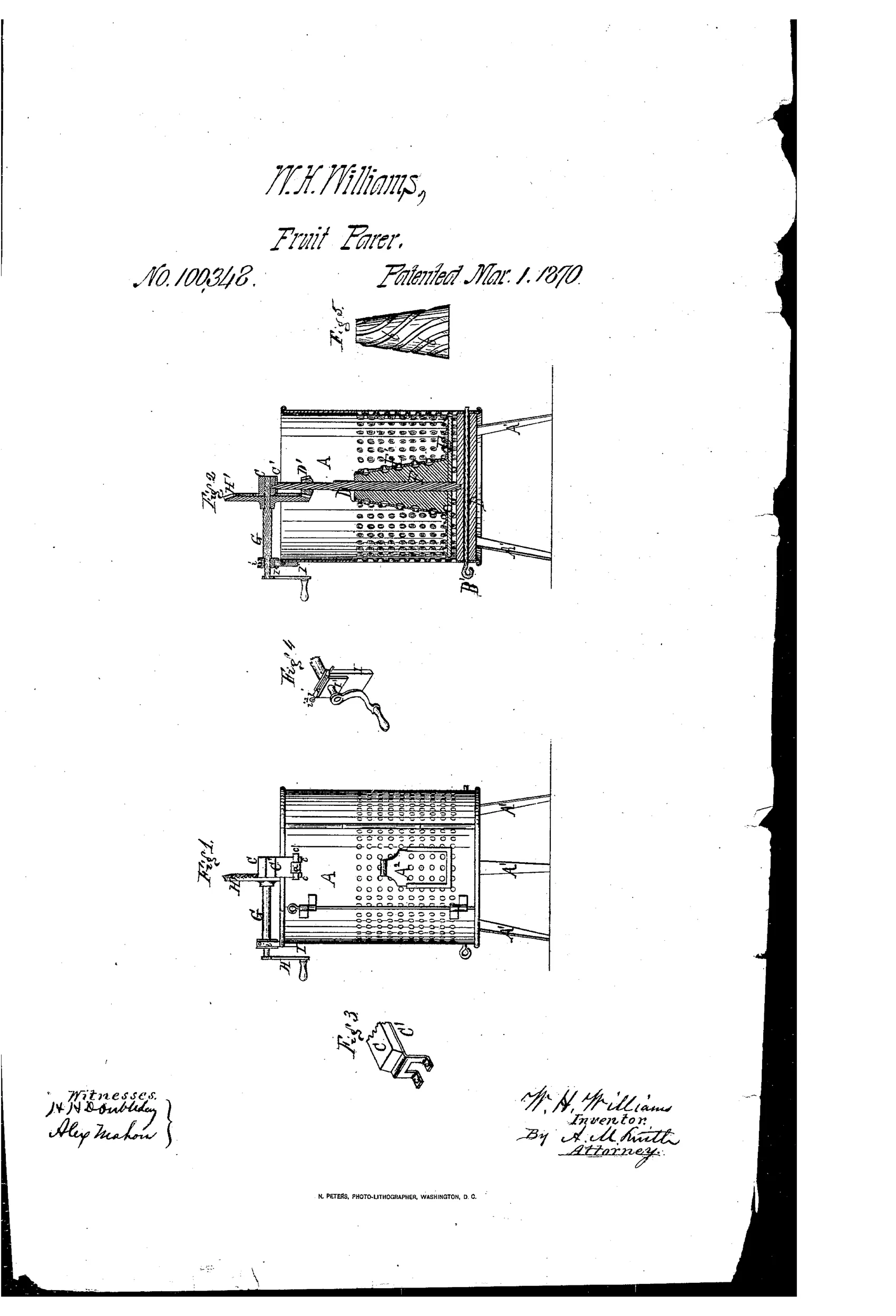
Rotary machine for paring fruit or potatoes
❧ How it works
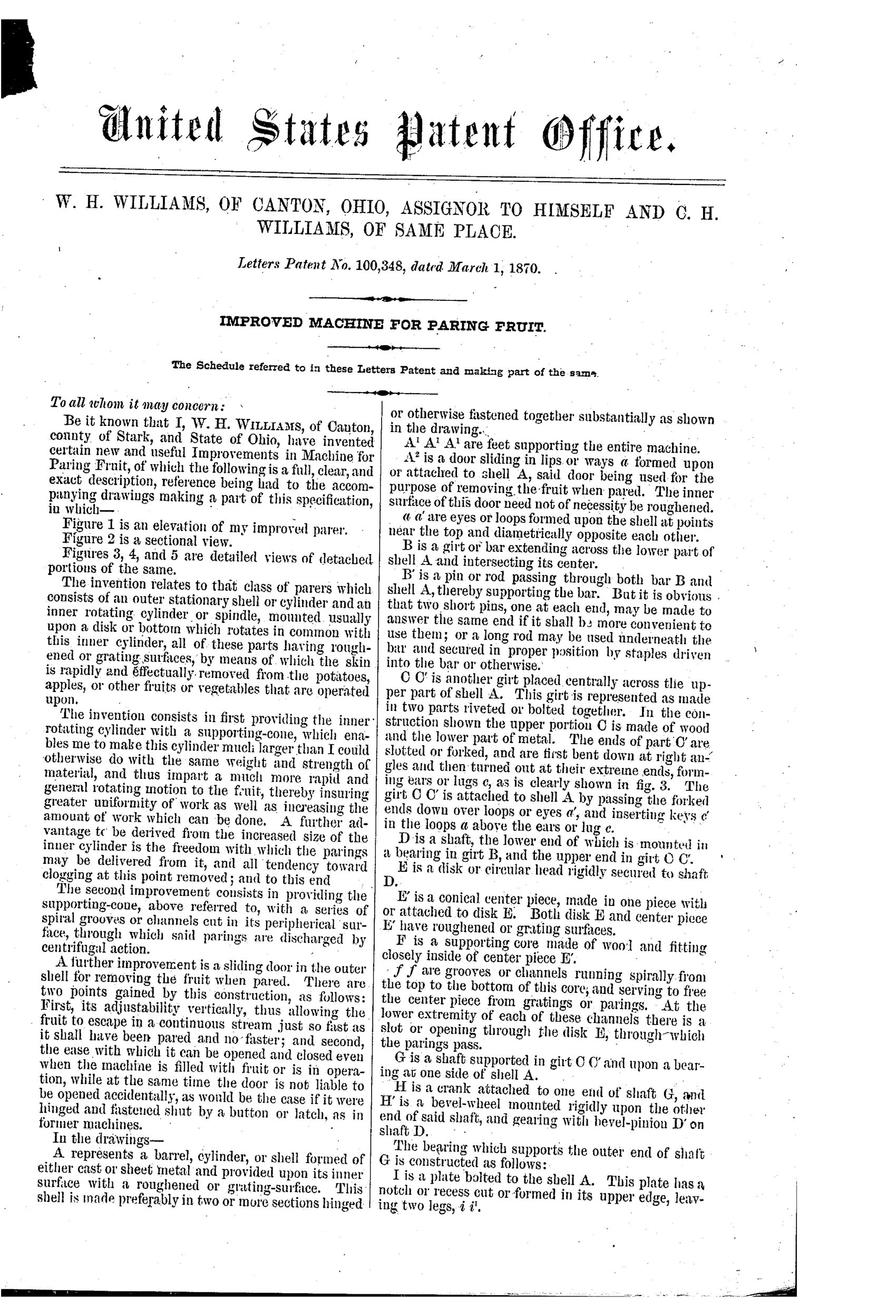
An outer stationary shell holds an inner rotating disk and conical center piece, both with roughened grating surfaces, mounted on a shaft turned by a hand crank via bevel gears. Fruit is loaded into the annular space around the cone, and rapid rotation grates and scrapes the skin off while also spinning the fruit itself for even peeling. A wooden supporting core fits inside the cone with spiral grooves that channel the parings downward and discharge them through slots by centrifugal action. A sliding door in the shell allows pared fruit to be released and its height adjusted to regulate continuous feeding and discharge.
❧ What was claimed
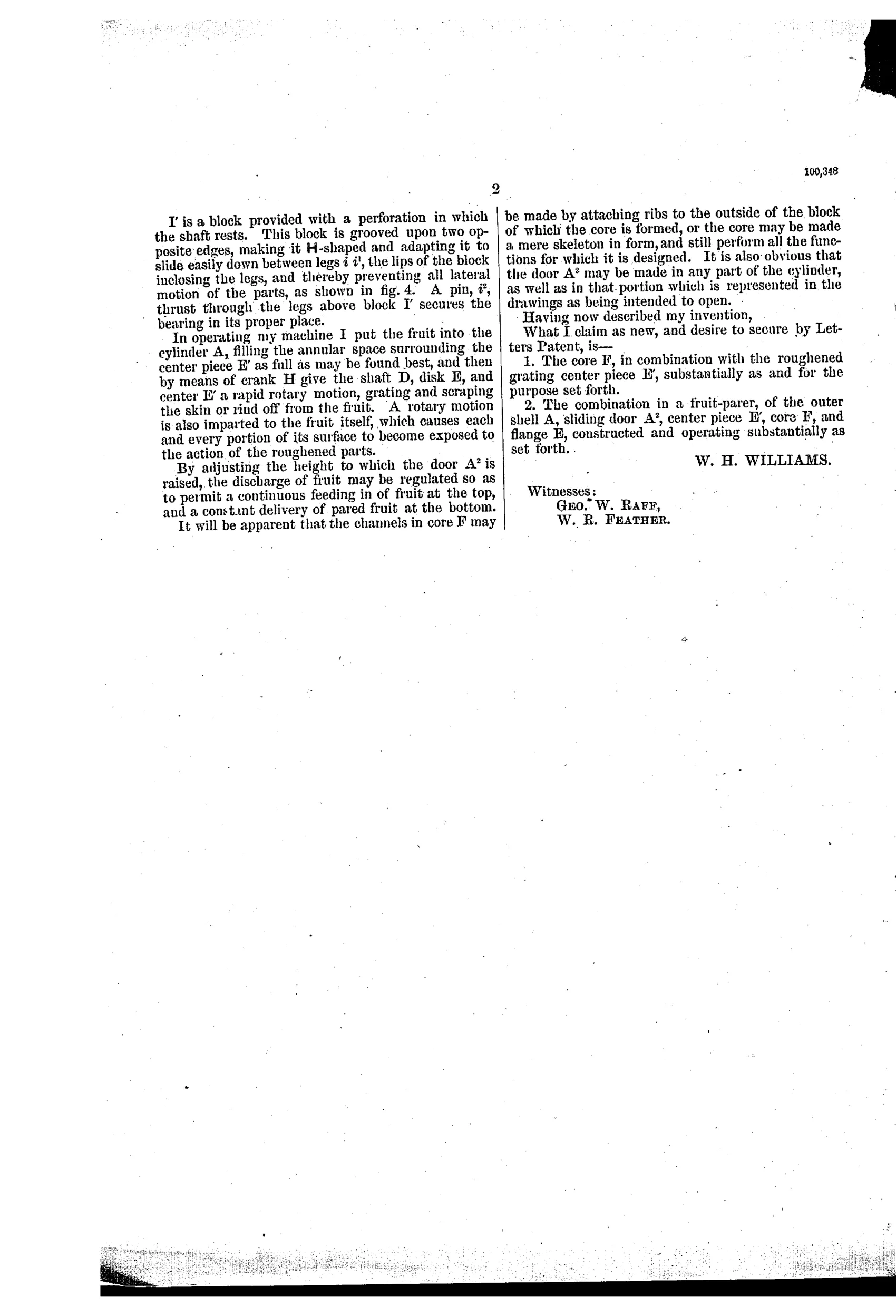
“The combination in a fruit-parer, of the outer shell A, sliding door A2, center piece E', core F, and flange E, constructed and operating substantially as set forth.”
In plain English: The invention combines an outer shell, a sliding discharge door, a grating center cone, an internal core, and a flange disk, all working together to peel fruit.
❧ In the inventor’s words
“A rotary motion is also imparted to the fruit itself, which causes each and every portion of its surface to become exposed to the action of the roughened parts.”— W. H. Williams, from the specification
Fate unknown
No surviving example appears in the collector record (DATAMP or otherwise); a marked specimen or trade advertisement would settle it.
❧ Commentary
Most parers of this era are miniature lathes: fork spins the apple, a blade tracks the profile. Williams of Canton, Ohio, is playing an entirely different game. His machine is a rotary grater — an outer shell holding a spinning disk and cone, both faced with roughened grating surfaces. You dump fruit or potatoes into the annular space, crank the bevel gears, and let friction do the paring. That's the same principle as the electric restaurant potato peelers of the twentieth century, arrived at decades early with a hand crank.
The drawing rewards a close look. Fig. 5, the little conical piece at the top of the sheet, is the heart of it: the grating cone with the spiral-grooved wooden core inside, which channels the parings downward and flings them out through slots by centrifugal action. That's a real attempt at continuous operation — peel, discharge waste, release fruit through the sliding door, all without stopping the crank. The claim about the fruit itself acquiring rotary motion, exposing 'each and every portion of its surface,' is the honest weak point: tumbling fruit against abrasive surfaces peels unevenly and bruises soft fruit badly. Fine for potatoes; rough on ripe apples.
As a dead end in the apple-parer story, it's an interesting one — the abrasion approach eventually won for potatoes at scale, just not in cast iron kitchen form in 1870.
Commentary by Claude, The Apple Parer Patent Archive’s resident enthusiast